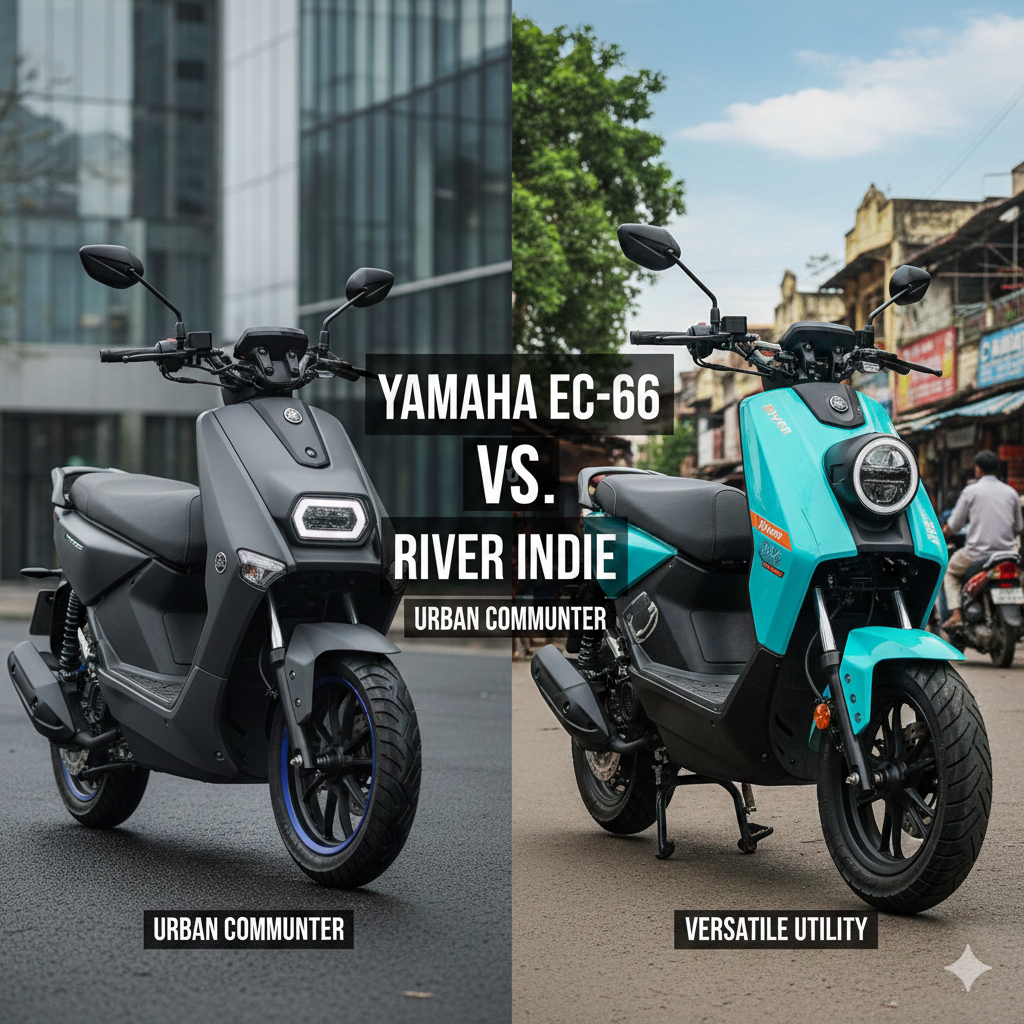
The Yamaha EC-06 marks Yamaha’s official entry into India’s electric scooter market, launched at an ex-showroom price of Rs 1,67,600 (often rounded to Rs 1.68 lakh). This model is built on the same platform as the River Indie, a product from the Bengaluru-based EV startup River Mobility, with whom Yamaha has a strategic partnership for EV development and manufacturing in India. The EC-06 is produced at River’s facility and shares core underpinnings, making it a rebadged and slightly re-tuned version of the Indie, but with Yamaha-specific styling, branding, and minor tweaks to appeal to a broader audience seeking the reliability associated with the Japanese brand.
While both scooters target urban commuters with practical, family-oriented designs, the EC-06 positions itself as a premium yet accessible option through Yamaha’s Blue Square dealership network (initially in select cities like Pune, Mumbai, Chennai, and Bangalore).
Key Similarities
Both models are fundamentally the same underneath, sharing:
- Powertrain: A 4 kWh fixed battery pack powering an electric motor with peak output of 6.7 kW (around 9 hp) and 26 Nm of torque. Continuous/rated power is around 4.5 kW.
- Battery and Charging Basics: IP67-rated for motor and battery protection. Charging uses a standard household socket, with 0-80% in about 8 hours (using a slower charger; River Indie offers faster options in some configs).
- Riding Modes: Three modes (Eco/Economic, Standard/Ride/Normal, Power/Rush/Sport) for balancing range, performance, and efficiency.
- Braking: Disc brakes on both wheels (typically 200 mm or similar) with Combined Braking System (CBS) or Combi Brake System.
- Other Shared Elements: LED lighting setup, push-button start, reverse assist, telescopic front suspension, twin rear shocks, and suitability for city commuting with good gradeability (around 18 degrees).
Key Differences
The EC-06 differentiates itself through branding, minor spec tuning, and some feature adjustments, while the River Indie emphasizes practicality and value.
- Pricing — Yamaha EC-06: Rs 1,67,600 (ex-showroom). River Indie: Starts around Rs 1,43,000–1,46,000 (ex-showroom, depending on subsidies/discounts). The EC-06 commands a premium of roughly Rs 20,000–25,000, reflecting Yamaha’s brand value, dealership experience, and after-sales network.
- Range (Claimed IDC) — Yamaha EC-06: Up to 169 km. River Indie: Up to 163 km (or 161 km in some listings). The slight edge for the EC-06 may come from tuning or testing differences.
- Top Speed — Yamaha EC-06: 79 km/h. River Indie: Up to 90 km/h. The Indie offers higher outright speed, likely due to different mode calibrations or gearing (note: some River updates include chain drive for durability).
- Storage Capacity — Yamaha EC-06: 24.5 litres underseat. River Indie: Larger (around 43 litres underseat + additional glove box space in some descriptions). The Indie is more family/practical-focused with greater utility for carrying items.
- Design and Styling — The EC-06 features a more conventional, sleek maxi-scooter look with Yamaha’s signature touches (e.g., refined LED headlight/taillight design). The River Indie has a bolder, more rugged “SUV of scooters” aesthetic with unique elements.
- Features and Display — Both have digital displays (color LCD on EC-06), but specifics like connectivity or regen levels may vary slightly. The EC-06 emphasizes premium feel, while the Indie highlights adaptive regen and storage innovation.
- Availability and Service — EC-06 is sold through Yamaha’s premium dealerships in select cities initially. River Indie is available through River’s network, potentially with different ownership experiences.
- Other Minor Aspects — Kerb weight is similar (around 132-143 kg), but the Indie may feel slightly heavier in some specs. Warranty on battery is typically 3 years/30,000 km for the EC-06.
Which One Should You Choose?
- Opt for the Yamaha EC-06 if you value brand trust, a widespread service network, and a slightly refined/tuned experience with marginally better claimed range.
- Go for the River Indie if you prioritize better value, higher top speed, significantly more storage, and a more distinctive design at a lower price point.
Both represent strong contenders in India’s growing electric scooter segment, offering zero-emission commuting with low running costs. The partnership highlights how established brands like Yamaha are leveraging local EV expertise to accelerate their entry into the market. For the latest on-road prices, availability, or test rides, check official Yamaha or River websites or dealerships.