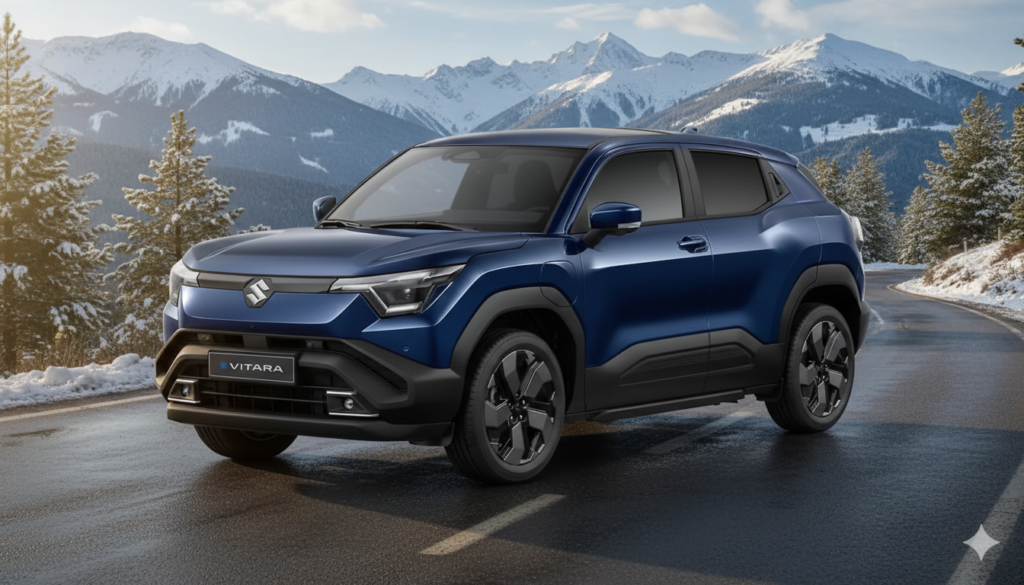
The Maruti Suzuki e Vitara has arrived as Maruti’s first electric vehicle in India, and its pricing has sparked immediate comparisons in the growing mid-size electric SUV segment. With introductory prices starting at Rs 15.99 lakh (ex-showroom) for the Delta variant with the 49kWh battery pack, and going up to Rs 19.79 lakh for the top-spec Alpha with the 61kWh battery (Rs 20.01 lakh for dual-tone options), it makes a compelling entry. Maruti also offers a Battery-as-a-Service (BaaS) model, dropping the upfront cost to Rs 10.99 lakh for the base Delta + Rs 3.99 per km battery rental, with higher variants starting around Rs 11.99-14.29 lakh under BaaS.
This positioning deliberately avoids a head-on clash with premium rivals like the Hyundai Creta Electric (starting around Rs 18-20 lakh and going up to Rs 24-25 lakh for top variants) or the Mahindra BE 6. Instead, the e Vitara sits much closer to the MG Windsor EV, which ranges from about Rs 14 lakh to Rs 18.5 lakh (ex-showroom) depending on the variant, with its own BaaS options starting even lower (around Rs 9.99-10 lakh + rental).
Why the e Vitara Feels Closer to the Windsor EV Than the Creta Electric
On paper and in the market, the e Vitara aligns more with the Windsor EV in terms of target buyer, affordability, and practical appeal rather than directly challenging the more premium Creta Electric.
- Pricing Edge and Accessibility — The e Vitara’s standard pricing (Rs 15.99-19.79 lakh) overlaps heavily with the upper end of the Windsor EV lineup, but its BaaS scheme makes the entry barrier lower for cost-conscious buyers. The Windsor EV holds a slight advantage in base pricing (starting ~Rs 14 lakh without BaaS), but the e Vitara counters with Maruti’s vast service network, brand trust, and potentially lower long-term ownership costs. In contrast, the Creta Electric starts higher (around Rs 18 lakh+) and targets buyers willing to pay a premium for Hyundai’s refinement and brand cachet.
- Range and Battery Options — The e Vitara offers two battery packs: 49kWh (claimed 440 km range) in the base Delta, and 61kWh (claimed 543 km range) in Zeta and Alpha variants. This gives it a clear advantage over the Windsor EV’s 38kWh (332 km) or 52.9kWh (449 km) options. For buyers prioritizing longer drives without frequent charging, the e Vitara pulls ahead significantly. The Creta Electric offers competitive ranges (around 420-510 km depending on the 42kWh or 51.4kWh pack), but at a higher price point.
- Performance and Practicality — Both the e Vitara and Windsor EV are front-wheel-drive setups suited for urban and highway use. The e Vitara’s higher-spec motor delivers up to 172 bhp and 193 Nm, with strong real-world usability. The Windsor EV emphasizes comfort features like reclining rear seats and a focus on lounge-like interiors. The Creta Electric, meanwhile, offers more powerful options (up to ~169 bhp in higher trims) and a more premium driving feel, but it comes at a cost.
- Features and Ownership — The e Vitara includes modern touches like Level 2 ADAS, ventilated seats, a large touchscreen, and a 7.4kW home charger (often complimentary with installation). Maruti’s nationwide network gives it an edge in service and resale value. The Windsor EV stands out with unique elements like 135° reclining rear seats and a tech-forward cabin. The Creta Electric brings Hyundai’s premium build, better materials, and stronger brand perception in the premium compact SUV space.
Which One Should You Choose?
If you’re shopping in the Rs 14-20 lakh electric SUV bracket and value longer range, Maruti’s reliability, and a lower effective upfront cost via BaaS, the e Vitara makes strong sense. It positions itself as a practical, feature-packed alternative that’s closer in spirit and pricing to the Windsor EV—offering more range and Maruti’s ecosystem advantages without jumping into the pricier territory of the Creta Electric.The MG Windsor EV remains a solid pick for those who prioritize unique comfort features (like the reclining seats) and a slightly lower entry price, especially if urban commuting is your main use case.The Hyundai Creta Electric, however, appeals to buyers seeking a more premium experience, better perceived build quality, and Hyundai’s established EV credentials—but you’ll pay noticeably more for it.Ultimately, the e Vitara reshapes the entry-level to mid-premium EV SUV battle by bridging affordability with impressive specs. If range and value matter most, it’s hard to overlook right now—especially with Maruti’s massive reach poised to accelerate EV adoption in India. Test drives will be key to see which one feels right for your needs.