In a market as competitive and price-sensitive as India, a new electric car brand typically takes years to establish itself. But one newcomer has bucked the trend: VinFast, a Vietnamese automaker that entered the Indian market in September 2025, is now the country’s fourth-largest electric vehicle seller. It has overtaken brands that have been here far longer, and it has done so while another global giant, Tesla, is still finding its feet in the premium segment. So, how did VinFast move so fast, and what does this tell us about where India’s EV market is headed?
Let’s start with the data. In just six months, VinFast has sold 1,161 electric cars in India.That puts it ahead of Hyundai, BMW, Kia, and BYD in the EV pecking order. During a comparable period, Tesla, which launched in July 2025, sold around 225 units.In January 2026, VinFast sold 336 vehicles, holding on to its fourth position for the second month in a row. Market leaders remained Tata Motors, followed by JSW MG Motor, and Mahindra Electric. Since the entry of both global brands, VinFast has emerged as a strong contender in a market where electric car sales reached 176,817 units in 2025 alone, more than doubling from previous years.
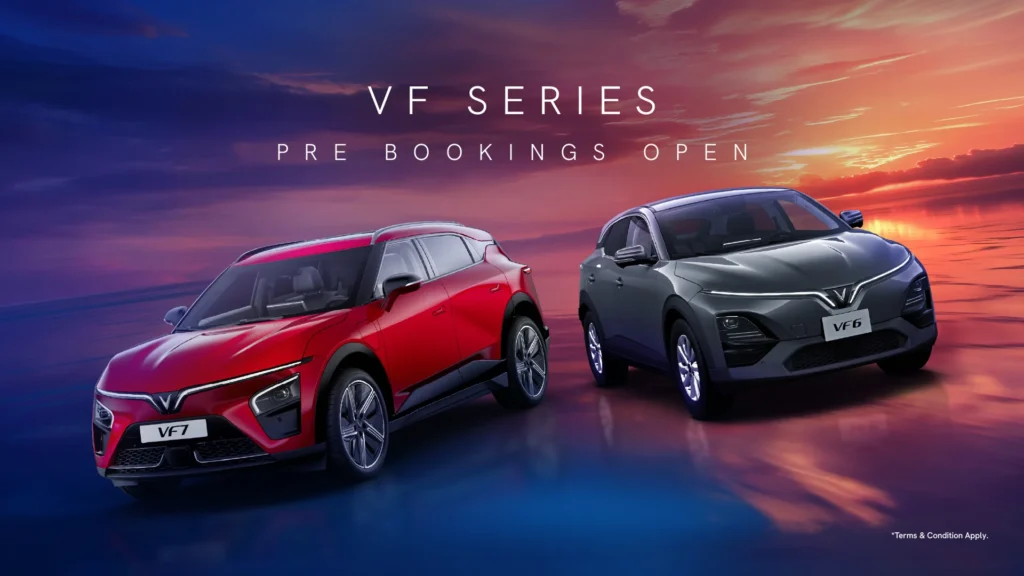
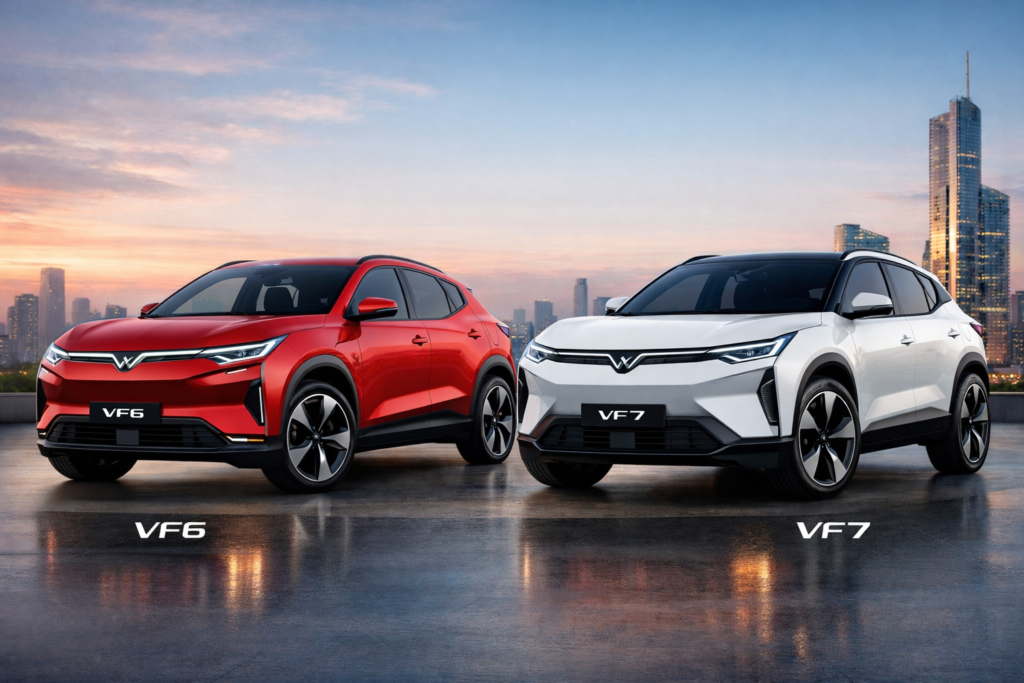
So, what’s working for VinFast? First, pricing. It entered the 16 to 25 lakh rupees bracket with its VF6 and VF7 electric SUVs. That’s the most active and fastest-growing segment in India’s EV car market, appealing to price-conscious buyers seeking value without compromising on features. Second, local manufacturing. Instead of waiting for policy clarity, VinFast set up an assembly plant in Thoothukudi, Tamil Nadu, with a capacity of 50,000 units a year, scalable to 150,00. Local assembly helped VinFast keep prices aggressive and avoid high import duties that plague fully imported models.
Third, speed of execution. VinFast built a network of 35 showrooms with plans to expand to 75 outlets by the end of 2026, including tier-3 and tier-4 cities. This early push disrupted rivals, forcing discounts, EMI relief, and warranty extensions, especially in EV-heavy states like Maharashtra, Delhi, and Karnataka.Now let’s talk about Tesla. Tesla’s impact so far has been limited but not insignificant. Nearly 76% of Tesla registrations have come from Mumbai and Delhi, where its only two showrooms operate. High prices and imported models have restricted scale. But even then, Tesla has outsold brands like Volvo and Mercedes-Benz in the premium EV space. In its core urban strongholds, Tesla has even outperformed VinFast. Now, VinFast is betting big on India. The company has committed $2 billion to its India operations, with $500 million already invested in the second phase for expansion.This will broaden production to include electric buses and e-scooters and position India as an export hub.
So, in a fast-expanding EV market, what happens in these early years may determine the long-term leaders. VinFast’s success highlights the power of targeting the mass-market segment with affordable, locally produced vehicles, while Tesla’s slower start underscores the challenges of premium pricing in a cost-sensitive economy. As India’s EV sales surged 77% in 2025 to capture about 8% of new vehicle registrations, the market is clearly heading toward broader adoption driven by mid-range options, rapid infrastructure growth, and policy support like the PM E-DRIVE scheme. With players like VinFast diversifying into buses and scooters, and established giants like Tata and Mahindra ramping up, the next phase could see EVs penetrating smaller cities and commercial fleets, accelerating India’s shift to sustainable mobility.