The iconic Land Rover Freelander nameplate is making a comeback after more than a decade. Discontinued in 2015 following two generations (1997–2014), the name is being revived under a joint venture between China’s Chery and Britain’s Jaguar Land Rover (JLR). The first new model—a plug-in hybrid (PHEV) SUV—is set for its official global unveiling on March 31, 2026
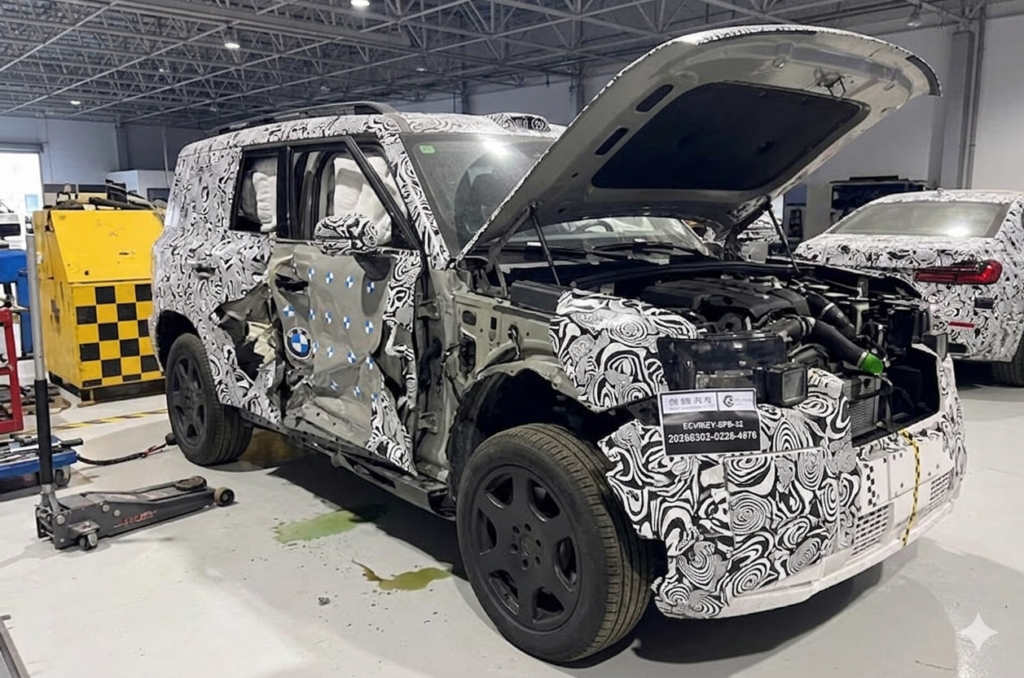
Just days before the reveal, images of heavily damaged, crash-tested prototypes surfaced on Chinese websites such as MyDrivers and CarNewsChina. These photos, believed to come from C-NCAP (China New Car Assessment Programme) testing, show camouflaged test mules with bent panels, cracked lights, detached bumpers, and visible structural details—hardly the glamorous debut the marketing team hoped for, but they provide an early, unfiltered look at the vehicle’s design and build quality.
Unlike the original Freelander, which was positioned as Land Rover’s more affordable, entry-level off-roader, the revived model operates as a standalone New Energy Vehicle (NEV) brand under the Chery-Jaguar Land Rover (CJLR) joint venture. It will not carry the full Land Rover badge and is developed primarily for the Chinese market, with potential for global expansion (starting possibly in regions like the Middle East).
Jaguar Land Rover China president Qing Pan described the new Freelander as one that “echoes the original spirit of Freelander but [is] brought up to date to appeal to discerning, technologically savvy Chinese consumers.” It aims to blend the rugged, adventurous character of the classic model with modern electrification and advanced tech.
In China, the new Freelander is expected to replace locally produced versions of the Land Rover Discovery Sport and Range Rover Evoque, whose production at the CJLR facility is winding down. The joint venture has invested significantly in upgrading its plant for intelligent NEV production.
Even in their battered post-crash state, the leaked images reveal several key design elements:
- Boxy, rugged proportions reminiscent of the original Freelander and evoking a “mini-Defender” or squared-off aesthetic.
- Prominent ‘Freelander’ lettering on the front (clamshell bonnet) and larger badging on the tailgate.
- Modern LED lighting signatures.
- A coupe-like roofline on what appears to be a mid-to-large SUV (some reports mention a six-seater configuration).
- Interior glimpses showing integrated front seat belts and a contemporary dashboard layout.
- Six-lug wheels suggesting enhanced structural reinforcement for better durability.
The vehicle is built on Chery’s T1X architecture (also referred to in some contexts as related to the E0X platform for electrified variants). This modular platform underpins several Chery-group SUVs and supports hybrid and electric powertrains. It is not expected to match the full off-road prowess of flagship Land Rover/Defender models but should offer capable performance for its segment.
The inaugural model will launch as a plug-in hybrid (PHEV), aligning with China’s strong demand for new energy vehicles. Details are still emerging, but expectations include:
- A 1.5T turbocharged engine (likely from Chery’s Ateco family) paired with electric motors.
- Possible dual- or triple-motor all-wheel-drive setups.
- Batteries supplied by CATL, with advanced components like the latest Qualcomm Snapdragon chips and Huawei Qiankun intelligent driving assistance.
Future variants under the Freelander brand are expected to include extended-range electric vehicles (REEV) and potentially full battery-electric versions. The focus is on efficiency, performance, and tech features tailored to Chinese buyers.
The crash test images themselves highlight the vehicle’s focus on safety. Prototypes appear to have undergone rigorous side-impact and other evaluations, with visible C-NCAP markings. While exact ratings are not yet available, the structural integrity shown even after testing suggests solid engineering from the Chery-JLR collaboration.
Positioned as a technologically advanced, electrified SUV, the new Freelander targets premium yet accessible buyers in China’s competitive new energy SUV segment. It combines British design heritage with Chinese manufacturing efficiency and supply chain strengths (e.g., CATL batteries, Huawei ADAS).Production is slated to ramp up after the March 31 reveal, with market launch expected later in 2026. Global availability remains uncertain but is under consideration.The revival of the Freelander nameplate represents a strategic shift for the CJLR joint venture—moving away from traditional JLR models toward a dedicated NEV lineup. Whether it successfully captures the adventurous spirit of the original while meeting modern expectations for electrification and smart features will become clearer once full details and official images are released on March 31.