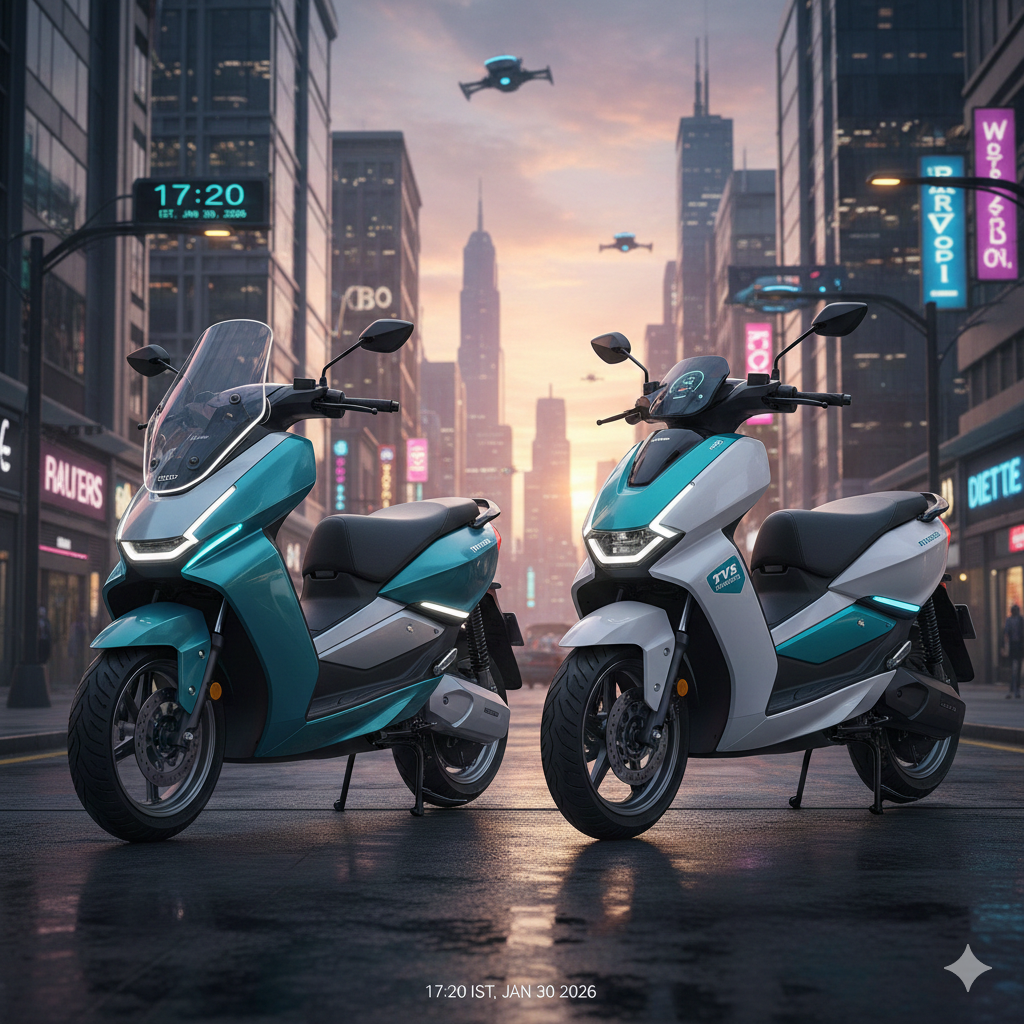
TVS Motor Company, a leading force in India’s electric two-wheeler segment, is gearing up for significant growth in its EV lineup. With the TVS iQube firmly established as the country’s bestselling electric scooter and the recently launched TVS Orbiter attracting steady interest, the company is now reviewing plans to expand its electric two-wheeler manufacturing capacity. This comes as annual EV production edges closer to 5 lakh units, driven by robust demand and improving supply conditions.
In comments made during the Q3 FY26 earnings call on January 29, 2026, KN Radhakrishnan, CEO and Director of TVS Motor Company, highlighted the positive trajectory. He noted that rising consumer interest in the company’s EV portfolio, coupled with easing supply-side constraints (including recent improvements in magnet availability for EV components), has prompted a fresh look at capacity additions.
The TVS iQube continues to dominate the market. Having surpassed 8 lakh cumulative domestic sales by late December 2025, it remains the undisputed leader in electric scooter registrations. The model has seen accelerated growth in recent years, with strong performance in premium and feature-rich variants offering ranges up to 212 km (IDC) and quick charging options.
In Q3 FY26 (October-December 2025), TVS’s electric two-wheeler sales — predominantly driven by the iQube — grew 40% year-on-year to a record 1.06 lakh units, marking the first time the company crossed the one-lakh quarterly mark in EVs. This outpaced broader industry growth, underscoring iQube’s appeal for urban commuters seeking reliability, connectivity, and performance.
Launched in mid-2025 as an entry-level option (starting around ₹1.05 lakh ex-showroom), the TVS Orbiter targets budget-conscious buyers with a focus on maximizing range (up to 158 km) and everyday usability. Radhakrishnan described demand for the Orbiter as “encouraging,” emphasizing that it serves a distinct customer segment compared to the more premium iQube.
Importantly, the two models are not cannibalizing each other — both are growing independently. Orbiter production is ramping up toward 10,000 units per month, with expectations of further increases as component supplies stabilize.
With combined output from iQube and Orbiter approaching levels that could push annual EV volumes near 5 lakh units, TVS is actively reviewing expansion plans for the next financial year. Investments will target additional capacity at facilities like Hosur to support higher volumes and meet escalating demand.This move aligns with TVS’s broader strategy in the EV space, where the company has outperformed industry averages despite temporary hurdles like component shortages. Overall company performance in Q3 FY26 was stellar, with record quarterly sales of 15.44 lakh units (two- and three-wheelers combined) and operating revenue up 37% to ₹12,476 crore.
As India accelerates toward widespread EV adoption — backed by government incentives, expanding charging infrastructure, and growing environmental awareness — TVS Motor is positioning itself as a frontrunner. The dual success of iQube and Orbiter demonstrates the company’s ability to cater to diverse segments, from premium urban riders to value-seeking first-time EV buyers.
With capacity enhancements on the cards and supply chains normalizing, TVS is set to sustain its momentum and capture even greater share in the fast-evolving electric two-wheeler market. The road ahead looks electric — and increasingly crowded with TVS scooters.