The Toyota Urban Cruiser Ebella marks Toyota’s much-anticipated entry into India’s electric vehicle market. As the brand’s first mass-market all-electric SUV in the country, it arrives as a close sibling to the Maruti Suzuki e-Vitara under the Toyota-Maruti partnership. Launched in early 2026, the Ebella brings Toyota’s signature styling touches to a proven EV platform, targeting buyers who prioritize reliability, looks, and intercity capability in the competitive mid-size electric SUV segment.
While the Ebella shares its core architecture, powertrain, and most features with the e-Vitara, Toyota has introduced subtle but noticeable changes—primarily cosmetic and premium tweaks—to differentiate it. Here’s a detailed look at what sets the Ebella apart, its strengths and weaknesses, who it suits best, and real-world driving impressions.
Key Differences from the Maruti Suzuki e-Vitara
The Ebella is largely a rebadged e-Vitara with minimal mechanical alterations, but Toyota has applied targeted updates:
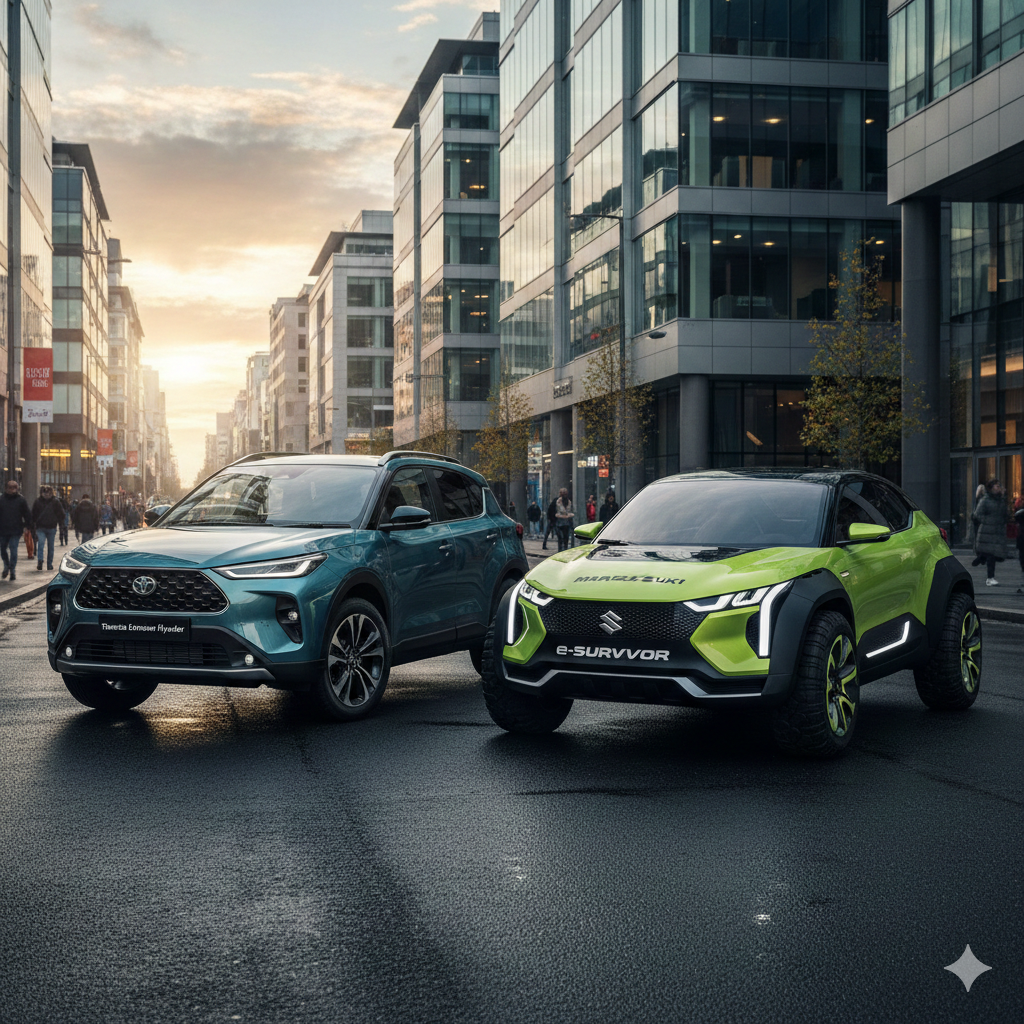
- Exterior Design — The front end stands out with Toyota’s signature hammerhead grille design, revised LED DRLs, projector headlamps (self-levelling), and a smoother bumper without fog lamps (replaced by reflectors). The grille features active flaps for aerodynamics, a common EV trait. Rear taillights adopt a connected light bar with a tri-element signature, while the housing remains similar. Badging includes “Battery Electric Vehicle” labels and Toyota emblems.
- Key and Convenience — The smart key carries the Toyota logo but functions identically—no remote window control or special unlock features.
- Interior and Audio — The big upgrade is the premium JBL sound system (replacing the Infinity unit in the e-Vitara), delivering clearer, more immersive audio. The instrument cluster shows “Ebella” branding alongside Toyota logos. The infotainment screen lacks Toyota-specific graphics but offers more connected car features than the Maruti counterpart.
- Other Elements — No changes to seats, console, textures, colors, sunroof, or overall cabin layout. The Ebella retains 18-inch wheels, parking sensors, 360-degree camera, and typical EV features like one-touch window operation (but not via key).
- Mechanical Tweaks — Suspension tuning feels subtly refined for better composure over potholes and breakers, with less dive compared to the e-Vitara.
Powertrain options remain shared: a 49 kWh battery (around 440 km ARAI range, ~142 hp) or 61 kWh (up to 543 km ARAI, ~172 hp), front-wheel drive, and linear power delivery.
Strengths (Pros) of the Toyota Urban Cruiser Ebella
The Ebella shines in several areas that appeal to practical buyers:
- Styling — Widely praised as one of the best-looking EVs in the ₹20 lakh segment, thanks to the bold hammerhead front, aerodynamic alloys, and confident SUV stance.
- Ride and Handling — Excellent suspension setup absorbs Indian road imperfections well, with good composure, minimal dive, and impressive handling for the class.
- Reliability and Build Quality — Toyota’s reputation for durability, combined with Suzuki’s reliable manufacturing (export-spec standards), inspires confidence. Mechanical components feel robust.
- Features and Safety — Well-equipped with wireless Android Auto/Apple CarPlay, ventilated seats, 10-way powered driver seat, Level 2 ADAS, blind-spot monitoring, 360-degree camera, 7 airbags, ESP, and more. The JBL audio adds premium appeal.
- Intercity Range — The 61 kWh variant excels for highway trips (e.g., 250–300 km commutes like Jaipur-Delhi), offering real-world usability beyond many rivals.
Weaknesses (Cons) of the Toyota Urban Cruiser Ebella
Despite its strengths, some areas fall short of modern EV expectations:
- Cabin Feel and Execution — Certain plastics and fabric mixes feel low-rent; glossy surfaces scratch easily and show stains. Feature implementation lags—regenerative braking requires multiple screen steps (no paddle shifters like competitors), and ergonomics/screen placement feel dated for 2026.
- Efficiency — Real-world consumption trails segment leaders; range per charge feels slightly lower than expected for the battery size.
- Space Utilization — As a non-born-EV (adapted platform), cabin space isn’t maximized. Rear seats offer limited thigh support, recline, and under-thigh comfort; boot space is modest with no frunk.
- Ambiguity and Pricing Sensitivity — Ongoing uncertainty around final pricing, resale value, and battery warranty/buyback creates hesitation. Missing feel-good features (e.g., openable sunroof, rear sunshades, electric tailgate) hurt at higher prices.
- Other Nitpicks — Noisy cabin over rough roads, bulky center console intrusion, and limited rear visibility in some scenarios.
Who Should Buy the Toyota Urban Cruiser Ebella?
- Toyota loyalists seeking the brand’s first EV in India.
- Buyers prioritizing standout looks in the segment.
- Those needing reliable intercity range and Toyota/Maruti’s resale reputation (with potential buyback offers).
- Drivers valuing ride comfort, handling, and premium audio over ultimate efficiency or space.
Who Should Avoid It?
- Feature enthusiasts expecting cutting-edge execution (e.g., seamless regen controls).
- Buyers wanting premium cabin materials and feel at ₹20+ lakh.
- Efficiency-focused users comparing cost-per-km/range.
- Families prioritizing generous rear space, thigh support, or large boot/frunk.
Drive Impressions
On the road, the Ebella feels composed and effortless. Power delivery is smooth and linear across Eco, Normal, and Sport modes—no dramatic punch but predictable acceleration (strong in Sport). Suspension tuning impresses: it handles breakers and potholes with less body dive than the e-Vitara, maintaining stability without excessive softness. Steering and ergonomics carry over familiar traits, with good visibility.Noise insulation lets in more suspension sounds over rough patches, but overall comfort suits long drives. Range expectations align with real-world use—suitable for mixed city/highway without anxiety for most owners.
Verdict
The Toyota Urban Cruiser Ebella succeeds as a handsome, reliable EV with Toyota polish on a solid base. Its looks, ride quality, and intercity prowess make it compelling—if priced competitively (ideally ₹18–20 lakh top-end). At higher levels, missing EV-specific optimizations and execution flaws become harder to overlook. For Toyota fans or style-conscious buyers, it’s a strong contender; others may wait for rivals offering more refinement or value. As Toyota’s EV journey begins in India, the Ebella sets a practical foundation.