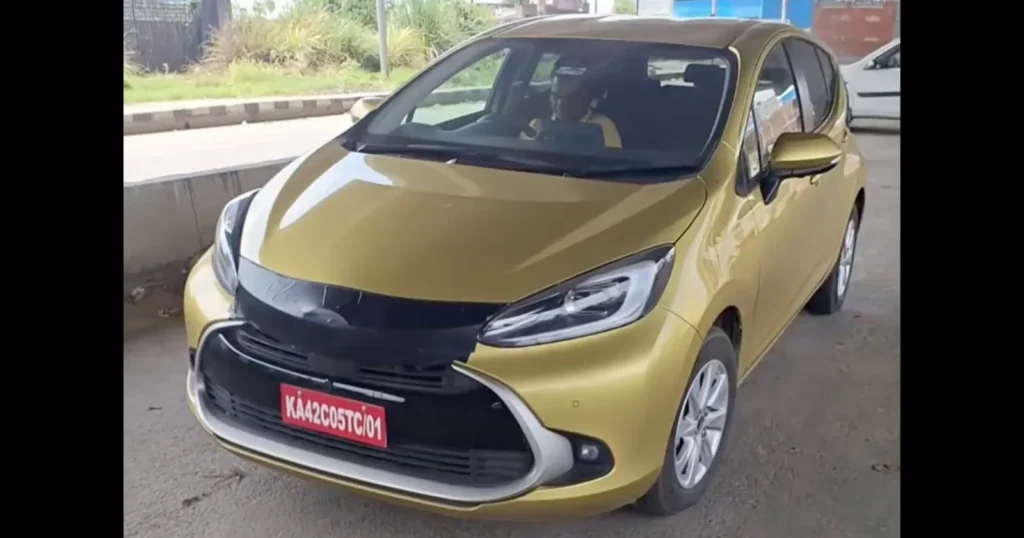
A few months ago, eagle-eyed automotive enthusiasts and spotters caught sight of the Toyota Aqua Hybrid cruising on Indian roads, sparking immediate speculation about a potential launch. However, despite the excitement, we remain cautious about confirming any official rollout. Sources close to the matter suggest that this could simply be Toyota evaluating the feasibility of strong hybrid technology in the Indian market – much like the ongoing pilot programmes for the hydrogen fuel-cell Toyota Mirai and Hyundai Nexo. In other words, the Aqua you saw might just be part of an extended real-world testing phase rather than a precursor to showroom arrivals.
What is the Toyota Aqua Hybrid?
For those unfamiliar, the Toyota Aqua (sold as the Prius c in some markets) is a compact, efficiency-focused hatchback that has been a bestseller in Japan for over a decade. The latest generation, launched in 2021, takes the hybrid game even further with impressive numbers:
- Claimed fuel efficiency: Up to 35.8 kmpl (Japanese test cycle, real-world figures will be lower but still class-leading)
- Powertrain: 1.5-litre three-cylinder Dynamic Force petrol engine + electric motor
- Total system output: 89.8 bhp and 120 Nm of torque
- Transmission: e-CVT
- Platform: Toyota New Global Architecture – B (TNGA-B), shared with the Yaris and upcoming models
- Drivetrain options: Front-wheel drive (2WD) standard, with an optional E-Four all-wheel-drive system using an additional rear electric motor
- Infotainment: Large 10.5-inch touchscreen with Apple CarPlay and Android Auto support (in select markets)
The Aqua is essentially Toyota’s answer to buyers who want Prius-level efficiency in a smaller, more affordable, and city-friendly package.
Why is Toyota testing the Aqua in India?
India is slowly warming up to electrified vehicles, but strong hybrids (self-charging, no plug required) are gaining particular traction because they don’t need charging infrastructure and qualify for lower taxes than pure ICE cars in many states. Toyota already dominates this segment with the Hyryder and Innova Hycross, both built locally with Maruti Suzuki under the Toyota-Suzuki alliance. Bringing in the Aqua could make sense for the following reasons:
- Filling the premium hybrid hatchback gap – Currently, there’s no direct rival to the Aqua in India. The Maruti Baleno/Toyota Glanza hybrids are mild hybrids at best, while the Honda City e:HEV plays in a higher sedan segment.
- Local production potential – The TNGA-B platform is already used for the Urban Cruiser Taisor and upcoming Starlet Cross, so localising the Aqua wouldn’t be a stretch.
- Tax benefits – Hybrids under 4 metres with engines below 1.5L enjoy significantly lower GST (28% + 1–3% cess vs 28% + 15–22% cess for regular petrol cars).
However, Toyota India has remained tight-lipped, and the absence of any official statement keeps the launch probability in the “wait-and-watch” zone.
Should we get excited?
Possibly – but temper your expectations for now. The Aqua would be a brilliant addition to Toyota’s Indian line-up, especially for urban buyers looking for 30+ kmpl efficiency without the range anxiety of EVs. Priced competitively (likely ₹12–16 lakh if localised), it could give the Honda City e:HEV sedan a serious run for its money in the efficiency wars.
Until Toyota makes an official announcement, treat the Aqua sightings as an encouraging sign that the company is seriously exploring more strong-hybrid options for India – and that’s good news for anyone tired of high fuel bills.Stay tuned. If the Mirai and Nexo pilots are any indication, Toyota loves to test the waters thoroughly before diving in. The Aqua might just be the next big splash – or simply another feasibility study. Only time will tell.