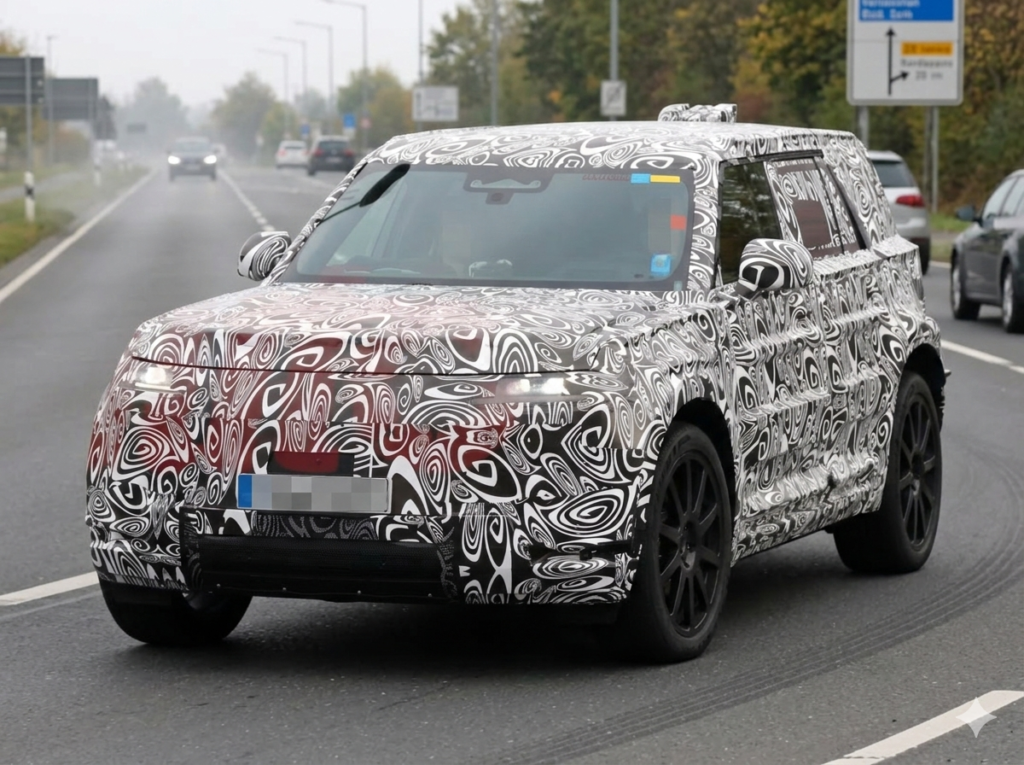
The iconic Defender nameplate is preparing for a major evolution. According to industry sources, Jaguar Land Rover is developing a compact, all-electric SUV—tentatively called the Defender Sport EV—that is expected to debut in 2027. While the brand promises “class-leading” electric performance and off-road ability, insiders suggest the original Defender will still remain the benchmark for hardcore terrain.
Here’s everything we know so far.
The upcoming Defender Sport EV is expected to be positioned as a “baby Defender,” sitting below the current 90 and 110 models in size. Designed primarily for urban buyers and younger customers, the new model will focus on:
- Compact proportions
- Fully electric powertrain
- Modern digital interior
- Lifestyle-oriented design
Despite its smaller footprint, Land Rover aims to retain the rugged DNA that has defined the Defender for decades.
To maintain its off-road reputation in the EV era, the Defender Sport is expected to feature advanced electric-specific technologies, including:
- Dual-motor all-wheel drive for instant torque delivery
- Independent motor control for precise traction management
- Advanced terrain response system adapted for EVs
- Underbody battery protection for rough conditions
- Regenerative braking tuned for off-road use
Electric motors offer instant torque, which can be a major advantage on steep climbs and loose surfaces. Land Rover believes this will help the Sport EV compete with traditional 4x4s in many real-world scenarios.
Despite ambitious claims, engineers face several limitations when translating classic Defender capability into a compact EV.
A smaller body means:
1.Size Constraints
- Reduced ground clearance
- Shorter suspension travel
- Limited approach and departure angles
This could restrict extreme off-road performance.
2. Wheel Articulation
Traditional Defenders are known for excellent wheel articulation. EV platforms, with flat battery packs under the floor, often limit suspension movement. This may affect performance on rocky or uneven terrain.
3. Aerodynamic Efficiency vs Rugged Design
EVs demand good aerodynamics to maximize range. Howeve
The Defender Sport EV is expected to be based on a next-generation electric platform designed for compact and mid-size SUVs.
Expected Specifications (Unofficial)
| Feature | Likely Range |
|---|---|
| Battery | 60–80 kWh |
| Range | 400–500 km (WLTP) |
| Drive | Dual-motor AWD |
| 0–100 km/h | Under 6 seconds |
| Charging | Fast DC + AC home charging |
The model is likely to support ultra-fast charging to suit long-distance touring and adventure travel
Interior: Tech-Focused and Premium
Inside, the Sport EV is expected to be far more digital than traditional Defenders.
Anticipated Highlights
- Large curved touchscreen
- Over-the-air software updates
- AI-based navigation and terrain guidance
- Sustainable interior materials
- Connected vehicle features
While ruggedness remains important, comfort and technology will play a bigger role in attracting urban buyers.
Despite all the innovation, Land Rover insiders reportedly admit that the electric Sport version won’t fully replace the traditional Defender in extreme conditions.
Reasons include:
- Higher towing capacity of ICE models
- Longer range in remote areas
- Faster refueling vs charging
- Proven durability in extreme climates
As a result, combustion and hybrid Defenders will continue alongside the EV version for the foreseeable future.
The Defender lineup is being positioned as a full sub-brand rather than a single model.
Future Lineup May Include:
- Defender Sport EV (Compact Electric)
- Defender 90/110 (ICE & Hybrid)
- Defender 130 (Large Family/Utility SUV)
- Special off-road editions
This strategy mirrors what brands like Range Rover and Discovery have done in the past.
Expected Launch and Market Positioning
Timeline
- Prototype testing: 2025–2026
- Global debut: 2027
- Market rollout: Late 2027 onwards
Positioning
The Defender Sport EV will likely compete with:
- Premium compact electric SUVs
- Lifestyle-oriented off-roaders
- Urban adventure vehicles
Pricing is expected to be more accessible than full-size Defenders, making it a gateway into the brand.
The Defender Sport EV represents Land Rover’s attempt to blend tradition with electrification. It promises strong electric performance, modern technology, and credible off-road ability in a compact package.
However, due to limitations in size, suspension travel, and battery packaging, it is unlikely to surpass the original Defender in extreme conditions.
Instead, it will serve as a modern, urban-friendly adventure SUV—while the classic Defender continues to dominate serious off-road terrain.