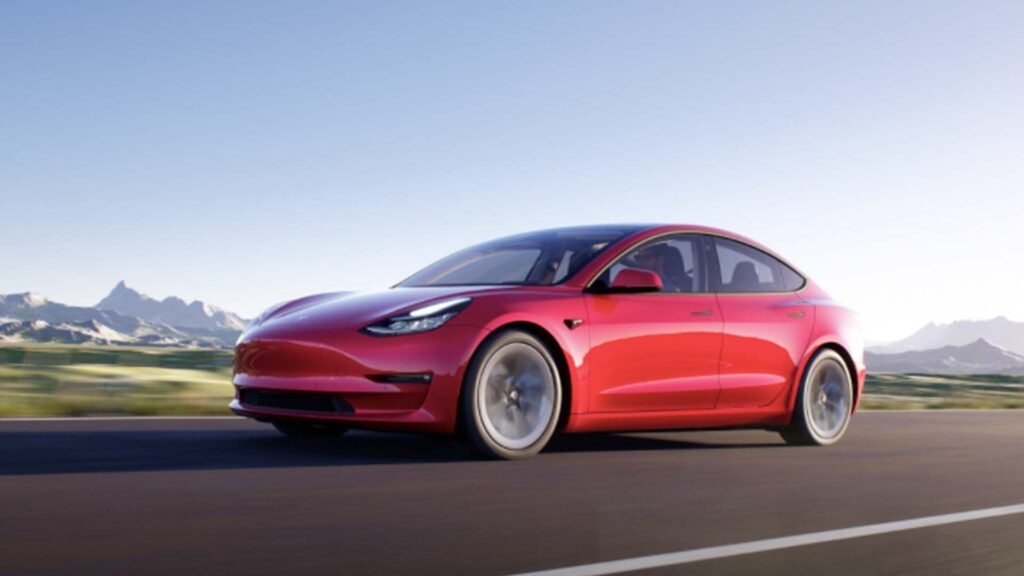
In a market where affordability reigns supreme, Tesla is pitching its electric vehicles not just as futuristic rides, but as smart financial investments. The California-based EV giant, led by Elon Musk, is making its first major push into India with the Model Y, promising buyers substantial long-term savings despite the steep upfront costs. According to Sharad Agarwal, Tesla’s India General Manager, owners could recoup about one-third of the Model Y’s hefty 6 million rupee ($67,220) price tag through fuel and maintenance savings over the next four to five years.
This optimistic projection comes amid Tesla’s cautious entry into one of the world’s fastest-growing auto markets. Since opening bookings for the Model Y in mid-July, the company has sold a modest 140 units as of late November. While that’s a promising start for a luxury brand in a price-sensitive economy, it underscores the challenges ahead for Tesla in a country dominated by budget-conscious consumers and entrenched two-wheeler culture.
Agarwal’s comments, shared exclusively with Reuters on Wednesday, highlight Tesla’s strategy to appeal to Indian buyers’ wallets rather than just their sense of innovation. “Plus it has a high resale value. The cost of home charging is one tenth of petrol prices,” he added, emphasizing the Model Y’s economic edge over traditional internal combustion engine vehicles.
In India, where gasoline prices hover around 100 rupees per liter and fluctuate with global oil dynamics, the math for EVs looks compelling. Home charging for the Model Y—using standard outlets or Tesla’s Wall Connector—could cost as little as 5-7 rupees per unit of electricity, translating to roughly 1-2 rupees per kilometer driven. By contrast, a comparable petrol SUV might guzzle 10-15 rupees per kilometer, factoring in India’s average fuel efficiency.Over 4-5 years, assuming an average annual mileage of 15,000 kilometers (common for urban Indian drivers), Tesla estimates savings of around 2 million rupees on fuel alone. Maintenance costs, notoriously high for petrol and diesel vehicles due to oil changes, spark plugs, and transmission repairs, drop dramatically for EVs. No engine oil, fewer moving parts, and regenerative braking mean brake pads last longer—potentially halving routine service bills.
This isn’t just hype; it’s backed by global Tesla data adapted for Indian conditions. In the U.S., Model Y owners report lifetime savings exceeding 30% on operating costs compared to gas counterparts. Agarwal’s one-third recoup figure aligns with that, factoring in India’s lower electricity rates (subsidized in many states) and the Model Y’s efficient 4680 battery cells, which promise up to 500 kilometers of range per charge.
Yet, the road to mass adoption is paved with tariffs. Import duties in India inflate the Model Y’s price tag to over 60 lakh rupees for the base Rear-Wheel Drive variant—nearly three times the average 22 lakh rupees at which most domestic EVs, like Tata’s Nexon EV or MG’s ZS EV, are sold. Compared to its U.S. starting price of about $40,000 (roughly 33 lakh rupees at current exchange rates), the Indian Model Y commands a 70% premium, largely due to a 100% customs duty on fully imported vehicles over 40,000 units annually.
Tesla’s response? A measured approach. The company has been lobbying for reduced duties and local manufacturing incentives, but for now, it’s importing via the Comprehensive Economic Partnership Agreement (CEPA) with the UAE to shave off some costs. Musk himself teased a potential Gigafactory in India during a recent earnings call, hinting at production by 2027 that could slash prices by 30-40%.
India’s electric vehicle market is accelerating, but it’s still a speck on the horizon. EVs accounted for just over 5% of overall car sales in the fiscal year ending March 2025, up from 2% the previous year, thanks to government incentives like the FAME-III scheme offering up to 1.5 lakh rupees in subsidies and road tax waivers. Prime Minister Narendra Modi’s green push aims for 30% EV penetration by 2030, but challenges persist: sparse charging infrastructure (only about 12,000 public stations nationwide), range anxiety in rural areas, and battery supply chain dependencies on China.
Tesla’s entry injects premium competition into a field led by homegrown players like Tata Motors (over 60% market share) and Mahindra. The Model Y’s Autopilot features, over-the-air updates, and Supercharger network (with plans for 100 stations in major cities by 2026) could lure urban elites in Mumbai, Delhi, and Bangalore. Early adopters—tech-savvy professionals and celebrities—have already boosted buzz, with social media abuzz over test drives showcasing the car’s 0-100 km/h sprint in under 5 seconds
Agarwal’s fuel savings narrative is a clever counter to the “EVs are expensive” trope, positioning the Model Y as a depreciating asset that pays for itself. High resale values—projected at 60-70% after three years, per Blue Book India estimates—further sweeten the deal, outpacing many ICE vehicles.As Tesla ramps up deliveries and eyes policy tailwinds from the upcoming Union Budget, the next 12 months will test whether Indian consumers bite. If savings materialize as promised, the Model Y could spark a luxury EV boom. For now, it’s a high-stakes gamble: Will the allure of green savings outweigh the sticker shock in a nation where most dream of their first car, not their first Tesla?