Tata Motors is charting an ambitious course in India’s evolving electric vehicle landscape, balancing its dominant mass-market EV presence with a bold push into the premium segment. Recent developments highlight two key strategic shifts: the confirmed 2027 debut of its luxury EV marque Avinya, led by the production-ready Avinya X first showcased in evolved form at the Bharat Mobility Global Expo 2025, and a rethink of its dedicated Tata.ev showroom strategy as EVs become mainstream rather than niche.
Avinya: Tata’s Leap into Luxury Electric MobilityTata Motors has officially confirmed that its Avinya brand—positioned as a premium, standalone luxury EV marque—will make its market debut in 2027. This timeline marks a delay from earlier expectations (some sources previously pointed to 2026), allowing more time for refinement on Tata’s next-generation Gen 3 born-electric architecture.
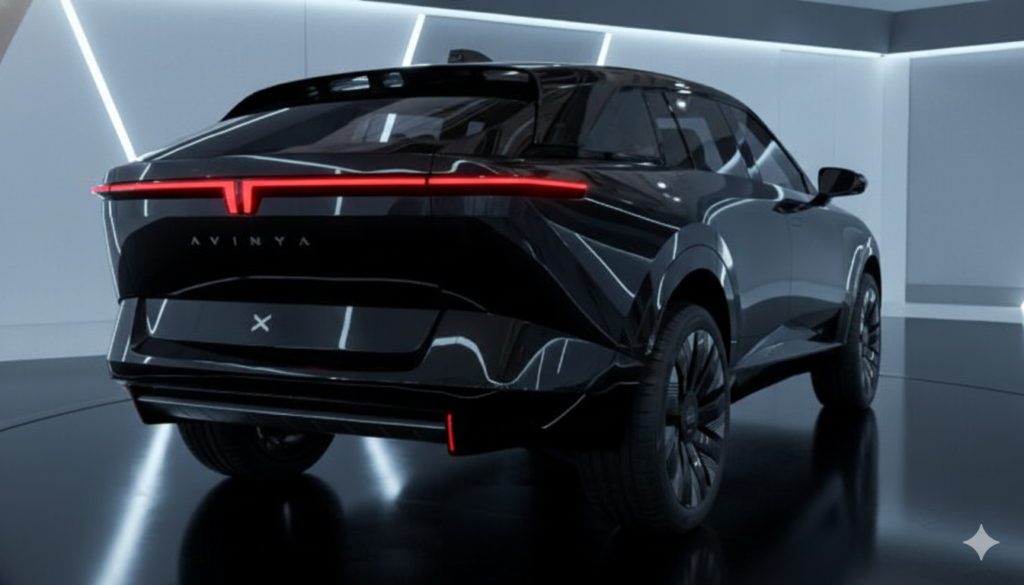
The flagship model leading this charge is the Avinya X, previewed as a near-production concept at the Bharat Mobility Global Expo 2025 (held in January 2025). This evolved version built on the original 2022 Avinya concept, featuring a sleeker, more production-oriented design inspired by modern luxury cues—think Riviera speedboat aesthetics, bold LED signatures, a clean minimalist interior, and advanced sustainable elements.
The Avinya X (and subsequent models under the brand) will ride on a modified version of JLR’s EMA platform adapted for Tata, promising superior structural efficiency, rapid charging, long-range capabilities, and a focus on well-being, innovation, and sustainability. Positioned above Tata’s current EV lineup, it targets premium rivals like the Hyundai Ioniq 5, Kia EV6, Tesla Model Y, and even Volvo models, with an expected starting price around ₹45 lakh or higher.
This move signals Tata’s intent to capture the growing premium EV segment in India while leveraging its first-mover advantage in the broader market. Avinya will operate as a distinct brand, potentially with its own specialized sales channels (including a “phygital” mix of physical and digital retail) to deliver a elevated buying experience tailored to luxury buyers.
Rethinking Tata.ev Showrooms: From Dedicated to Integrated
While Avinya gears up for a premium, segregated approach, Tata is recalibrating its mass-market EV retail strategy. When Tata.ev exclusive showrooms launched a few years ago (starting around 2023–2024 with facilities in cities like Gurugram, Kochi, and others), EVs were viewed as a radically different proposition—requiring specialized education, demos, and infrastructure.Today, with Tata boasting India’s largest EV portfolio (including models like Nexon EV, Punch EV, Tiago EV, and upcoming Sierra EV and updated Punch EV), consumer perceptions have shifted. Many buyers now see EVs simply as another powertrain option alongside ICE and hybrids, not something “outrightly different.”As a result, Tata has slowed expansion of standalone Tata.ev outlets—currently limited to around seven facilities—and is rethinking the model entirely. The company is leaning toward integrating EVs into its main dealership network, placing all powertrains under one roof. This shift promises several advantages:
- Cost efficiency — Reduced overheads from maintaining separate showrooms.
- Better visibility — Customers can compare EVs directly with ICE siblings, easing decision-making.
- Simplified operations — Unified service, sales, and after-sales support.
- Alignment with market maturity — As EV adoption grows (evidenced by strong sales surges, like 57% YoY in early 2026 reports), the need for segregated spaces diminishes.
This pragmatic pivot doesn’t diminish Tata’s EV commitment; instead, it reflects confidence in mainstream acceptance. Tata continues aggressive expansion elsewhere—new launches like the Sierra EV (expected mid-2026), updated Punch EV, and three more EVs by FY2030—while investing heavily in charging infrastructure (via Tata Power EzCharge) and local manufacturing (e.g., Sanand Gigafactory for cost reductions).
What This Means for India’s EV Future
Tata’s dual-track strategy—premium separation for Avinya in 2027 and mainstream integration for core EVs—positions the company to dominate both ends of the market. With strong sales momentum, a robust portfolio, and adaptive retail thinking, Tata remains India’s EV leader amid rising competition from Mahindra, MG, and global entrants.The Avinya X’s 2025 showcase teased a luxurious, forward-looking future, while the showroom rethink shows smart evolution in a maturing market. For buyers, this could mean easier access to Tata EVs at local dealers and, soon, aspirational premium options under a new luxury banner.