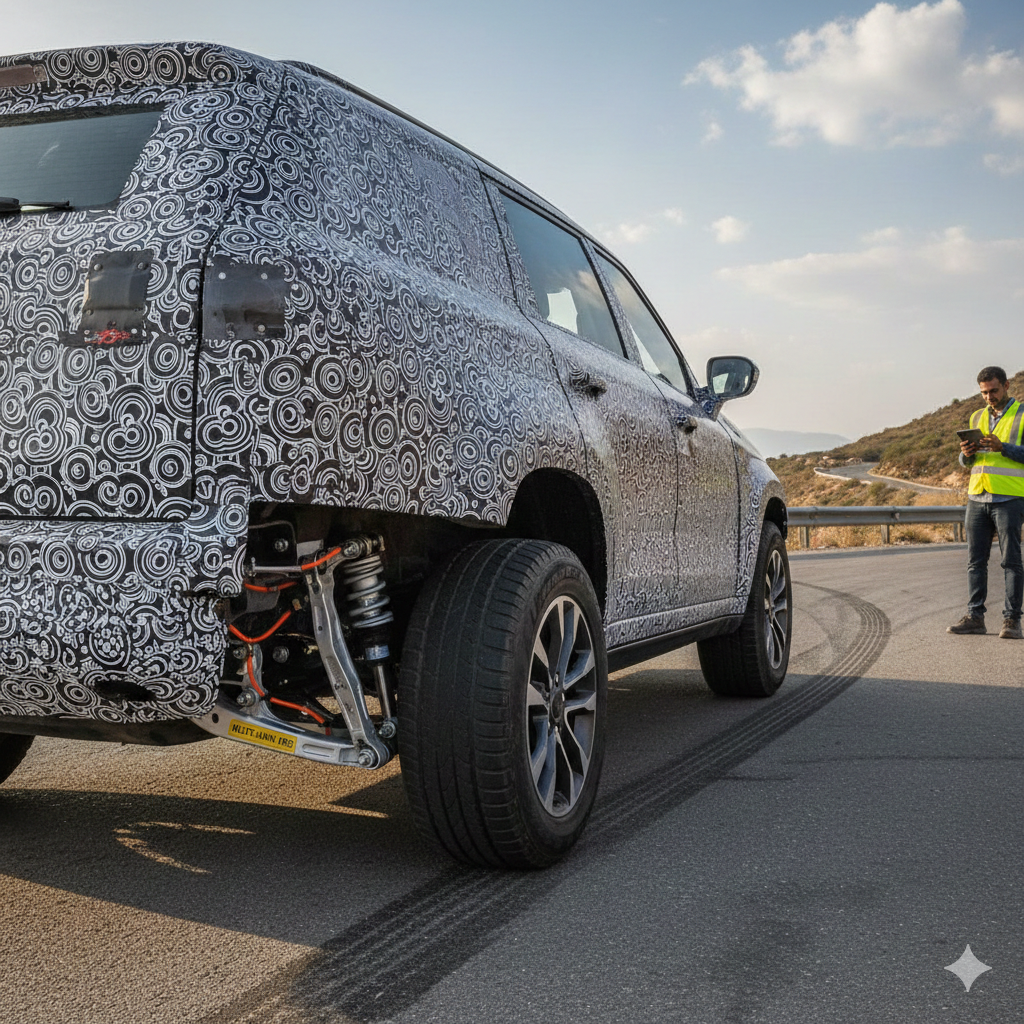
The revival of the iconic Tata Sierra nameplate is gaining momentum, with the electric version (Sierra EV) recently spotted undergoing testing in India. Latest spy photographs of a heavily camouflaged test mule have uncovered significant mechanical differences from the internal combustion engine (ICE) variants, highlighting Tata Motors’ focus on delivering a premium driving experience in its upcoming electric SUV.
One of the clearest giveaways in the spy shots is the complete absence of an exhaust pipe, instantly confirming this mule’s all-electric powertrain. The prototype also features aero-optimized alloy wheels, another hallmark of EV-specific design choices aimed at improving efficiency and range. These elements align with Tata’s acti.ev platform, which underpins the Sierra EV and supports both rear-wheel-drive (RWD) and all-wheel-drive (AWD) configurations.
The most notable revelation from the underside shots is the adoption of a multi-link independent rear suspension setup. This is a substantial departure from the semi-independent twist-beam (or beam axle) rear suspension used in the petrol and diesel Sierra models, which prioritize cost-effectiveness and simplicity in this segment.Multi-link suspension—similar to what’s seen on the Tata Harrier EV—allows each rear wheel to move independently. This design offers several advantages:
- Superior ride quality: Better absorption of bumps and reduced cabin intrusions on uneven Indian roads.
- Improved handling: Reduced body roll during cornering, enhancing stability and driver confidence.
- Enhanced wheel articulation: Greater traction and composure over rough terrain, ideal for a lifestyle-oriented SUV like the Sierra.
While more complex and expensive to manufacture than a traditional beam axle, this upgrade positions the Sierra EV as a more premium offering, potentially justifying its expected higher pricing (starting around Rs 18-20 lakh, ex-showroom, with top variants nearing Rs 25 lakh).
The ICE versions of the Tata Sierra launched in late 2025, with deliveries underway. The Sierra EV is slated for an early 2026 debut, likely January, making it one of Tata’s key electric launches following models like the Curvv EV and Harrier EV.Powertrain details are yet to be officially confirmed, but reports suggest it will borrow battery packs from the Harrier EV—65 kWh and 75 kWh options—delivering ranges exceeding 500 km (up to 627 km in ideal conditions). Features like a triple-screen dashboard, panoramic sunroof, Level 2 ADAS, and V2L/V2V capabilities are also anticipated.
The Sierra EV retains the retro-modern styling cues of its ICE sibling, including the signature curved rear glass, boxy silhouette, flush door handles, and connected LED lighting. This blend of nostalgia, advanced EV tech, and refined dynamics could make it a strong contender against rivals like the Hyundai Creta Electric and Mahindra’s upcoming EVs.
As testing intensifies, more details are expected to emerge soon. The Sierra EV promises to not just revive a legendary name but elevate it with modern electric sophistication.