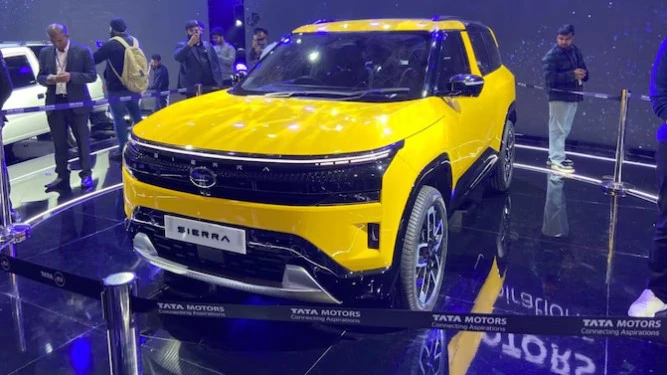
In the ever-competitive world of electric SUVs, Tata Motors is pulling out all the stops to redefine premium driving dynamics. Recent spy shots of the Tata Sierra EV, captured during its final testing phases, have spilled the beans on a key engineering highlight: a sophisticated multi-link rear suspension setup. This isn’t just a technical tweak—it’s a deliberate nod to luxury, mirroring the approach seen in the recently launched Harrier EV.
By ditching the ubiquitous torsion beam found in most mass-market SUVs, Tata is signaling its ambition to elevate the Sierra EV into a segment where ride comfort and handling prowess take center stage. The Sierra EV, a modern revival of Tata’s iconic 1990s boxy off-roader, has been turning heads with its retro-futuristic design and promises of cutting-edge EV tech. But beneath the camouflage wraps in these latest images, the real story is in the chassis. The multi-link system confirms Tata’s strategy to blend nostalgia with next-gen performance, targeting urban adventurers and family haulers who demand more than just zero-emission credentials.
Why Multi-Link Suspension Marks a Game-Changer
At its core, multi-link suspension is a hallmark of advanced automotive engineering, far surpassing the torsion beam setups that dominate budget and mid-range vehicles. This configuration employs multiple control arms—typically four or more—to link the wheel hub to the chassis, granting each rear wheel the freedom to articulate independently across vertical, lateral, and longitudinal axes.
The benefits are immediate and tangible:
1.Superior Ride Isolation: Imagine cresting a pothole-riddled Indian road—common in cities like Mumbai or Delhi. With multi-link, the impacted wheel absorbs the jolt without transmitting it to its counterpart, ensuring a smoother, more composed ride. Rear passengers, often the judges of true comfort, will appreciate this isolation from road imperfections, reducing fatigue on long drives.
2.Enhanced Handling Precision: Cornering in an EV demands stability, especially with instant torque delivery. The multi-link setup excels here by optimizing camber and toe angles under load, providing better grip, reduced body roll, and predictable steering feedback. It’s the difference between feeling planted during spirited drives and wrestling for control.
This upgrade isn’t arbitrary; it’s a direct evolution from the Harrier EV, which pioneered multi-link in Tata’s electric lineup for improved dynamics. For the Sierra EV, expected to launch in the coming months with a competitive price tag around ₹25-30 lakh, this positions it as a value-luxury contender against the likes of the Mahindra XUV400 or Hyundai Creta EV.
Torsion Beam: The Reliable Workhorse Left Behind
To appreciate the Sierra EV’s leap, it’s worth contrasting it with the torsion beam suspension—a staple in vehicles like the Tata Nexon EV or Maruti Suzuki’s Grand Vitara. This design features a single, twisted beam that connects the rear wheels, acting as both a locator and spring mount.
| Feature | Multi-Link Suspension | Torsion Beam Suspension |
|---|---|---|
| Wheel Independence | High—each wheel moves freely in multiple planes | Low—wheels linked, movements coupled |
| Ride Comfort | Excellent isolation from bumps; plush for passengers | Adequate but transmits more road noise/vibration |
| Handling | Precise control in corners; stable under load | Functional for daily use; less refined in dynamics |
| Cost & Packaging | Higher cost; more complex assembly | Cheaper, compact; maximizes boot space |
| Durability | Good, but requires periodic alignment | Excellent; low maintenance due to simplicity |
While torsion beam shines in affordability and space efficiency—freeing up room for larger cargo holds and simpler manufacturing—it falls short in sophistication. Over uneven terrain, the coupled wheels can lead to a bouncy, less controlled feel, and aggressive maneuvers might expose its limitations in stability. It’s durable and low-maintenance, making it ideal for fleet operators or first-time buyers, but for a premium EV like the Sierra, Tata clearly aims higher.
Tata’s Broader Vision: EVs That Drive Like Dreams
These spy shots aren’t isolated; they align with Tata’s aggressive EV roadmap, including the Harrier EV’s recent debut and whispers of an ICE-powered Sierra variant for traditionalists. With a projected range exceeding 500 km on a single charge (thanks to a 75 kWh battery pack) and features like ADAS Level 2, ultra-fast charging, and a panoramic sunroof, the Sierra EV could redefine accessible luxury.As testing wraps up—potentially leading to a festive season unveiling—Tata enthusiasts are buzzing. Will this multi-link magic make the Sierra EV the EV coupe-SUV hybrid we’ve been waiting for? Early indications say yes. Stay tuned for official reveals, but one thing’s clear: Tata isn’t just electrifying roads; it’s revolutionizing rides.