Tata Motors is all set to launch the Sierra EV in India in the coming months, with multiple reports pointing to a May 2026 debut (some sources mention a broader April–June 2026 window in Q2). This marks the electric revival of the iconic Sierra nameplate, bringing modern zero-emission mobility to a model that once defined rugged, adventurous SUVs in the country.
Initially, Tata Motors planned to introduce the EV version of the Sierra first, followed by the internal combustion engine (ICE) variant. However, the automaker later adjusted the order. The ICE-powered Tata Sierra made its debut earlier, while the Sierra EV is now gearing up for launch. This strategic switch allows Tata to build hype around the reborn nameplate with the more familiar ICE option before rolling out its electric sibling.
The Sierra EV is expected to be positioned above the Curvv EV and below the Harrier EV in Tata’s electric SUV lineup, competing with models like the Mahindra BE 6, Hyundai Creta Electric, and others in the mid-size electric SUV segment. Pricing is anticipated to start around ₹15–20 lakh (ex-showroom), with top variants potentially going up to ₹25 lakh, depending on battery and feature levels. A Battery-as-a-Service (BaaS) option may also be offered to lower the upfront cost
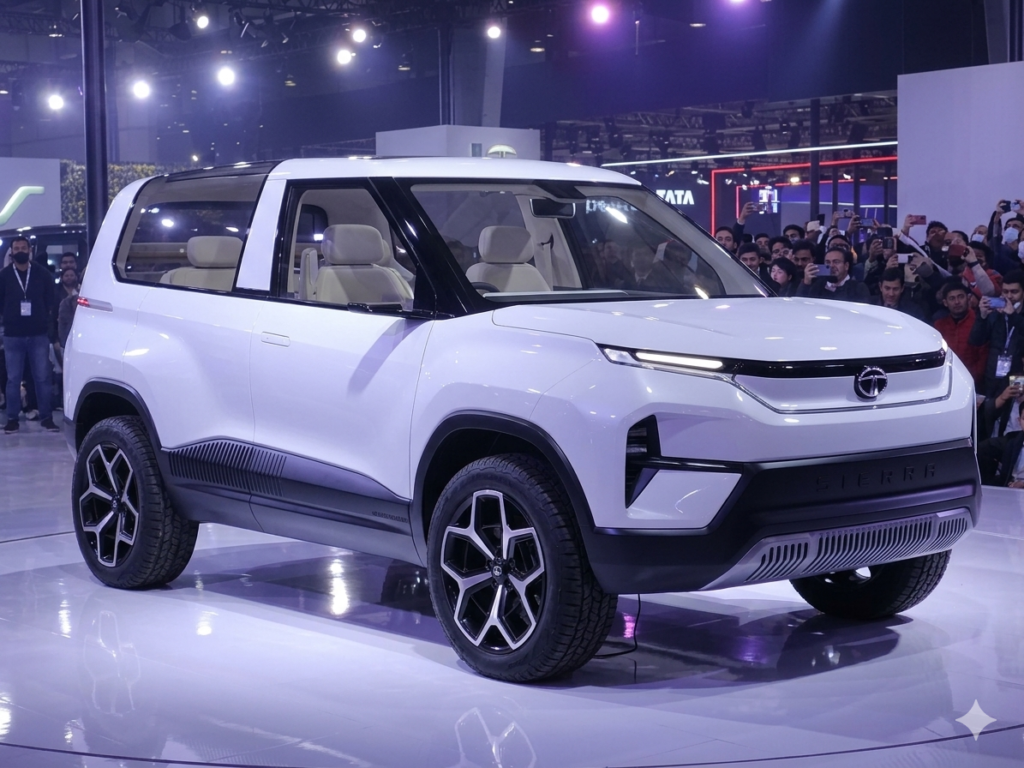
Based on the concepts showcased earlier, spy shots of test mules, and official teaser images, the Sierra EV appears to share a very similar silhouette and overall dimensions with its ICE counterpart. Both models measure approximately 4340 mm in length, 1841 mm in width, and 1715 mm in height, with a wheelbase of 2730 mm and ground clearance of around 205 mm. This ensures the EV retains the bold, upright, and chunky stance that evokes the original Sierra’s adventurous spirit.
The EV version features subtle but meaningful differences for better aerodynamics and electric-specific aesthetics:
- A closed-off front grille with smoother bumpers (instead of the ICE’s more open design).
- EV-specific styling cues like the absence of an exhaust pipe.
- Flush door handles, ORVM-mounted turn indicators, and a shark-fin antenna.
The most distinctive shared element is the large glass area, including a wraparound rear glass and generous side windows, which creates a strong sense of airiness inside the cabin. This design pays homage to the classic Sierra while delivering a spacious and premium feel. Spy shots confirm production-spec elements such as alloy wheels, a rear spoiler, and a panoramic sunroof option
The Sierra is known for its roomy interiors, and the EV variant is expected to carry forward the same strengths. The generous glasshouse contributes to a bright, open ambience, while the cabin is likely to feature a triple-screen layout (instrument cluster, infotainment, and possibly a passenger display) in higher trims. Features such as ventilated and powered front seats, wireless charging, connected car technology, and OTA updates are anticipated.
Interior themes may differ slightly between ICE and EV — with the electric model possibly leaning towards lighter, eco-friendly materials and a more minimalist, tech-forward aesthetic (including EV-specific displays for range, charging, and energy flow). Seating configurations could include both 4- and 5-seater options, and boot space is expected to remain practical, similar to the ICE’s 622 litres (expandable further with rear seats folded).
The Sierra EV is likely to be built on Tata’s Acti.EV architecture (shared with models like the Curvv EV). It is expected to offer two battery options — around 55 kWh and 65 kWh (LFP chemistry) — delivering a claimed range of up to 450–500+ km on a single charge, depending on the variant.
- Lower variants: Single-motor rear-wheel drive.
- Higher trims: Dual-motor all-wheel drive (AWD) setup for enhanced performance and traction.
Fast-charging capability and features like regenerative braking with multiple modes are expected. Performance figures are still under wraps, but the EV should offer instant torque and a refined, quiet drive compared to the ICE Sierra’s petrol and diesel options.
With testing of camouflaged prototypes already underway, Tata is fine-tuning the Sierra EV for Indian conditions. The launch will strengthen the company’s EV portfolio significantly, especially as it aims to maintain strong market share in the electric segment.
The Sierra EV combines nostalgic appeal with forward-looking electric technology, spacious practicality, and modern features — making it a compelling choice for buyers seeking a versatile lifestyle SUV without compromising on range or comfort.