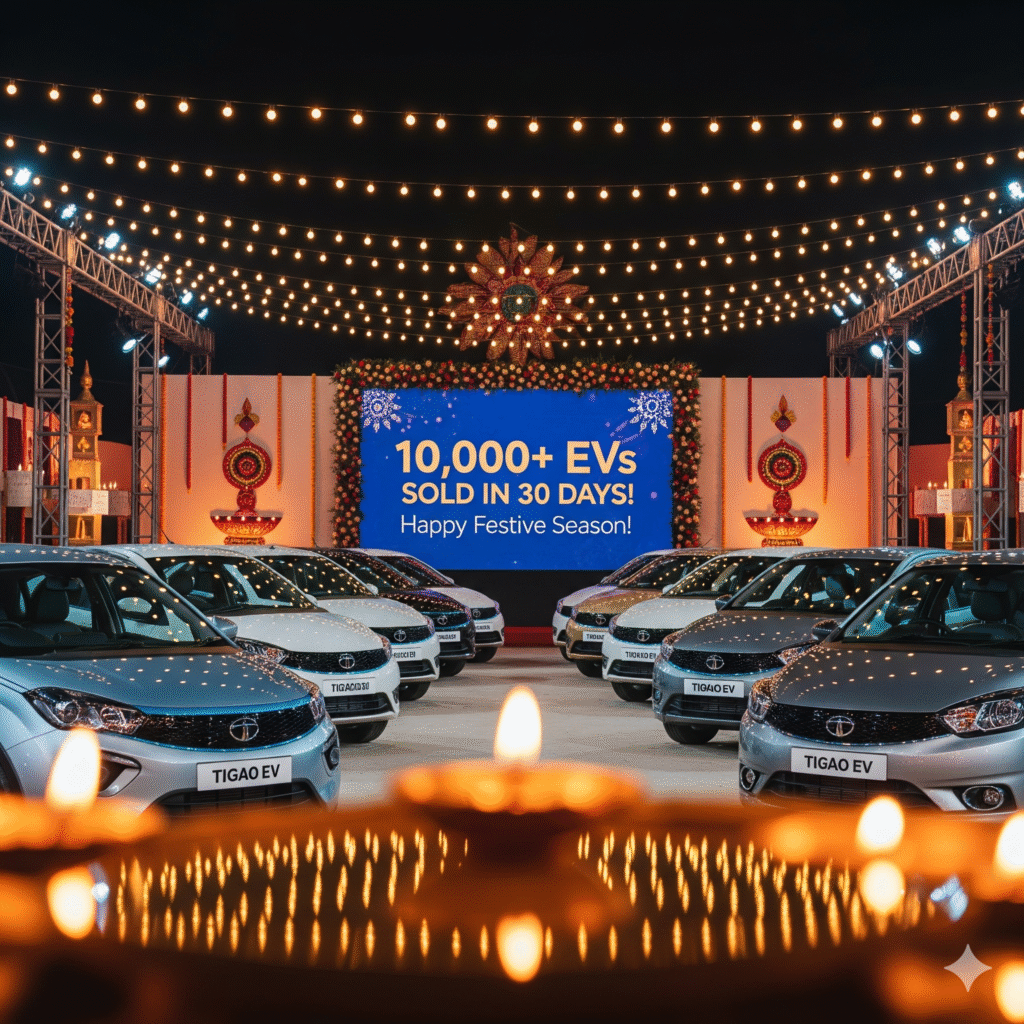
As Diwali fireworks illuminated the skies across India, Tata Motors celebrated its own explosive growth in the electric vehicle segment. The homegrown automaker retailed over 10,000 EVs during the 30-day festive window spanning Navratri to Diwali, marking a robust 37 percent year-on-year increase. This milestone underscores the accelerating shift toward electrification in one of the world’s fastest-growing auto markets, with Tata’s affordable and versatile EV lineup—led by the Nexon EV, Punch EV, and Tiago EV—driving the momentum.
The festive period, traditionally a high-stakes battleground for carmakers, saw Tata’s EV portfolio shine brighter than ever. Shailesh Chandra, Managing Director of Tata Motors Passenger Vehicles and Tata Passenger Electric Mobility, highlighted the achievement in a recent statement: “Our EV portfolio too has shown strong traction, with over 10,000 EVs retailed during this period, marking a 37% growth.” This surge not only reflects heightened consumer confidence but also aligns with broader industry trends, where electric passenger vehicle sales have more than doubled year-over-year in recent months.
At the forefront of Tata’s EV charge were its popular compact models. The Nexon EV, India’s best-selling electric SUV, continued to dominate with its blend of range, features, and competitive pricing. Close behind were the Punch EV, appealing to urban millennials with its sub-compact footprint and punchy performance, and the entry-level Tiago EV, which remains a gateway for first-time EV adopters thanks to its affordability and low ownership costs. Together, these models accounted for the lion’s share of the 10,000-plus units, demonstrating Tata’s strategy of offering EVs across price points to capture diverse buyer segment
What’s fueling this electric boom? Buyers are increasingly warming to EVs, buoyed by a maturing ecosystem of charging infrastructure and supportive government policies. India’s public charging network has expanded significantly, with over 25,000 stations now operational, reducing range anxiety for city dwellers and highway travelers alike. Incentives under the FAME-III scheme, including subsidies and road tax waivers, have further sweetened the deal, making EVs more accessible than ever.A key enabler has been Tata’s aggressive pricing strategy, which is steadily narrowing the cost gap between electric and petrol variants. For instance, the Tiago EV starts at around ₹8 lakh (ex-showroom), just a modest premium over its ICE sibling, while the Nexon EV offers parity in some trims after incentives. This affordability is drawing in first-time buyers, particularly from Tier-2 and Tier-3 cities, where rising fuel prices and environmental awareness are tipping the scales. “Many customers are choosing electric for lower running costs and fewer maintenance needs,” as echoed in industry analyses, with EV operating expenses often 50-70 percent less than traditional fuels.
This festive EV haul is part of Tata’s larger triumph, with overall retail sales crossing the 1 lakh mark in the same period—a 33 percent jump from last year. SUVs, including the petrol Nexon that clocked over 38,000 units, contributed 70 percent of the volume, but the EV segment’s outsized growth signals a pivotal transition. Tata now commands about 40 percent of India’s EV market share, solidifying its leadership amid rising competition from players like MG Motor and Mahindra.
Looking ahead, Tata’s EV ambitions show no signs of slowing. With upcoming launches like the Harrier EV and an expanded lineup of long-range batteries, the company is poised to sustain this trajectory into 2026. As India targets 30 percent EV penetration by decade’s end, milestones like this festive sprint prove that the road to electrification is not just paved—it’s electrifying.
What’s your take on Tata’s EV push? Ready to plug in, or still sticking with the classics? Share your thoughts below.