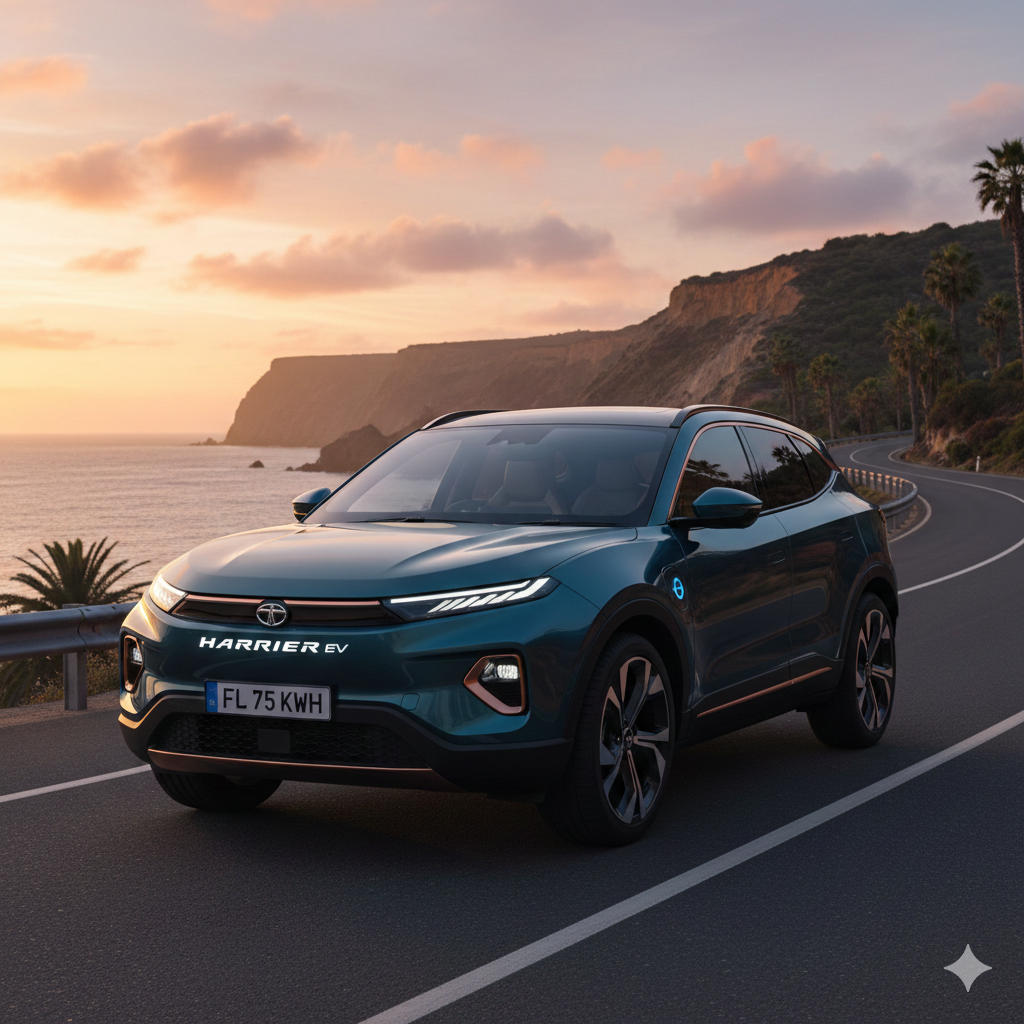
In the competitive world of Indian SUVs, Tata Motors has pulled off something remarkable with its flagship Harrier lineup. Just months after its launch, the Tata Harrier EV has not only found its feet but has started outselling the combined petrol and diesel versions of the Harrier — and it’s been doing so consistently since its second month on sale.
This shift marks a significant moment in India’s evolving automotive landscape, where electric vehicles are moving beyond niche appeal to become the preferred choice even within the same nameplate.
The Harrier EV was launched in June 2025 with deliveries beginning shortly after. In its very first full month, the electric version sold 475 units, while the ICE (Internal Combustion Engine) variants — petrol and diesel combined — managed 784 units. The EV accounted for about 38% of total Harrier sales that month.
By July 2025 — just the second month — the script flipped dramatically. The Harrier EV surged to 1,301 units, comfortably ahead of the 915 units sold by its petrol and diesel siblings. That gave the EV a commanding 59% share of the Harrier nameplate’s total sales.
Since then, the electric Harrier has maintained a strong lead. From September 2025 onwards, its share has hovered between 56% and 59% in most months, rarely dipping below 54%. Even with the introduction of a new petrol engine option, the EV has continued to dominate
Impressive Cumulative Numbers Tell the Real Story
Over the ten-month period from June 2025 to March 2026, the Harrier nameplate sold a total of 31,008 units. Out of these:
- Harrier EV: 17,592 units (57% share)
- Petrol + Diesel Harrier: 13,416 units (43% share)
This means the electric version has not only outsold the combined ICE variants month after month but has also contributed thousands of incremental sales that the traditional Harrier might never have seen. Many buyers appear to be upgrading from smaller EVs or switching from rival brands, rather than simply cannibalizing existing diesel Harrier customers.
Peak performance came in October 2025, when the entire Harrier family (EV + ICE) hit a record 4,483 units in a single month — a level the diesel-only Harrier had never achieved in its history.
Several factors seem to be driving this rapid adoption:
- Premium Appeal with Real-World Benefits: With a claimed range of up to 622 km (depending on battery variant), fast-charging capability, and available All-Wheel Drive (AWD/QWD) options, the Harrier EV offers a compelling mix of performance, capability, and luxury that appeals to buyers moving upmarket.
- Lower Running Costs: Electric ownership brings significant savings on fuel and maintenance, which resonates strongly with buyers in the premium SUV segment.
- Strong Feature Set: Advanced driver assistance systems (ADAS), spacious interiors, and modern tech make it feel like a worthy flagship.
- Tata’s EV Momentum: As India’s leading EV maker, Tata has built trust in its electric offerings. The Harrier EV has even briefly overtaken the long-dominant Nexon EV in monthly sales, becoming Tata’s top-selling electric SUV in some months.
The Harrier EV’s success shows that Indian buyers in the mid-to-premium SUV space are increasingly ready to embrace electrification — especially when the product delivers on capability and confidence. It’s not just replacing ICE sales; in many cases, it’s expanding the overall pie for the Harrier brand.
With production ramped up and more AWD variants becoming available across trims, the Harrier EV is well-positioned to maintain its strong run. For Tata Motors, this is validation that its acti.ev platform and premium EV strategy are paying off handsomely.