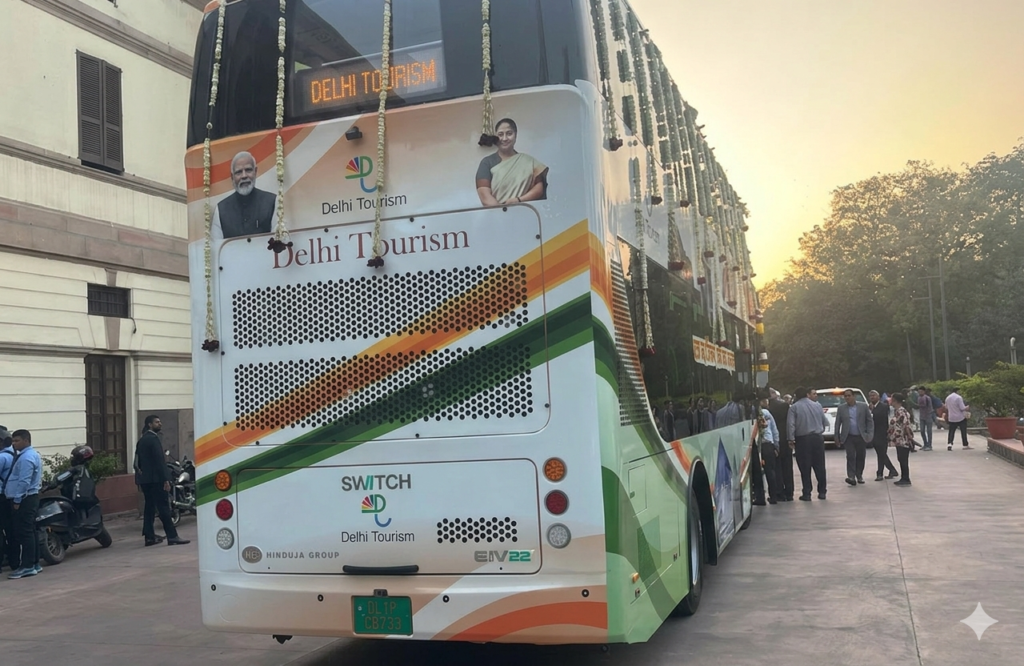
At the recent launch of Delhi’s electric double-decker bus, Switch Mobility reaffirmed its growing presence in India’s electric public transport sector. The company, which operates as the electric mobility arm of Ashok Leyland, announced strong delivery and order pipeline numbers for the current and upcoming financial years.
Speaking at the event, Dheeraj Hinduja revealed that Switch Mobility is on track to close the ongoing financial year with nearly 1,500 electric bus deliveries. This figure includes vehicles scheduled for dispatch in March, highlighting a steady execution of orders across multiple states and transport authorities.
The company’s electric buses are currently deployed in several Indian cities, supporting the transition toward cleaner and more sustainable urban mobility.
Looking ahead, Switch Mobility is set to enter the next fiscal year with an order book of around 2,500 electric buses. This strong pipeline provides clear visibility for continued production scale-up and capacity expansion.
According to company officials, the healthy order book reflects increasing confidence among state transport undertakings and private operators in electric buses, driven by lower running costs and improved operational efficiency.
Despite the positive momentum, Switch Mobility acknowledged that financing remains the biggest bottleneck in accelerating EV adoption in the public transport segment.
While battery prices have declined significantly in recent years and the total cost of ownership (TCO) of electric buses has become more favourable compared to diesel alternatives, access to affordable and long-term financing remains limited.
High upfront costs, cautious lending by financial institutions, and long repayment cycles continue to slow down large-scale fleet electrification, especially for smaller transport operators.
Industry experts note that falling battery prices and improved energy density have helped reduce vehicle costs and improve range. Combined with lower fuel and maintenance expenses, electric buses are increasingly proving to be economically viable over their lifecycle.
Switch Mobility officials emphasized that, in many use cases, electric buses now offer better long-term value than conventional diesel models. However, unlocking large volumes will depend on innovative financing models, government support, and stronger participation from banks and NBFCs.
The launch of electric double-decker buses in Delhi marks another milestone in the capital’s efforts to reduce pollution and modernise its public transport system. These buses combine higher passenger capacity with zero tailpipe emissions, making them ideal for high-density urban routes.
With companies like Switch Mobility expanding their footprint, Delhi and other major cities are expected to see faster electrification of bus fleets in the coming years.