Suzuki Motorcycle India (SMIPL) is gearing up to broaden its electric vehicle footprint in the country, moving past its recently launched premium electric scooter, the e-Access. The Japanese two-wheeler maker aims to target more accessible price points with a wider range of EV products while simultaneously advancing multiple powertrain technologies to align with evolving customer needs and market conditions.
Positioning the e-Access as an entry point on the premium side rather than a mass-market plunge, Suzuki Motorcycle India President and Managing Director Kenichi Umeda emphasised a measured, calibrated approach to electrification. “We have to think about a more mainstream… wider model line-up also,” Umeda stated, indicating that the next phase will focus on mainstream segments with diverse products and use cases.
e-Access: Suzuki’s First Step into Electric Mobility
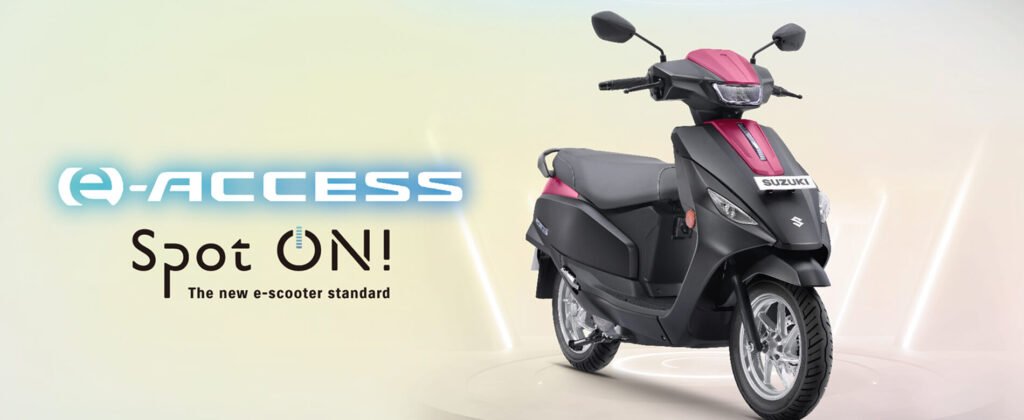
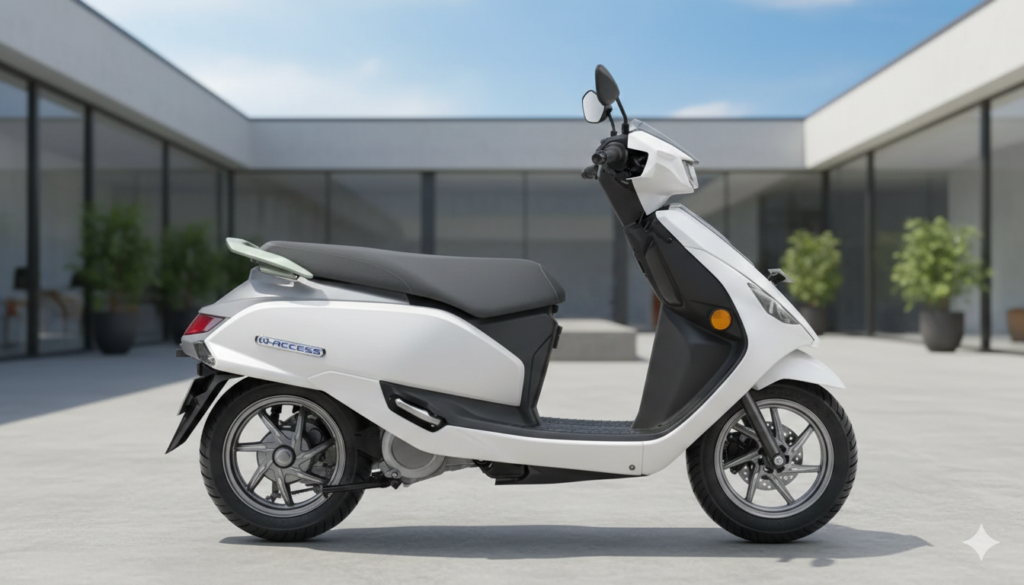
Launched in January 2026 at ₹1.88 lakh (ex-showroom, Delhi), the Suzuki e-Access marks the company’s global debut in the battery electric two-wheeler segment, with India serving as the launch market. Manufactured at the company’s Gurugram plant, the scooter is positioned as a reliable urban commuter equipped with Suzuki’s in-house “e-Technology” platform.Key specifications include:
- Battery: 3.07 kWh fixed Lithium Iron Phosphate (LFP) pack
- Motor: 4.1 kW (approximately 5.5 bhp) producing 15 Nm of peak torque
- Claimed Range: 95 km (as per AIS 040 standards)
- Top Speed: 71 kmph
- Charging: 6 hours 42 minutes with standard charger; around 2 hours 12 minutes with DC fast charging (0-100%)
- Weight: 122 kg
- Features: 4.2-inch full-colour TFT display, Suzuki Ride Connect smartphone integration with turn-by-turn navigation, three riding modes (Eco, Ride A, Ride B), regenerative braking, reverse mode, and a maintenance-free belt drive
Suzuki highlights the LFP battery’s advantages, claiming up to four times longer life compared to conventional NMC batteries, along with enhanced safety and thermal stability—particularly relevant for Indian conditions. The scooter also comes with an attractive ownership package: up to 7 years/80,000 km extended warranty (at no extra cost during the introductory period), buy-back assurance of up to 60% after three years, and loyalty/welcome bonuses.
Despite its premium pricing, which places it alongside higher-end variants of rivals like the Ather 450 series, TVS iQube, and Ola S1, the e-Access is seen as a foundation rather than the full story for Suzuki’s EV ambitions.
Umeda made it clear that Suzuki’s EV journey will be gradual and closely tied to how the Indian market develops. The company is not rushing into high volumes immediately but is preparing a broader portfolio that includes more affordable options in the coming phases. Industry sources indicate Suzuki is targeting over 25,000 EV units in FY27, though official volume targets have not been disclosed.
This expansion is expected to include scooters and potentially other formats suited to everyday commuting, family use, and varied Indian riding conditions. Localisation and development of cost-effective local suppliers will play a key role in bringing down prices for mainstream models.
Suzuki is adopting a pragmatic, technology-agnostic strategy rather than betting solely on battery electric vehicles. Alongside EVs, the company is actively studying and developing:
- More efficient internal combustion engines (ICE)
- Flex-fuel technologies (already introduced in some models like the Gixxer SF 250 FFV)
- CNG options
Suzuki Motorcycle India is strengthening its manufacturing base to support future growth. The company is building a new greenfield plant at Kharkhoda, Haryana, with significant investment. This facility is expected to boost both domestic production and exports, helping SMIPL increase its contribution to parent Suzuki Motor Corporation’s global two-wheeler sales to over 50%.
All recent product introductions, including the e-Access, have been first launched in India, underscoring the market’s strategic importance for Suzuki’s global two-wheeler business.
Suzuki’s approach suggests a balanced future lineup: premium, reliable EVs like the e-Access for early adopters who value build quality and long-term ownership experience, followed by more affordable electric models that can compete on price with mass-market players. Combined with continued ICE, CNG, and flex-fuel offerings, buyers will have multiple clean and efficient choices depending on their budget, usage patterns, and charging infrastructure access.
As the Indian EV two-wheeler market matures—with improving charging networks, falling battery costs, and policy support—Suzuki’s gradual yet comprehensive strategy positions it to play a meaningful role without overcommitting to a single technology.
EV enthusiasts and industry observers will be watching closely for the next wave of accessible electric products from Suzuki, expected in the coming years as the company scales its “Make in India” capabilities and refines its multi-powertrain roadmap.