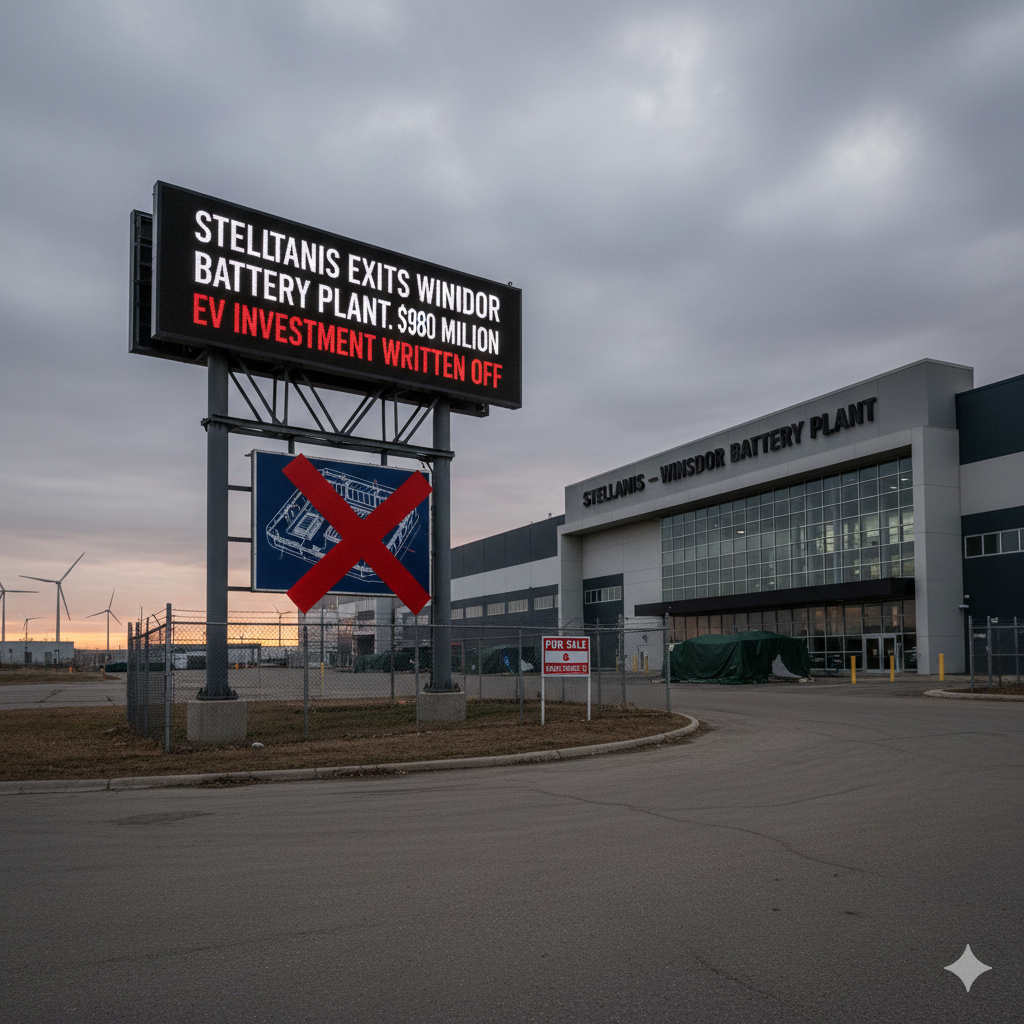
n a stark reflection of shifting priorities amid slowing EV demand and massive financial pressures, Stellantis has effectively exited its high-profile electric vehicle battery venture in Canada. On February 6, 2026, the automaker announced it is selling its 49% equity stake in NextStar Energy—the joint venture behind the massive Windsor, Ontario battery plant—to its partner LG Energy Solution for a token $100.The transaction, described in official statements as a “joint strategic decision,” transfers full ownership of NextStar Energy to the South Korean battery giant. Stellantis, the parent company of brands including Jeep, Dodge, Ram, Chrysler, Peugeot, and Fiat, had poured close to $980 million into the project, positioning it as a cornerstone of its North American electrification roadmap.
The NextStar Energy facility, Canada’s first large-scale lithium-ion battery manufacturing plant, represents a multi-billion-dollar investment—totaling over C$5 billion (approximately US$3.7 billion)—with support from Canadian federal and provincial governments. Located in Windsor, Ontario, the 4.23-million-square-foot plant was designed to produce more than 45 GWh annually, create up to 2,500 jobs, and supply battery cells primarily for Stellantis’ future electric vehicles in the region.
Construction began after the 2022 joint venture agreement, with module production starting in late 2024 and mass battery cell production commencing in November 2025. However, the plant has pivoted in focus: recent output has shifted toward batteries for energy storage systems (ESS) rather than exclusively for automotive use, a sector outside Stellantis’ core business.
The nominal $100 sale price—revealed in LG Energy Solution’s regulatory filings—amounts to an almost complete write-down of Stellantis’ $980 million contribution. This move aligns with the company’s broader recalibration of its EV strategy. Stellantis recently reported massive impairments and charges related to electric vehicle investments (including a reported $26.5 billion in EV-related losses in some accounts), as slower-than-expected adoption, regulatory changes, and market realities prompt a return to emphasizing internal combustion and hybrid powertrains under the “power of choice” philosophy.
In a joint statement, Stellantis emphasized that the ownership change allows LG Energy Solution to “fully leverage the Windsor facility’s capacity,” enhancing its long-term viability while securing continued battery supply for Stellantis’ EVs. The automaker will remain a customer of the plant but sheds future capital commitments, operational risks, and equity exposure tied to the venture.For LG Energy Solution, taking 100% control provides greater flexibility to optimize production, potentially expanding beyond automotive applications into grid-scale energy storage and other markets. The company described the transaction as mutually beneficial, subject to customary approvals and closing conditions.
The Windsor community and Canadian stakeholders have reacted cautiously but optimistically. Local economic development leaders, including Invest WindsorEssex, view the shift as potentially stabilizing for the facility and its roughly 1,300 current employees (with room to grow to full capacity). Government backers have indicated the change is unlikely to jeopardize incentives or long-term prospects.
This high-profile exit underscores broader industry challenges: overcapacity in some battery plants, underwhelming EV sales growth in key markets, and strategic retreats by legacy automakers from aggressive electrification timelines. For Stellantis, the Windsor divestment is a clear signal of recalibration—prioritizing financial discipline and flexibility over locked-in heavy investments in a still-evolving EV landscape.
As NextStar Energy moves forward under sole LG ownership, the Windsor plant remains operational and poised for expansion in energy storage, even as its original automotive-focused vision evolves. The episode serves as a cautionary tale of the risks and rapid shifts defining the global transition to electric mobility.