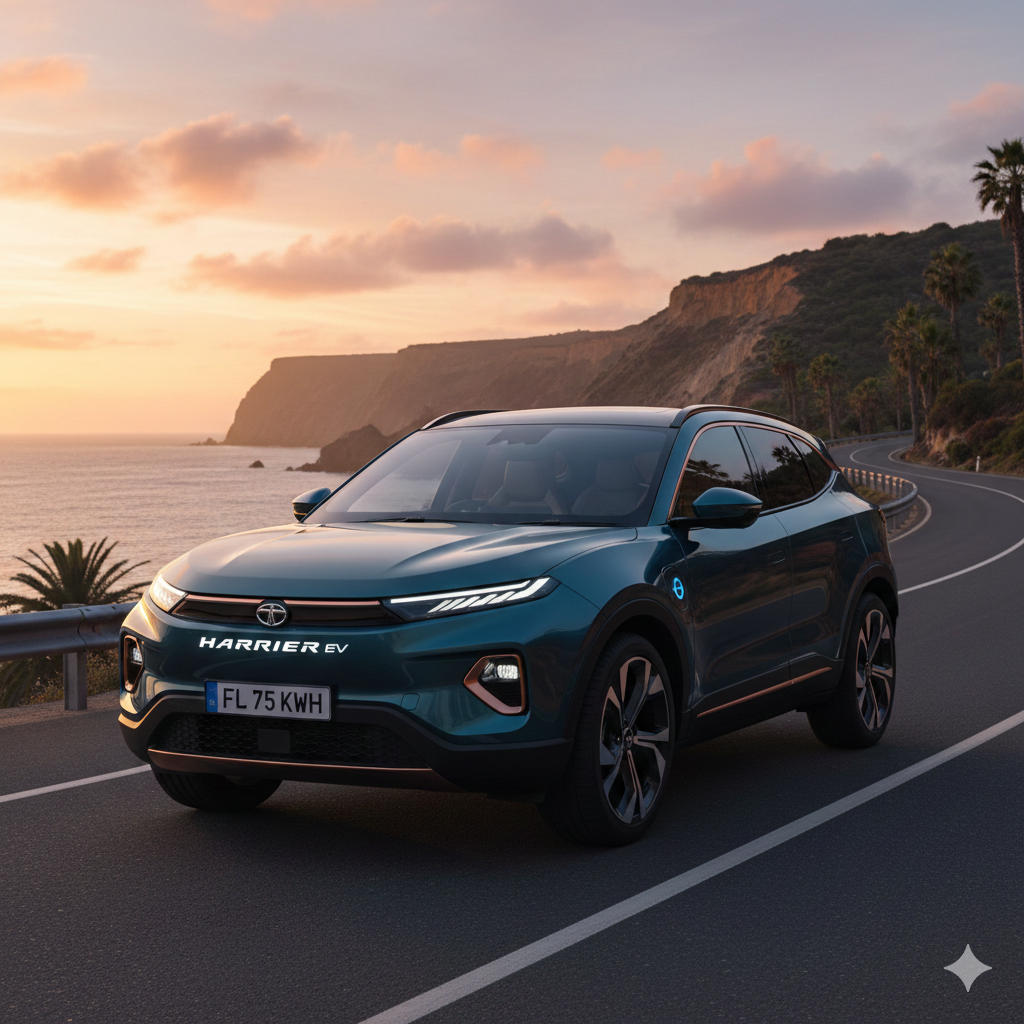
As India’s electric vehicle market matures, real owner experiences are proving that long-distance travel in EVs is not just possible — it’s practical and enjoyable. Rohan Jalan (@RohanJalan73611), an early adopter of the Tata Harrier EV (75 kWh variant), recently shared a detailed account of his 3-day year-end family trip covering approximately 1,350 km from Chennai to Tirupati, Srikalahasti, Srisailam, and back. This journey — undertaken with a family of 4 adults and 1 child plus luggage — debunks lingering doubts about EV readiness for multi-day road trips in India.
The Itinerary: Ambitious Yet Achievable
- Day 1: Started from Chennai at 100% SOC (State of Charge) on Sunday, December 28. Drove non-stop to Tirupati, followed by multiple up-and-down trips on the iconic Tirumala hills. Plugged in at 25% SOC to a 7 kW unit at the E-Mobility Station — Rohan praised the setup as “fantastic.”
- Day 2: Overnight charge to 100% by 10 AM. Departed for Srikalahasti and Srisailam, covering ~400 km. Arrived at Tetra Doranala at 16% SOC and charged for about 1 hour 30 minutes.
- Day 3: Morning drive from Doranala to Srisailam temple, then the return leg to Chennai. Stopped midway at a Chargezone near Kavali, charging from 14% to 80% in just 45 minutes using a 120 kW fast charger. Reached home late night with ~25% SOC remaining.
Key Takeaways from a Real Owner
Rohan’s experience highlights practical insights for prospective EV buyers:
- Charging infrastructure is improving — While stations may be sparse in some areas, they are far from non-existent. Strategic planning makes it manageable.
- Private/home charging is ideal — Overnight top-ups reduce reliance on public networks.
- Planning + car knowledge is essential — Understand your Harrier EV’s efficiency, regen settings, and how terrain/ load affect range.
- Driving style matters — Moderate speeds and smart use of regen helped achieve impressive efficiency.
- Impressive real-world performance — With full family load (4A + 1C) and boot luggage, the Harrier EV delivered ~160 Wh/km efficiency — roughly 216 kWh total consumption for the trip. Public charging cost: ~₹3,700.
This aligns with broader real-world tests of the 75 kWh Harrier EV, where mixed conditions often yield 400-450+ km per charge (versus the claimed 622 km ARAI), making it a strong contender for family adventures.
Why This Matters for India’s EV Future
Rohan’s trip demonstrates that the Tata Harrier EV — with its spacious cabin, strong torque, advanced features like Level 2 ADAS, and robust 75 kWh battery — handles demanding family outings without drama. For those still hesitant about EVs for long hauls, stories like this show the ecosystem is maturing rapidly, thanks to expanding charging networks and vehicles built for Indian conditions.
If you’re considering an electric SUV for similar adventures, the Harrier EV’s real-owner validation is hard to ignore. The era of worry-free EV road trips has truly arrived! (Insights based on Rohan Jalan’s firsthand account shared on January 2, 2026. Actual range and efficiency can vary with conditions, load, and driving style.)