In a bold stride toward diversifying its electric mobility portfolio, Ola Electric has filed a design patent for a compact five-door electric hatchback, built on its innovative Gen 4 modular platform. This move signals a renewed commitment to the four-wheeler segment, following a strategic pause in its car program to prioritize the booming scooter market. The development, which aligns with silhouettes teased earlier this year, positions Ola to challenge established players in India’s urban EV space.
The unannounced hatchback is tailored for city dwellers, drawing direct comparisons to rivals like the MG Comet EV, Tata Tiago EV, and the upcoming VinFast Minio Green. While Ola has yet to reveal detailed specifications or launch timelines, industry observers anticipate a sub-₹10 lakh price tag, emphasizing affordability and accessibility over high-end performance. This pivot reflects a broader shift in Ola’s strategy—from earlier concepts of premium sedans to a focus on mass-market urban solutions that address everyday commuting needs.
A City-Savvy Design for the Masses
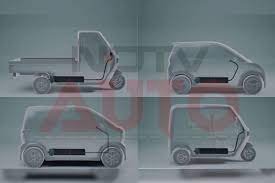
The patent illustrations reveal a dimensionally compact, upright hatchback with minimal overhangs and a footprint optimized for tight urban maneuvers. Measuring roughly in the micro/compact category, the vehicle boasts a boxy, practical silhouette that prioritizes interior space and ease of parking over aerodynamic flair. This design ethos echoes the teaser images Ola showcased at its Sankalp 2025 event in August, where the company unveiled visions for a new era of interconnected, software-defined EVs.
Experts describe the form factor as a pragmatic choice for India’s congested streets, where quick acceleration, regenerative braking, and seamless integration with ride-hailing apps could prove game-changers. “It’s not about chasing supercar thrills; it’s about redefining mobility for the next billion users,” noted an analyst covering the patent filing. Unlike flashier concepts from Ola’s past, this hatchback underscores the company’s maturation toward scalable, cost-effective production.
The Gen 4 Platform: A Modular Powerhouse
At the heart of this hatchback lies Ola’s Gen 4 “skateboard” platform—a flexible, battery-integrated chassis designed to underpin a family of vehicles. Beyond the five-door car, the platform will support diverse body styles, including a three-wheeler passenger rickshaw and a light commercial vehicle (LCV) for last-mile delivery. This multi-purpose architecture promises economies of scale by sharing components like motors, batteries, and software stacks across product lines, potentially slashing development costs by up to 30%.A standout feature is the integration of Ola’s proprietary 4680 “Bharat” lithium-ion cells, which boast higher energy density and faster charging compared to conventional formats. Showcased prominently at Sankalp 2025, these in-house batteries have already entered production for Ola’s two-wheeler lineup, marking a milestone in India’s push for localized EV supply chains.
Early reports suggest the hatchback could pair a 21bhp (16kW) electric motor with a modular battery pack, delivering a real-world range suited for intra-city jaunts—think 200-250 km on a single charge.Ola’s CEO, Bhavish Aggarwal, emphasized during the Sankalp event that the Gen 4 platform represents “the future of electric everything,” with deployment slated for early 2026.
By leveraging vertical integration—from cell manufacturing at its Gigafactory to over-the-air updates via the MoveOS ecosystem—Ola aims to outpace competitors in pricing and feature velocity.
Navigating Challenges in a Crowded EV Arena
Ola’s re-entry into cars comes at a pivotal moment for India’s EV landscape. The two-wheeler giant, which commands over 30% market share in electric scooters, has faced headwinds including service network complaints and regulatory scrutiny. Deferring its four-wheeler plans in 2023 allowed Ola to scale scooter production to 1 million units annually, but the patent filing hints at pent-up ambition.
Success will hinge on execution: Can Ola translate its two-wheeler dominance into cars amid fierce rivalry? The MG Comet EV, with its quirky two-door charm and ₹7 lakh starting price, has carved a niche in metros, while Tata’s Tiago EV offers proven reliability at similar costs. VinFast’s Minio Green, expected soon, adds global muscle to the mix. Yet, Ola’s edge lies in its ecosystem—seamless app integration, rapid charging infrastructure via Ola Hyperchargers, and a vertically controlled supply chain could tip the scales.Skeptics question the timeline, given Ola’s history of ambitious announcements. The Gen 4 platform’s rollout was teased for 2026, but patent-to-production cycles often stretch longer in India’s regulatory maze. Still, with government incentives like the PLI scheme boosting battery localization, Ola is well-positioned to disrupt.
A Broader Vision for Electric India
This patent isn’t just about one car; it’s a cornerstone of Ola’s “Sankalp” vision to electrify India’s roads, skies, and seas. From e-scooters to potential e-rickshaws and beyond, the Gen 4 platform embodies a unified approach to sustainable transport. As Aggarwal put it, “We’re not building vehicles; we’re building the future of mobility.”For now, the compact hatchback remains a tantalizing sketch on paper. But if Ola delivers, it could accelerate the shift toward affordable EVs, making green commuting as commonplace as a daily chai. Watch this space—Ola’s four-wheeler chapter is just beginning.