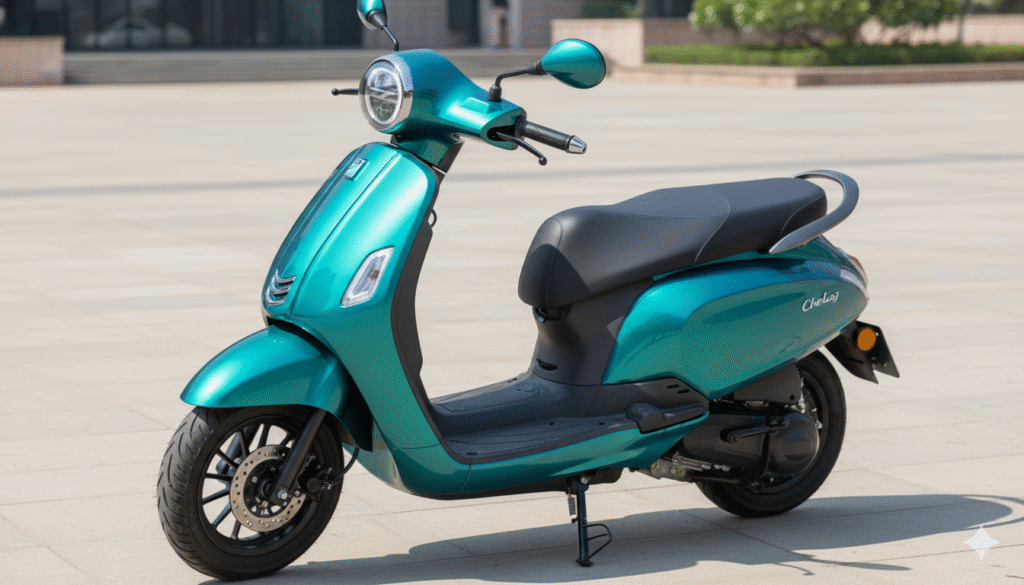
Bajaj Auto has been consistently updating the Chetak since its electric revival in 2020, breathing new life into one of India’s most beloved scooter legacies. The latest 35 Series, launched in December 2024, refined the model’s performance, range, and features, solidifying its position as the sole electric vehicle in Bajaj’s lineup. Currently, the Chetak commands the second spot in domestic electric two-wheeler sales, trailing only Ola Electric but outpacing rivals like TVS and Ather with its blend of premium build, retro charm, and practical pricing.
A buzzing development just days ago, the much-anticipated next-generation Chetak was spotted testing on Indian roads for the first time, hinting at a comprehensive overhaul set to keep Bajaj competitive in the booming EV scooter market. While an exact launch timeline remains under wraps, insiders and spy shot analysts peg the debut for sometime in early 2026—likely the first quarter—to align with festive sales momentum and evolving battery tech. The camouflaged test mule reveals evolutionary tweaks rather than a revolutionary redesign, preserving the Chetak’s timeless silhouette while injecting modern flair. Let’s break down what these spy images tell us about the future of this urban EV icon.
Evolutionary Design: Subtle Yet Significant Updates
At first glance, the next-gen Chetak retains its elegant, retro-modern profile—think flowing lines, a sturdy chassis, and that unmistakable Bajaj poise. However, the tail section steals the show with noticeable refinements. The updated LED tail lamp now integrates the brake light and turn indicators into a sleek, single unit, enhancing visibility and aesthetics for safer night rides.
The number plate positioning has been revised for a cleaner look, paired with a new tyre hugger that adds a touch of rugged protection without compromising style. Moving sideways, the camouflage does a solid job of concealing the side panels, but eagle-eyed spotters note potential tweaks for better aerodynamics or storage access—details that could emerge in upcoming leaks. The grab handle, a staple for pillion comfort, appears unchanged, signaling Bajaj’s commitment to family-friendly usability.
The seat, however, gets a practical upgrade: it’s now flatter, ditching the small central hump for easier tandem seating and a more inclusive ride height. Up front, the changes are equally thoughtful. The indicators have shifted to the handlebar area, freeing up the mudguard for a sleeker vibe and improving ergonomics during turns. The familiar LED headlamp unit returns, but with fresh “Chetak” lettering embossed for brand reinforcement.
Inside the cockpit, a revamped switchgear console promises intuitive controls, while the instrument cluster sports a new, more compact shape—potentially a larger TFT display for enhanced connectivity, though the mule’s setup suggests a mid-spec trim. Notably absent from this prototype is the keyless start-stop system, a hallmark of higher variants in the current lineup. This omission, along with the limited kit, points to a mid-spec tester, implying a broader range of trims at launch to cater to diverse budgets—from entry-level commuters to tech-savvy urbanites.
Under the Skin: Powertrain and Performance Teasers
While the exterior dominates the spy chatter, glimpses under the camouflage hint at mechanical shifts. The test mule sports a hub-mounted electric motor—a departure from the current mid-drive setup—positioned at the rear wheel for simpler integration and potentially lower costs.
The battery pack seems nestled in the floorboard, akin to the existing model, which could translate to a flat floor for easy foot placement and ample underseat storage (around 20-25 liters, we speculate).Expectations for specs are high: the current 35 Series offers up to 153 km IDC range with a 3.2 kWh pack and a top speed of 73 km/h. The new-gen might push boundaries with a larger 3.5-4 kWh battery, aiming for 160-180 km range, faster charging (0-80% in under 3 hours), and refined ride modes (Eco, Sport, Reverse). Priced competitively between Rs. 1-1.3 lakh (ex-showroom), it could challenge the TVS iQube and Ather 450X head-on. Bajaj’s focus on a hub motor might prioritize affordability and reliability over outright performance, making it ideal for city sprints and last-mile deliveries.
Why the Next-Gen Chetak Matters in India’s EV Surge
Bajaj’s EV journey with the Chetak isn’t just about nostalgia—it’s a strategic play in a market projected to hit 10 million annual sales by 2030. Holding the runner-up spot with over 20% market share, the Chetak’s updates underscore Bajaj’s push for premium yet accessible electrics, backed by a robust 3,000+ dealer network and a 5-year battery warranty.
As testing ramps up, more details will trickle out—perhaps via official teasers at the Auto Expo 2026. For now, these spy shots fuel excitement for a Chetak that’s smarter, safer, and more versatile. If you’re eyeing an EV upgrade, hold off on the current model; the next-gen promises to blend heritage with high-tech in ways that could redefine urban mobility. Stay tuned—Bajaj’s electric swan song might just be its biggest hit