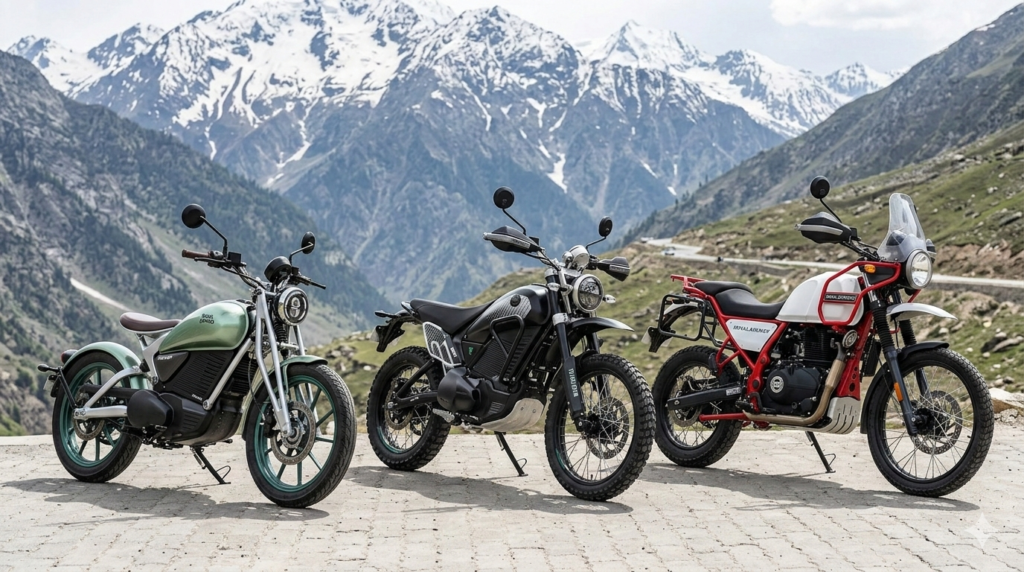
Royal Enfield is preparing for a major shift into electric mobility, with its first dedicated EV motorcycles expected to arrive between 2026 and 2027. Backed by parent company Eicher Motors, the iconic brand is developing a new electric platform that will debut with two core models – the C6 and S6, followed later by an electrified Himalayan.
While electric motorcycles are grabbing global headlines, Royal Enfield’s approach is measured and strategic, focusing on long-term reliability, shared technology, and brand character.
C6 & S6: The First Royal Enfield Electric Twins
The C6 and S6 will be Royal Enfield’s first production-ready electric motorcycles and will serve as the foundation of its EV lineup.
Key Highlights
- Common EV Platform: Both bikes will share battery modules, motor systems, and electronic architecture.
- Different Personalities:
- C6 – Likely a comfort-focused, cruiser-inspired electric motorcycle.
- S6 – Expected to be sportier, more agile, and urban-oriented.
- Scalable Battery Tech: Modular battery components will allow easy upgrades and cost efficiency.
- Connected Features: Smart dashboards, navigation, OTA updates, and smartphone integration are expected.
By using shared components, Royal Enfield aims to keep development costs in check while ensuring consistency across its electric range.
Electrified Himalayan: Adventure Goes Electric
Following the launch of the C6 and S6, Royal Enfield is expected to introduce an electric Himalayan, bringing battery power to its popular adventure segment.
What to Expect
- Adventure-Focused Design: High ground clearance, long-travel suspension, and rugged bodywork.
- Long-Range Battery Pack: Optimised for touring and mild off-road use.
- Water & Dust Protection: Reinforced sealing for harsh riding conditions.
- Torque-Heavy Motor: Instant torque suited for hill climbs and trail riding.
An electric Himalayan would be one of the first mainstream electric adventure motorcycles in India, potentially creating a new niche.
Platform Strategy: Shared Batteries, Smarter Development
A major highlight of Royal Enfield’s EV roadmap is the use of common battery components across models.
Benefits of This Approach
- Lower Production Costs
- Simpler Servicing
- Faster Model Expansion
- Easier Upgrades in Future
This modular strategy will allow the company to introduce more EV models quickly without starting from scratch every time.
Focus on Balance: EVs and ICE Will Co-Exist
Despite the EV push, Royal Enfield is not abandoning its internal combustion motorcycles.
- Petrol-powered models will continue to evolve.
- Hybrid and electrified technologies may appear later.
- EVs will complement, not replace, the existing lineup in the near future.
This balanced approach ensures loyal customers are not forced into sudden transitions.
Expected Timeline and Market Positioning
| Model | Expected Launch | Segment |
|---|---|---|
| C6 | 2026 | Electric Cruiser/Urban |
| S6 | 2026–27 | Electric Sport/Roadster |
| Himalayan EV | 2027 | Electric Adventure |
Pricing Outlook (Expected)
- C6 / S6: ₹2.5 lakh – ₹3.5 lakh (ex-showroom, estimated)
- Himalayan EV: ₹3.5 lakh+ (ex-showroom, estimated)
Royal Enfield is likely to position these bikes as premium yet accessible EVs, targeting both urban riders and touring enthusiasts.
Royal Enfield’s entry into electric motorcycles could be a turning point for the Indian EV two-wheeler market.
- Boosts confidence in premium EV bikes
- Encourages infrastructure development
- Expands electric options beyond scooters
- Pushes rivals to accelerate EV plans
With its strong brand loyalty and nationwide network, Royal Enfield is well-placed to popularise electric motorcycles in India.
The arrival of the C6, S6, and electric Himalayan between 2026 and 2027 marks a new era for Royal Enfield. By focusing on shared battery technology, practical design, and gradual expansion, the company is laying a solid foundation for its electric future.
While EVs may be grabbing headlines today, Royal Enfield’s thoughtful and heritage-driven approach suggests its electric motorcycles will be built not just for trends—but for long-term riders.