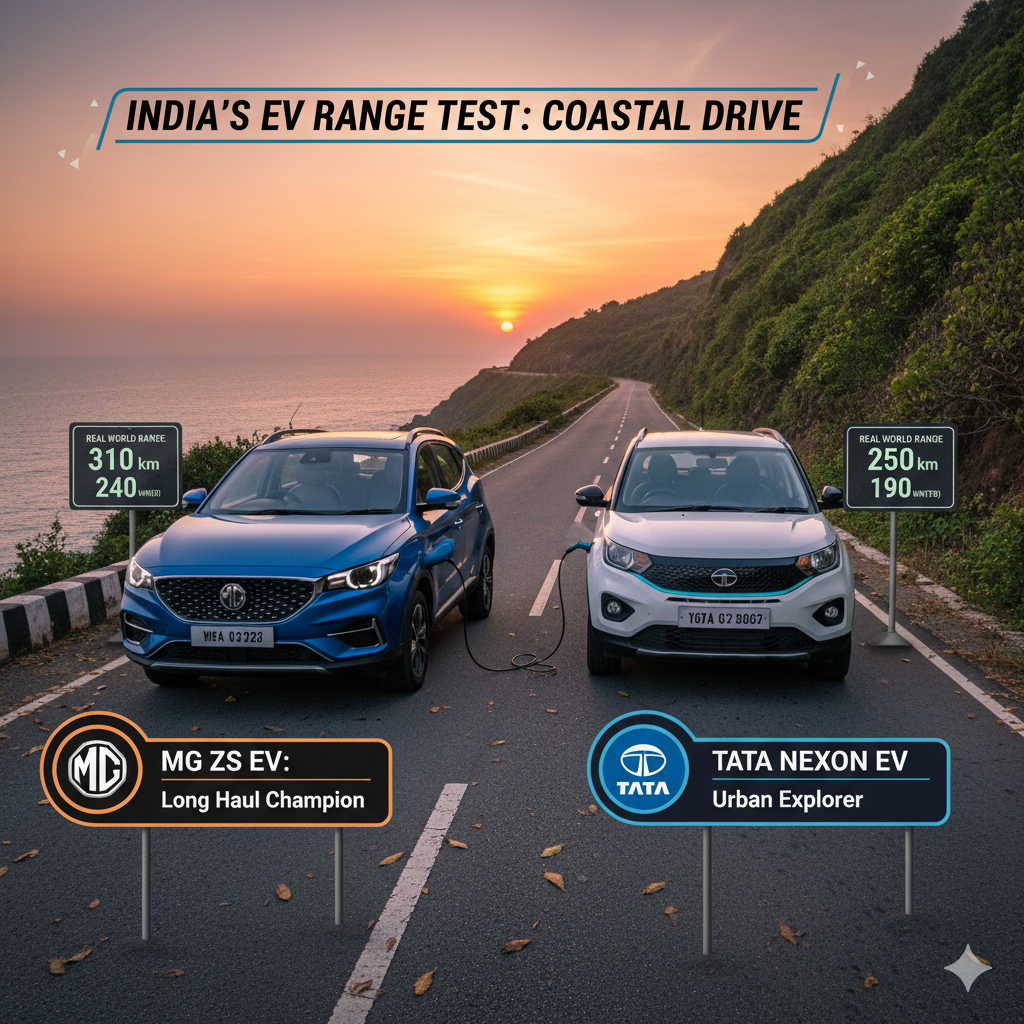
In India’s booming electric vehicle segment, the MG Windsor EV and Tata Nexon EV stand out as fierce competitors, blending compact footprints with family-friendly appeal. Despite the Windsor’s crossover-MPV styling edging it slightly longer at 4,295mm versus the Nexon’s sub-4m SUV stance at 3,995mm, their price tags hover around Rs 14 lakh at entry level, making them natural rivals for urban commuters and weekend warriors alike. Both promise solid battery capacities and claimed ranges north of 300km, but ARAI figures can be optimistic. To cut through the hype, we’ve crunched our exhaustive in-house test data from city crawls, highway sprints, and mixed drives to reveal their true real-world endurance. For a level playing field, we’re pitting the Windsor EV’s base 38kWh pack against the Nexon EV 45’s upgraded 45kWh battery – a matchup where the Tata holds a clear spec-sheet edge, but does it translate to the road?
On Paper: Tata’s Edge in Power and Stamina
The Nexon EV 45 ups the ante with its larger 45kWh lithium-ion battery, dwarfing the Windsor’s 38kWh unit by 7kWh. This translates to an ARAI-certified range of 489km for the Nexon, a whopping 157km ahead of the Windsor’s 332km claim. Powertrain-wise, Tata’s single-motor front-wheel-drive setup churns out 128.7hp and 215Nm, edging the MG’s 134hp and 200Nm by a slim 8hp but a more noticeable 15Nm torque boost for punchier acceleration.Charging favors the Nexon too: its 7.2kW AC home charger tops up from 10-100% in about 6.5 hours, 24 minutes quicker than the Windsor’s 7 hours. On DC fast chargers (up to 60kW for Tata vs 50kW for MG), the gap narrows to just 5 minutes for a 20-80% top-up, with the Nexon hitting the mark in 40 minutes versus the MG’s 45. Note that the 7.2kW AC unit is standard only on top trims for both; base models make do with slower 3.3kW setups.Pricing starts neck-and-neck at Rs 13.99 lakh (ex-showroom) for the Nexon EV 45 base and Rs 14 lakh for the Windsor Excite, but Tata climbs higher at the top end – up to Rs 17.19 lakh for the Fearless+ S variant versus the Windsor’s Rs 17.25 lakh cap. Tech perks tilt toward Tata’s flagship: the Nexon EV 45’s Empowered+ trim includes a full Level 2 ADAS suite with adaptive cruise, lane-keep assist, and auto emergency braking. MG reserves similar wizardry for its pricier Windsor Pro with the 52.9kWh battery (449km ARAI), leaving the base Windsor to rely on basics like a 360-degree camera and rear parking sensors.
Real-World Range: City Hustle, Highway Haul, and the Verdict
Our tests simulated everyday Indian driving: congested city loops at 30-50km/h with full AC (24°C), steady highway cruises at 80-100km/h, and a 50:50 mixed blend. Both EVs ran in Eco mode with standard regen, no hypermiling tricks, and a 75kg payload. Efficiency was measured in Wh/km, factoring in Mumbai’s humid October conditions.The Windsor EV impressed in stop-go traffic, leveraging its aerodynamic crossover shape and efficient motor for a city range of 327km – that’s 98% of its ARAI figure, thanks to an urban efficiency of 116Wh/km. But highways exposed its limits: wind resistance and the smaller battery yielded 289km at 131Wh/km, dipping below claims. Overall mixed range clocked 308km, a respectable 93% efficiency rating that suits short daily commutes but demands planning for longer jaunts.
The Nexon EV 45, buoyed by its heftier battery and refined thermal management, pulled ahead convincingly. City drives netted 365km at a thrifty 123Wh/km, while highways delivered 340km (132Wh/km) – both exceeding Tata’s own C75 real-world estimate of 350-370km. The mixed average? A strong 355km, translating to 73% of ARAI but a 15% lead over the Windsor. In our loop, the Nexon squeezed an extra 47km before hitting 0%, proving its stamina for inter-city runs like Mumbai-Pune without mid-way top-ups.
Key takeaway: Despite the Windsor’s peppier low-end torque for city zips, the Nexon’s larger pack and optimized efficiency make it the range king, especially for highway-heavy users. Both charge to 80% in under 45 minutes on DC, adding 220-250km in a coffee-break stop.
Beyond Range: Features, Ride, and Ownership
The Windsor shines in practicality with a 604-litre boot (versus Nexon’s 350 litres) and a cavernous cabin seating six comfortably, complete with reclining rear pews and a panoramic sunroof on higher trims. Its 10.1-inch touchscreen runs a smooth i-Smart system with OTA updates, ventilated seats, and a 6-speaker audio setup. Ride quality is plush over potholes, though the soft suspension can feel wallowy at speed.Tata counters with SUV swagger: 205mm ground clearance (vs Windsor’s 186mm) tackles speed breakers better, and the ride is tauter with sharper handling. The 12.3-inch cluster + 12.3-inch infotainment duo feels premium, backed by JBL audio and wireless charging. ADAS on top trims adds peace of mind, and Tata’s denser service network (500+ touchpoints) edges MG’s 200. Battery warranties match at 8 years/1.6 lakh km, but Tata’s prismatic cells promise better longevity.
| Aspect | MG Windsor EV (38kWh) | Tata Nexon EV 45 (45kWh) |
|---|---|---|
| Battery Capacity | 38kWh | 45kWh |
| ARAI Range | 332km | 489km |
| Power/Torque | 134hp / 200Nm | 128.7hp / 215Nm |
| Real-World City | 327km (116Wh/km) | 365km (123Wh/km) |
| Real-World Highway | 289km (131Wh/km) | 340km (132Wh/km) |
| Real-World Mixed | 308km | 355km |
| AC Charge (10-100%, 7.2kW) | ~7 hours | ~6.5 hours |
| DC Charge (20-80%) | 45 min (50kW max) | 40 min (60kW max) |
| Price Range (ex-showroom) | Rs 14-17.25 lakh | Rs 13.99-17.19 lakh |
| ADAS Availability | Only on Pro (52.9kWh) variant | Standard on top Empowered+ trim |
The Bottom Line: Nexon for Range Rebels, Windsor for Value Seekers
In our head-to-head, the Tata Nexon EV 45 emerges as the real-world range champ, delivering 355km of hassle-free motoring that outpaces the MG Windsor EV’s 308km by a meaningful margin. Its quicker charging and standard ADAS on flagships make it the smarter pick for highway explorers or tech enthusiasts, though the premium at top-end might sting.The Windsor EV, however, punches above its weight with superior space, a lower entry price, and urban efficiency that rivals pricier peers – ideal if your drives stay local and you crave MPV versatility without breaking Rs 15 lakh. As EV adoption surges past 10% market share in 2025, both solidify India’s affordable green shift. Test drive them; your daily km will decide the winner.