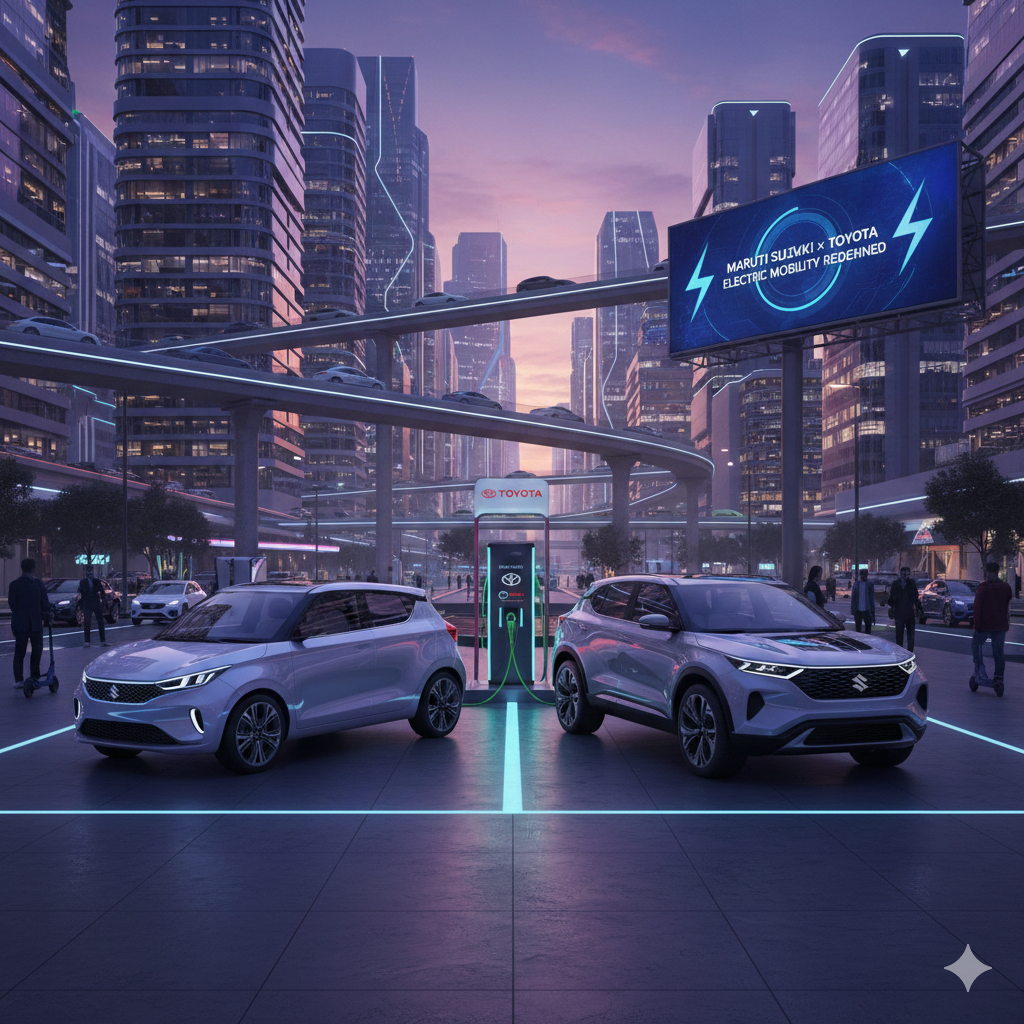
The longstanding joint venture between Maruti Suzuki and Toyota has already delivered numerous successful badge-engineered models in the Indian market, from the Glanza-Baleno twins to the Grand Vitara-Hyryder duo. Now, this powerful collaboration is accelerating into the electric vehicle (EV) era, promising a wave of accessible, locally produced all-electric models that could reshape India’s growing EV landscape.
Under the partnership, Maruti Suzuki and Toyota are set to introduce at least five all-electric vehicles in the coming years, built on shared platforms and manufactured in India. This strategy leverages Maruti’s massive sales network, Toyota’s reliability reputation, and joint engineering expertise to make EVs more affordable and practical for Indian buyers.
Maruti Suzuki eVitara: The First Strike – Launching Early January 2026
Maruti Suzuki is gearing up for its biggest leap yet with the eVitara (also referred to as e Vitara or e-Vitara), its first-ever mass-market electric SUV in India. The model, which made its full production debut at the Bharat Mobility Global Expo 2025, is scheduled for official pricing announcement and sales commencement in early January 2026.The eVitara rides on the advanced Heartect-e skateboard platform — a dedicated EV architecture co-developed by Suzuki, Toyota, and Daihatsu. This born-electric foundation delivers lightweight construction, excellent rigidity, and optimized battery integration for better efficiency and handling.Key specifications include:
- Two lithium iron phosphate (LFP) battery options: 49 kWh (FWD only, ~142 bhp, ~344 km WLTP range) and 61.1 kWh (FWD or AWD with AllGrip-e, ~172 bhp, up to 543 km ARAI-claimed range).
- Features like Level-2 ADAS, dual 10.1-inch screens, 360-degree camera, panoramic sunroof, ventilated seats, and a 5-star Bharat NCAP rating.
- Innovative ownership models: Full purchase, Battery As A Service (BAAS), subscription plans, and assured buyback to reduce upfront costs and address range anxiety.
Maruti is also investing heavily in charging infrastructure, partnering with operators to expand fast-charging networks nationwide. The eVitara will rival models like the Hyundai Creta EV, Tata Curvv EV, Mahindra BE 6, and MG ZS EV, with expected pricing in the ₹18-25 lakh range (ex-showroom).
Toyota Urban Cruiser EV: The Reliable Sibling Arrives Soon After
As part of the JV, Toyota will introduce its first mainstream EV in India — the Urban Cruiser EV — shortly after the eVitara, likely in early 2026 (February-March timeframe).This is essentially a rebadged eVitara with Toyota-specific styling tweaks: a cleaner front fascia with a unique LED DRL signature, subtle rear changes, and distinct interior trims. It shares the same Heartect-e platform, battery packs (49 kWh and 61.1 kWh), powertrain options (including AWD), and range figures.Toyota’s version emphasizes brand strengths like long-term dependability, premium feel, and hassle-free ownership, appealing to buyers who prioritize Toyota’s reputation.
Maruti Suzuki YMC Electric MPV & Its Toyota Sibling
Maruti’s next EV is an all-electric seven-seater MPV codenamed YMC, expected in the second half of 2026 or early 2027. Built on the same Heartect-e platform, it will likely offer similar 49 kWh and 61 kWh battery options, with a focus on spacious, family-friendly design, rear-wheel-drive layout in some variants, and practical features for passenger comfort.
This MPV will target rivals like the upcoming Kia Carens Clavis EV and Mahindra XEV 9S, positioning itself above the Ertiga in the lineup. Toyota will launch its own version of this electric MPV, following the same badge-engineering formula.
Maruti Suzuki EWX-Based Compact EV
Rounding out the lineup, Maruti is developing a budget-friendly compact EV based on the eWX concept (shown at the Japan Mobility Show). This entry-level model, possibly a tallboy hatchback inspired by the Wagon R, could arrive around 2027 or later, rivaling the Tata Tiago EV and MG Comet EV with a projected range of 200-300 km and sub-₹15 lakh pricing.
The Bigger Picture: A Shared Future for Affordable EVs
The Maruti-Toyota EV collaboration is a game-changer for India. By sharing the Heartect-e platform, batteries, motors, and production at Maruti’s Gujarat facility (with significant exports), both brands can reduce costs, localize components, and scale quickly. This approach addresses key barriers like high prices, range anxiety, and charging infrastructure.
With Maruti’s vast dealer network and Toyota’s trust factor, these models could drive mass EV adoption. 2026 will mark the start of this exciting era — starting with the eVitara in January.