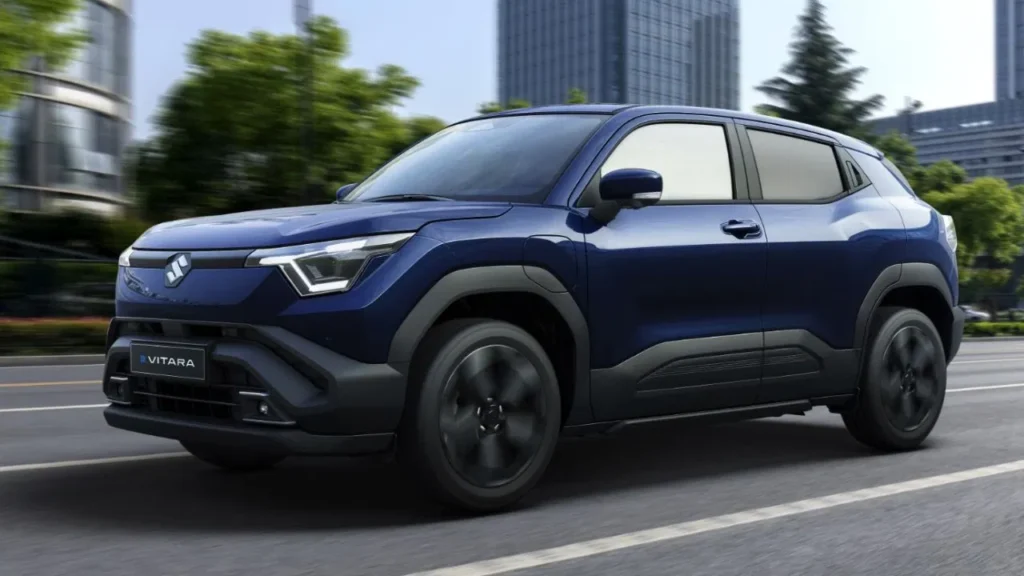
Maruti Suzuki has taken its time to enter the world of EVs. While most Indian carmakers have already built strong EV portfolios, Maruti has instead focused on CNG and hybrid technology in recent years. They have doubled down on both, offering CNG options across its range and strong hybrids in models like the Grand Vitara and the Invicto. But that changes very soon. What you are looking at here is the Suzuki e-Vitara, the brand’s first-ever fully electric car. It’s already on sale in the UK, and the same model, with some India-specific changes, is set to make its debut in India next month—specifically on December 2, 2025. We got the chance to drive the UK-spec version to get a feel of what it’s all about and what to expect from Maruti’s first electric SUV.
A Purpose-Built Platform for Electric Mobility
The e-Vitara sits on a new Heartect-e platform that’s been developed specifically for battery-electric vehicles, in collaboration with Toyota and Daihatsu. It features a flat floor construction for improved interior packaging and shorter overhangs, which contributes to a more efficient use of space and better weight distribution. The 2,700mm wheelbase also gives it a nice and planted look, with 18-inch and 19-inch wheel size options in the UK. Of course, the India-spec car will feature smaller alloys and chunkier rubber to better suit our pothole-ridden roads and varied terrains.
In terms of size, the e-Vitara measures 4,275mm in length, 1,800mm in width, and 1,635mm in height. It’s about 200mm longer and slightly wider than the hybrid Vitara sold internationally; however, it’s lower and shorter than the Grand Vitara sold here in India, positioning it as a more compact yet capable midsize SUV. The design draws from Suzuki’s rugged heritage, with a bold front fascia, slim LED headlights, and a side-mounted charging port for practicality. Ground clearance is generous enough for light off-roading, aided by the optional AllGrip-e all-wheel-drive system complete with a dedicated Trail mode for tackling rough tracks.
Powertrain Options: Balanced and Efficient
The e-Vitara is offered with two battery sizes: 49kWh and 61kWh, both using durable LFP (lithium iron phosphate) chemistry for longevity and safety. Power output depends on the variant. The 49kWh version makes 107kW (around 143bhp) in front-wheel-drive guise, while the 61kWh version (the one we drove) produces 128kW (roughly 171bhp) for the 2WD setup, bumping up to 135kW (181bhp) with AWD.
Suzuki claims a driving range of 264 miles (425km) for the 61kWh 2WD model under the WLTP cycle, with the smaller pack offering up to 214 miles (around 340km).While Indian test figures are typically lower due to our tropical climate and traffic conditions, expect a real-world range in the 350-380km ballpark for the larger battery—plenty for daily commutes and weekend getaways. Charging is straightforward and competitive: a 150kW DC fast charger can take the 61kWh pack from 10-80% in about 45 minutes, while the standard 11kW onboard AC charger fills it up in 8-11 hours from a home wallbox. Regenerative braking is tunable across three levels (plus one-pedal driving), making it easy to maximize efficiency without feeling unnatural.
Behind the Wheel: Smooth, Confident, and Unpretentious
Slipping behind the wheel of the UK-spec 61kWh e-Vitara, the first thing that strikes you is the serene cabin—whisper-quiet at startup, with none of the mechanical drama of traditional engines. The two-spoke steering wheel and digital driver’s display set a modern tone, though the overall vibe is more utilitarian than luxurious. Acceleration in Sport mode is instant and eager, propelling the SUV from 0-100km/h in about 9.1 seconds for our 2WD tester—lively enough for city merges and highway overtakes, but not neck-snapping quick by EV standards. The AWD variant shaves that down to 7.4 seconds, if you’re after more pep
On the move, the e-Vitara feels planted and composed, thanks to that dedicated EV platform. The steering is heavier than you’d expect from a Maruti—delivering a confident, European-like feel that inspires trust on winding B-roads.
Suspension tuning is firm yet forgiving, soaking up bumps without jiggling you around, and the cabin remains remarkably hushed even at triple-digit speeds, with minimal road or wind noise intruding. We tested it on a mix of urban streets and rural lanes, and it handled both with ease—predictable understeer in corners, but nothing that encourages hot-hatch heroics.
For those with a taste for adventure, the AllGrip-e system shines off the tarmac. In Trail mode, it distributes torque seamlessly to all four wheels, allowing the e-Vitara to crawl over gravel and mud with surprising poise. It’s no hardcore off-roader, but for light trails or farmyard duties, it’s more than capable— a nod to Suzuki’s Jimny DNA without the compromise on-road refinement. One minor gripe: the infotainment, while featuring a crisp 10.25-inch touchscreen with wireless Android Auto and Apple CarPlay, feels a tad dated compared to flashier rivals. Physical buttons are a plus for glovebox fumbling, but the system lacks the seamless integration of some competitors.
Interior Comfort and Tech: Practical Over Flashy
Inside, the flat-floor design pays dividends with a spacious feel, especially for a sub-4.3m SUV. Rear seats slide and recline (40/20/40 split-fold), offering flexibility for families, though the high battery floor means footwell space isn’t class-leading. Boot capacity starts at 300-320 litres, expanding to 562 litres with seats down—no frunk, but ample cubbies and a wireless charger keep things organized up front. Materials are durable and SUV-chunky, with options for brown accents to lighten the mood (black can feel a bit somber).Safety is a strong suit, with Level 2 ADAS including adaptive cruise control, lane-keep assist, and autonomous emergency braking. It packs seven airbags (including a driver knee bag), a 360-degree camera, hill-hold, and TPMS as standard—aligning well with India’s stringent norms. Trim levels in the UK (Motion and Ultra) add niceties like heated seats, a sunroof, and powered driver’s seat, which should carry over to India with some localization.
Pricing, Warranty, and India Expectations
In the UK, the e-Vitara starts at around £29,999 for the base 49kWh model, climbing to £37,799 for the top AWD Ultra—though introductory discounts can drop that to £26,000. For India, Maruti is targeting an aggressive ₹17-22.5 lakh ex-showroom range, positioning it against the Hyundai Creta Electric and MG Windsor EV. It will be sold exclusively through Nexa dealerships, with a class-leading 10-year battery warranty to ease range anxiety Expect India tweaks like reinforced underbody protection, a simpler infotainment tune, and possibly a single-motor setup to keep costs down.
Verdict: A Sensible Step Forward for Maruti
The Suzuki e-Vitara isn’t out to redefine the EV game—it’s not the quickest, flashiest, or most tech-laden option out there. But in a market flooded with overcomplicated crossovers, its fuss-free demeanor, rugged versatility, and honest pricing make it a breath of fresh air.
For Maruti loyalists eyeing their first EV, or families seeking a reliable daily driver with off-road flair, this could be just the ticket. As India’s EV adoption accelerates, the e-Vitara feels like a smart, grounded bet from the country’s largest carmaker—one that’s finally ready to plug in and play. We’ll reserve final judgment for the India drive, but early signs point to a winner.