
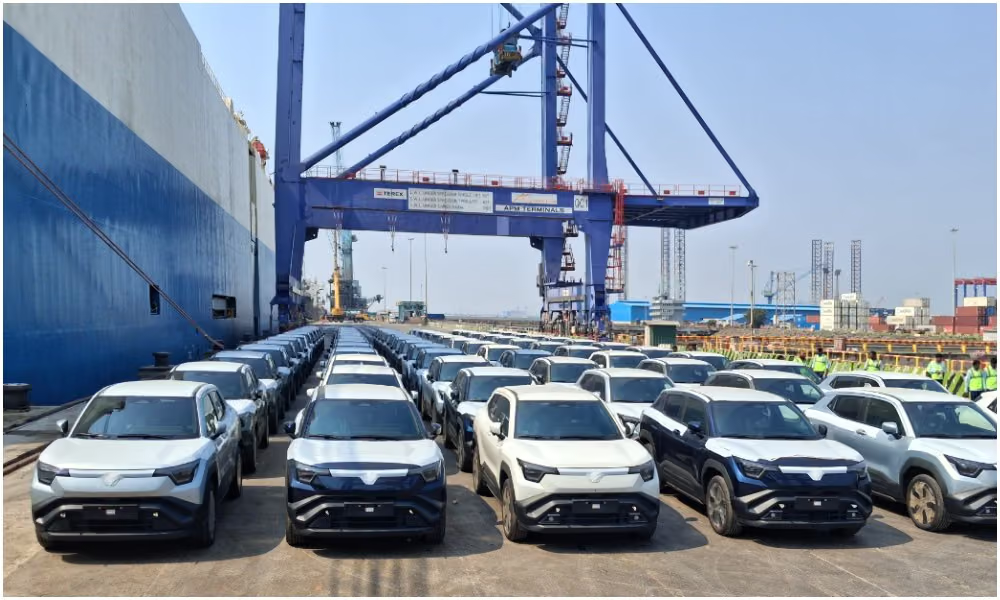
Maruti Suzuki have now exported more than 50,000 cumulative electric vehicles and have also been seeing great successes in international markets with its made-in-India e-Vitara model reaching almost 50 countries.
Maruti Suzuki India have recently reached a big milestone in their electric vehicle journey as their battery electric vehicles have now exceeded 50,000 cumulative exports. This shows how successful their e-Vitara model – the first global battery electric vehicle they offer – has been within international markets as it is being made in India and is being supplied to several international countries.
This milestone is an important one for Maruti Suzuki as they are now expanding outside of their traditional petrol and hybrid vehicle offerings. With electric vehicles becoming increasingly popular in international markets, Maruti Suzuki are using their e-Vitara to begin building up their presence in the battery electric vehicle sector. It also indicates how important Indian production can be in providing electric vehicles to international customers.
Maruti Suzuki began exporting their e-Vitara globally in August 2025. Since then it has reached almost 50 countries. The e-Vitara is being supplied to many international countries such as the United Kingdom, Norway, Germany, Japan and Switzerland. By entering these markets Maruti Suzuki can begin building up brand awareness with their electric vehicles. They can also learn how important it is to understand what their customers expect from them, what regulations they have to comply with and what the market is like. This will become increasingly important as they look to develop their future electric vehicle plans.
It is also important to note how the e-Vitara is being supplied to some well-established electric vehicle markets in Europe. Norway and Germany have really taken their battery electric vehicles on board but the speed of adoption, government support and customer wants vary between markets. Manufacturers will have to comply with safety and regulation requirements in these markets.
The e-Vitara is only produced at Maruti Suzuki’s Hansalpur facility in Gujarat. This means they can utilise their production in India to produce electric vehicles for international customers. India has created a strong automotive production ecosystem with lots of component suppliers, engineers, logistics and a large workforce. By exporting their e-Vitara from Gujarat Maruti Suzuki can utilise this base and begin to expand into a new vehicle type.This also means they can begin to increase the importance of electric vehicles within their exports. As they have treated the e-Vitara as a global model they will have opportunities to supply multiple markets.
However there are a lot to consider when producing an electric SUV for international markets. Different homologation requirements, safety standards, software requirements and customer expectations all need to be considered. They also need to make sure they have efficient logistics and high quality production. With them now having reached 50,000 cumulative exports Maruti Suzuki have created an initial distribution network for their electric SUV. However they will need to manage the demand from international markets, production and deliveries as they grow.
Traditionally Maruti Suzuki have focused on affordable passenger vehicles and utilise petrol vehicles and strong hybrid technology. However the e-Vitara is completely battery powered. This means they can begin to learn how to produce battery electric vehicles, distribute them internationally and provide after-sales. This will become increasingly important as the global automotive industry moves towards a variety of electrified vehicles.
The e-Vitara will give Maruti Suzuki confidence with customers looking at buying an electric SUV. However in international markets it will be important to provide a good range, convenient charging, competitive pricing, great specification, good safety and good after-sales. By exporting their vehicles internationally Maruti Suzuki can diversify their business further outside of the Indian passenger vehicle market. This may also help them utilise their production facilities but will depend on how much they are exporting and the cost of supplying different markets.
This milestone is not only important for Maruti Suzuki but also for the Indian electric vehicle industry as a whole. As the industry is still growing, increasing exports of locally produced electric vehicles can help position India as a key player in the global automotive market. Having an export focussed approach can encourage investment in production, engineering, components and quality. It can also mean Indian suppliers can get involved with the global electric vehicle supply chain if they can meet the requirements of international markets.
The fact that Maruti Suzuki are exporting their e-Vitara to international markets indicates that Indian manufacturers can utilise their production experience and distribution network to enter the electric vehicle market. Although there are challenges with battery electric vehicles (batteries, charging and cost), companies with established production can utilise their strengths.
However it is important to remember that this milestone of 50,000 cumulative exports is just the beginning. Maruti Suzuki will need to adapt to changing market conditions, competition from well-established electric vehicle manufacturers and different customer requirements. The next stage for the e-Vitara will be important for Maruti Suzuki to know how fast they can expand their international electric vehicle offering. Although they have reached almost 50 countries it will be important to keep customers wanting to buy their vehicles. They will also have to compete in increasingly competitive electric SUV markets.
In Europe there will be fierce competition from well-established manufacturers and new EV focussed brands. There will also be different requirements in Japanese and other international markets meaning they might not get the same results from one product. Price, local customer expectations, brand image and after-sales will be important.
They will also have to make sure they can keep up with future demand and make sure they can supply their vehicles on time with high quality production. If they continue to sell their vehicles internationally their production in India will become increasingly important for their global electric vehicle strategy. Overall the e-Vitara has had a great start with exceeding 50,000 cumulative exports in just over a year. It has become an important part of Maruti Suzuki’s international business and shows how India can be a key production hub for global electric vehicle markets.
Maruti Suzuki have taken an important first step in their global electric vehicle journey by getting their e-Vitara to customers in almost 50 countries. How they capitalise on this will determine their position in the international EV market.