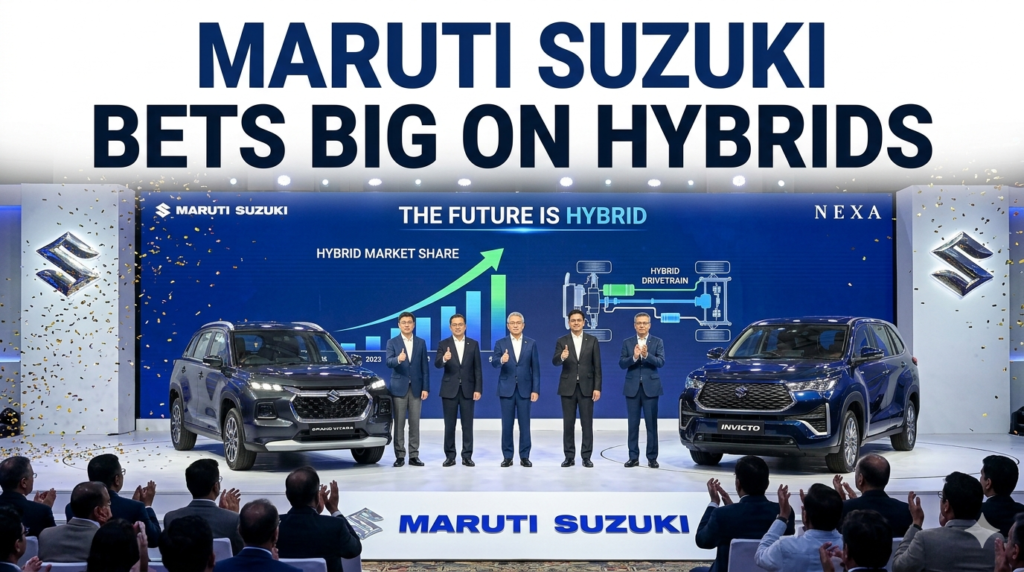
Maruti Suzuki is betting big on the future of sustainable mobility with the help of hybrids and not electric cars. As a result, the company is currently developing a series hybrid powertrain which will be much different than the current strong hybrid cars which it offers. Here are all the details about the upcoming Maruti Suzuki cars that will be offered with the range extender series hybrid powertrain.
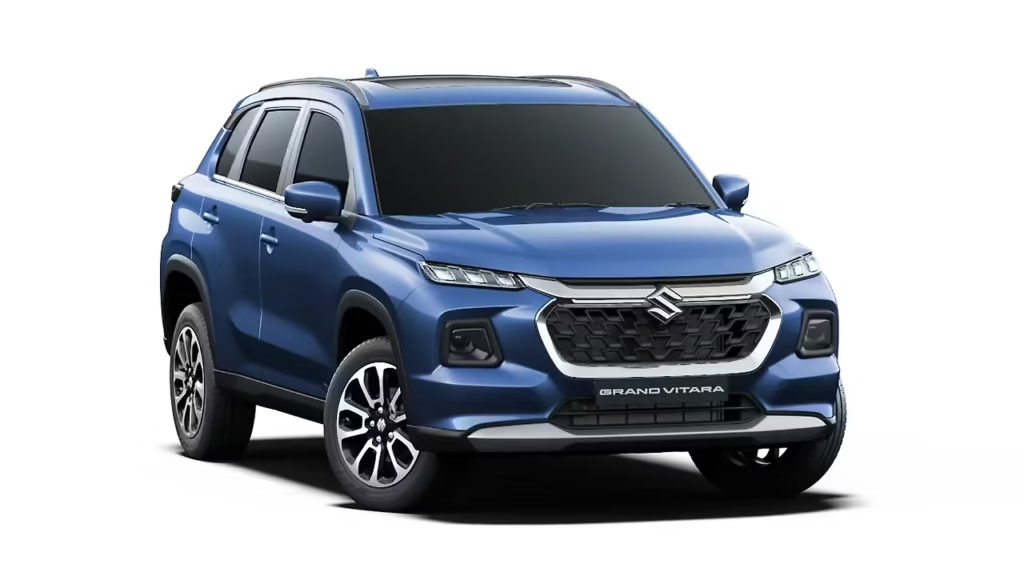
Maruti Suzuki has established itself as a leader in India’s hybrid market through models like the Grand Vitara and Invicto, which use Toyota-sourced strong hybrid (series-parallel) technology. These systems allow for seamless blending of petrol and electric power, including short EV-only driving modes, delivering excellent efficiency in larger vehicles. However, to make hybrids more accessible in mass-market segments—particularly compact cars and crossovers—Maruti is shifting focus to an in-house developed series hybrid setup, often referred to as a range extender hybrid.
Unlike the current strong hybrids (series-parallel), where the petrol engine can directly drive the wheels alongside the electric motor, the new series hybrid works differently:
- The petrol engine acts primarily as a generator (range extender), producing electricity to charge a small battery pack or directly power the electric motor.
- The wheels are driven exclusively by an electric motor, providing smoother, EV-like driving feel in many conditions.
- This setup uses a simpler design with fewer moving parts, making it cheaper to produce and ideal for affordable models.
- It pairs with the new Z12E 1.2-litre three-cylinder naturally aspirated petrol engine from the Z-Series family.
- The battery is compact (around 1.5–2 kWh), and the system prioritizes high fuel efficiency over pure performance.
Reports indicate this powertrain could achieve 35 km/l or more (with some earlier targets even suggesting up to 40 km/l in optimal conditions), making it one of the most fuel-efficient options in its class and a strong alternative to full EVs, which face challenges like charging infrastructure and higher costs in India.Maruti’s strategy emphasizes hybrids as a practical bridge to sustainable mobility, avoiding heavy reliance on pure EVs in the near term due to market readiness.
The new HEV (Hybrid Electric Vehicle) series hybrid is set to debut in compact, high-volume models starting around 2026–2027. Key upcoming cars include:
- Fronx Facelift / Hybrid Variant
Expected launch: 2026–2027 (some sources point to facelifted model as the debutant).
This crossover will be the first to feature the series hybrid setup. It will build on the existing Fronx’s stylish design, potentially adding features like Level 2 ADAS. The range-extender system aims to deliver exceptional city efficiency, positioning it as a fuel-sipper in the sub-4m crossover segment. - Next-Generation Baleno
Expected launch: 2026–2027.
The popular premium hatchback will receive a full update with a new design language, more premium interior, and the Z12E-based series hybrid. It promises to become one of India’s most fuel-efficient hatchbacks, targeting budget-conscious buyers seeking low running costs without compromising on practicality. - Other Potential Models
- Swift (possible hybrid variant in future updates).
- Small MPV (based on concepts like Spacia, potentially with sliding doors for family use).
These could follow as the technology scales to more segments.
For larger SUVs like the upcoming 7-seater Grand Vitara derivative or other premium models, Maruti continues with Toyota’s proven 1.5L strong hybrid system rather than the in-house series setup.This shift to series hybrids underscores Maruti Suzuki’s pragmatic approach: delivering affordable, high-mileage options that align with India’s fuel prices, road conditions, and infrastructure. By focusing on hybrids over rushing into mass EVs, the company aims to capture growing demand for greener yet practical mobility while targeting significant hybrid volume growth in the coming years.As development progresses, expect more official details on specifications, pricing, and exact timelines—watch for updates around auto shows or company announcements in 2026.