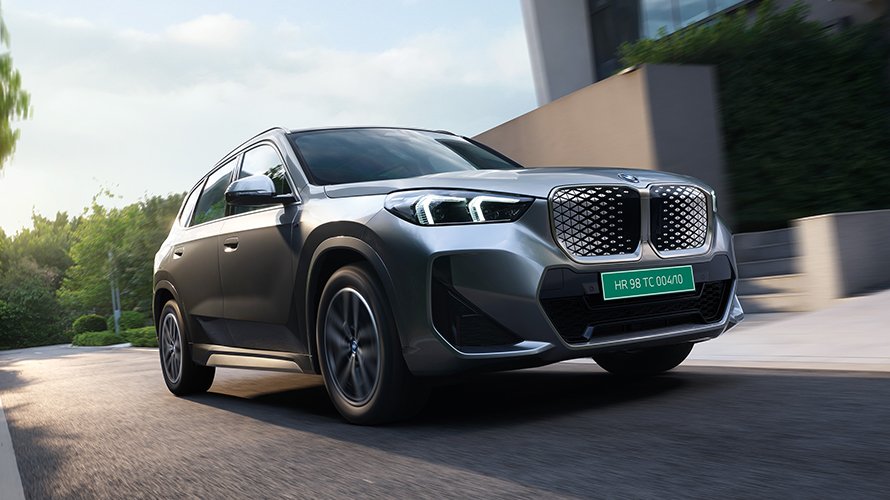
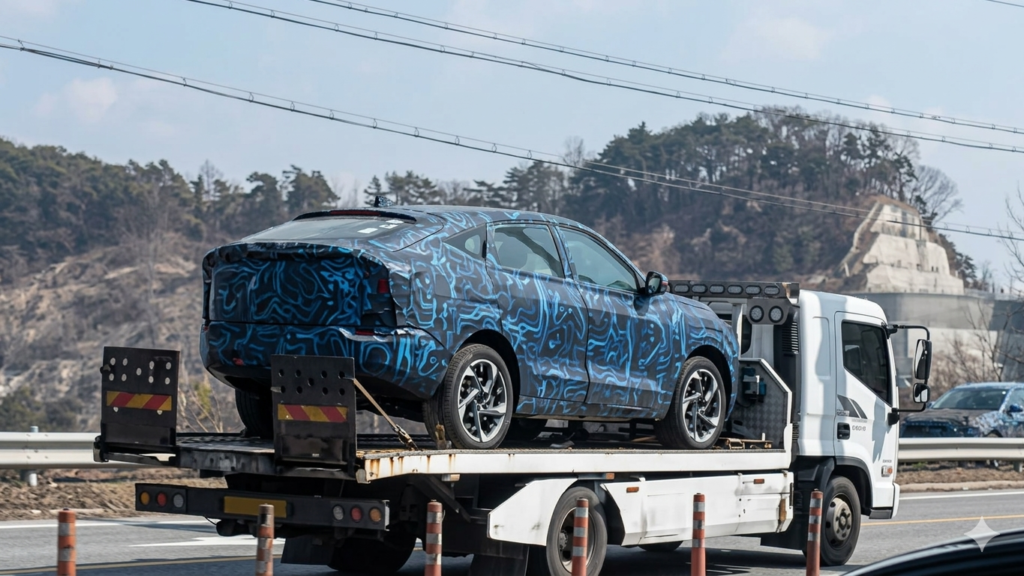
The recent sighting of a Mahindra XEV 9e in South Korea, captured in spy shots while being transported on a flatbed truck and fully camouflaged, has sparked significant speculation in the automotive community. This premium electric SUV, already a standout success in India since its launch in late 2024 (with updates and variants continuing into 2025), appearing in one of the world’s most competitive EV markets raises intriguing questions about Mahindra’s global ambitions.
The XEV 9e is part of Mahindra’s “Electric Origin” lineup, built on the advanced INGLO platform—a dedicated EV skateboard architecture designed for flexibility, performance, and efficiency. It’s a mid-size crossover SUV with a coupé-inspired sloping roofline, bold futuristic styling, and strong road presence.Key highlights include:
- Battery options: 59 kWh or 79 kWh (using Blade LFP cells from BYD FinDreams or similar).
- Range: Up to 656 km (MIDC certified for the 79 kWh variant), with real-world figures often exceeding 500 km in mixed conditions.
- Performance: Rear-wheel drive, with the top variants delivering around 210 kW (282 hp) and 380 Nm torque, achieving 0-100 km/h in about 6.8 seconds.
- Features: Level 2+ ADAS, adaptive cruise control, hands-free parking, premium interiors with spacious seating, large boot (663 liters + 150 liters frunk), advanced infotainment, and options like intelligent adaptive suspension.
- Pricing in India: Starting around ₹21.90 lakh and going up to ₹31.25 lakh (ex-showroom), positioning it as a value-packed premium EV.
It has earned praise for its ride quality, comfort, tech loadout, and ability to compete with (or outperform) rivals like the Hyundai Creta EV, Tata Curvv EV, and others in drivability and features.
Recent social media posts (from sources like Trakin Auto and car enthusiast clubs) and automotive sites show the XEV 9e in full camouflage, spotted in South Korea. This follows a similar pattern with the smaller sibling, the Mahindra BE 6e, which was also spied there shortly after its Indian debut. The vehicle was seen being hauled, suggesting engineering testing, homologation runs, or benchmarking activities rather than casual use.South Korea is home to EV powerhouses Hyundai and Kia, with a highly developed charging infrastructure, strict emissions norms, and fierce domestic competition. It’s also a key export and R&D hub for global automakers.
Several scenarios could explain the presence of the XEV 9e in South Korea:
- Benchmarking by Korean Giants
Hyundai or Kia engineers might be evaluating the XEV 9e as a reference point. The Indian EV has gained attention for its competitive pricing, long range, and feature-rich package—potentially pressuring Korean brands in the mid-size electric SUV segment. Past spy shots and reports have fueled speculation that it’s being used for reverse-engineering or competitive analysis. - Mahindra’s Global Expansion Plans
Mahindra has explicitly stated intentions to take its INGLO-based EVs overseas, including right-hand-drive markets initially. South Korea could serve as a testing ground for extreme weather validation, high-speed stability, local charging compatibility (CCS2 standard), or regulatory homologation. A camouflaged unit hints at pre-production or adapted prototypes being refined for international specs. - Potential Market Entry
While not officially confirmed, South Korea represents a lucrative premium EV market. If Mahindra adapts the XEV 9e (or a variant) for local preferences—such as enhanced connectivity, safety features, or even collaborations—it could challenge established players. The brand’s rising global profile, boosted by positive reactions from Japanese and Korean visitors at events like the Bharat Mobility Global Expo, supports this possibility. - Partnership or Collaboration
Less likely but intriguing: Mahindra has historical ties in components and tech ecosystems. The sighting could relate to supply chain evaluations (e.g., batteries or motors) or exploratory talks, though no concrete evidence points to this.
The XEV 9e has already turned heads internationally—Anand Mahindra himself shared proud moments of Japanese and Korean auto enthusiasts photographing the BE 6 and XEV 9e at expos, calling it an emotional milestone for Indian engineering.
With India’s EV market booming and Mahindra pushing “Made in India” premium EVs, sightings like this signal the brand’s shift from domestic player to potential global contender. Whether it’s defensive benchmarking by rivals or proactive steps toward exports, the camouflaged XEV 9e in South Korea underscores one thing: Indian EVs are now on the world’s radar, and they’re being taken seriously.Stay tuned for official announcements—Mahindra’s next moves could redefine the competitive landscape in Asia’s EV heartlands.