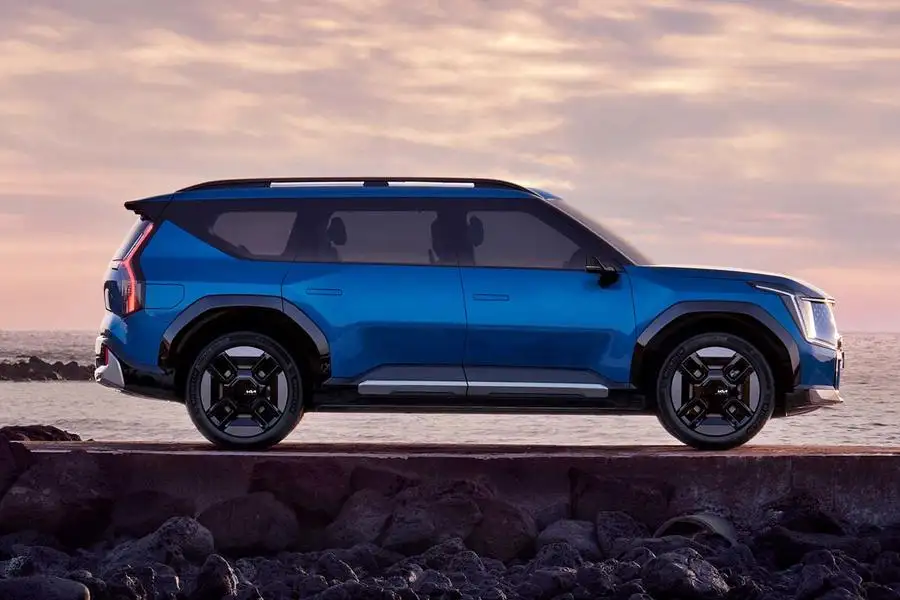
In a electrifying surge for the Indian automotive market, Kia India has shattered its own records by posting its highest-ever monthly electric vehicle (EV) sales in October 2025. The star of the show? The newly launched, made-in-India Carens Clavis EV—the country’s most affordable seven-seater all-electric MPV—which has injected a fresh charge into Kia’s burgeoning EV portfolio. With 658 units retailed last month, Kia not only claimed a 4% slice of the overall electric passenger vehicle (e-PV) market but also rocketed to the No. 4 spot among e-PV original equipment manufacturers (OEMs), leapfrogging ahead of heavyweights like BYD India and Hyundai Motor India.This milestone marks a pivotal moment for the Korean automaker’s Indian arm, which first dipped its toes into the EV waters back in June 2022 with the premium EV6 crossover. Fast-forward to today, and Kia is no longer a fringe player but a formidable contender in India’s rapidly greening mobility landscape.
A Game-Changer on Seven Seats: Enter the Carens Clavis EV
At the heart of Kia’s October triumph is the Carens Clavis EV, a vehicle that’s redefining accessibility in the EV segment. Priced aggressively to undercut competitors, this homegrown MPV combines family-friendly practicality with zero-emission efficiency, making it a no-brainer for urban households eyeing sustainable transport without breaking the bank. As India’s first made-in-India seven-seater EV, it boasts a spacious cabin, advanced battery tech for competitive range, and features tailored for local roads—from robust suspension to seamless integration with fast-charging networks.Launched amid a wave of government incentives for domestic EV manufacturing, the Carens Clavis EV has resonated deeply with price-sensitive buyers. “It’s not just about going electric; it’s about making it viable for the masses,” said a Kia spokesperson in a recent statement. Early adopters praise its blend of affordability (starting under ₹20 lakh ex-showroom) and versatility, positioning it as a direct rival to petrol and hybrid MPVs while accelerating Kia’s shift toward electrification.The model’s debut has been nothing short of transformative. While Kia offered a trio of EVs prior—the EV6, EV9, and the compact EV3—the Carens Clavis EV’s mass-market appeal has unlocked pent-up demand, propelling the brand’s sales from modest trickles to a torrent.
Breaking Records: From 47 Units to 658 in a Year
Kia India’s EV journey hasn’t been a straight line. Between its market entry in mid-2022 and July 2025, monthly retail figures hovered below 90 units, hampered by high import duties, limited infrastructure, and nascent consumer awareness. But the tide turned dramatically this summer.August 2025 saw the first breakthrough with 464 units sold—a quantum leap fueled by the EV3’s introduction and easing supply chains. September built on that momentum with 528 deliveries, and October’s 658 units represent a staggering 25% month-on-month (MoM) jump. Year-over-year (YoY), that’s a mind-boggling 1,300% increase from October 2024’s mere 47 units, underscoring how quickly Kia has scaled on a once-low base.
To put this in perspective, here’s a snapshot of Kia’s monthly EV retail sales since inception:
| Month/Year | Retail Sales (Units) | Key Notes |
|---|---|---|
| Jun 2022 | 12 | EV6 launch; initial imports |
| Jul–Dec 2022 | 20–45 | Steady but low-volume growth |
| Jan–Dec 2023 | 30–65 | EV6 ramps up; market education focus |
| Jan–Jul 2025 | 40–89 | Pre-Clavis plateau; under 90 units/month |
| Aug 2025 | 464 | First 100+ month; EV3 boost |
| Sep 2025 | 528 | MoM +14%; No. 5 ranking |
| Oct 2025 | 658 | Record high; No. 4 ranking; 25% MoM growth |
Data sourced from Kia India retail figures and FADA reports. Figures represent passenger EVs only.This three-month streak of triple-digit sales isn’t just numerical—it’s a signal of structural change. Kia’s localization efforts, including battery assembly at its Chakan plant, have slashed costs and wait times, making EVs more attainable.
Claiming the Podium: 4% Market Share and a Leap to No. 4
October’s EV market in India was robust, with total e-PV sales hitting 18,036 units—a 32% YoY rise driven by festive demand and policy tailwinds. Kia’s 658 units translate to a 4% share, a far cry from its sub-1% foothold a year ago when it languished at No. 9 among e-PV OEMs.The ascent to No. 4 is particularly sweet: It edges out BYD India (previously a thorn in Kia’s side with its Atto 3 and e6 models) and even Hyundai Motor India, Kia’s corporate sibling under the Hyundai-Kia umbrella. Tata Motors remains unchallenged at the top, followed by Mahindra and MG Motor, but Kia’s five-rank jump in a single year speaks volumes about its aggressive playbook.”This isn’t luck—it’s strategy,” notes automotive analyst Rajesh Menon. “By betting on affordable, India-specific EVs like the Carens Clavis, Kia is capturing the family segment where hybrids still dominate. Overtaking BYD shows Korean engineering trumping Chinese volume in a nuanced market.”
What’s Next for Kia India?With the Carens Clavis EV leading the charge, Kia isn’t resting on its laurels. The company eyes 1,000+ monthly sales by Q1 2026, backed by an expanding dealer network and partnerships for charging infrastructure. Plans for more localized models, including a potential electric Seltos variant, hint at further disruption.As India accelerates toward its 30% EV penetration goal by 2030, Kia’s October feat is a beacon for OEMs worldwide: In the world’s third-largest auto market, innovation meets affordability to spark real adoption. For now, Kia India is the one with the biggest smile—and the fastest-charging MPV—in the room.