India’s electric car conversation has evolved beyond the basics. Early adopters have paved the way, charging infrastructure has matured, and range anxiety is largely a thing of the past for most buyers. EVs are no longer a “maybe”—they’re a serious alternative to petrol or diesel for new car shoppers. The real question now is: Which electric vehicle truly fits family life without feeling like a compromise?
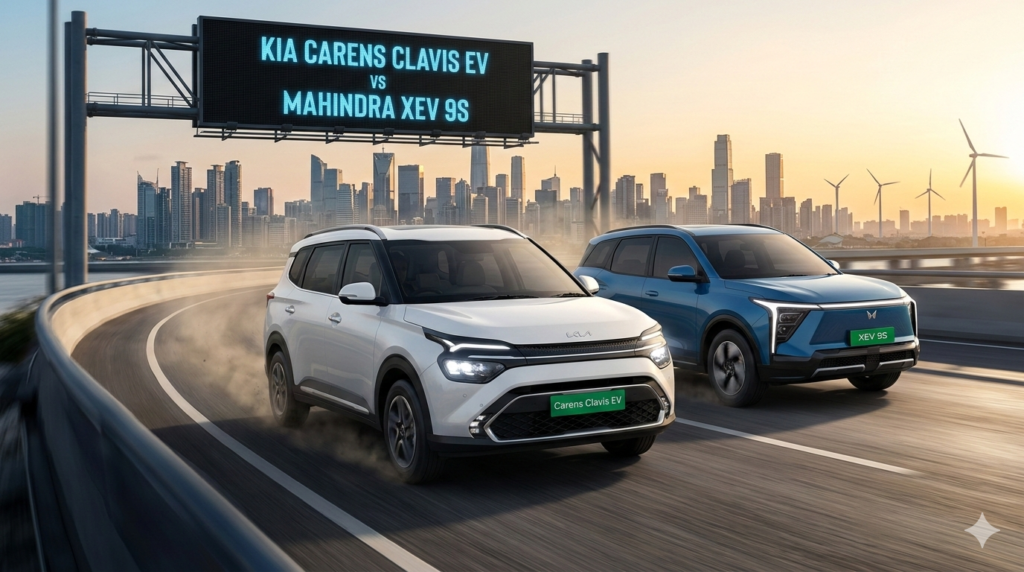
In the sub-₹30 lakh segment (ex-showroom), the options for genuine three-row electric vehicles are limited. This makes the Kia Carens Clavis EV and the Mahindra XEV 9S (often referred to in discussions as a large three-row electric SUV, with parallels to the XEV 9e family) direct, if unconventional, rivals. They tackle the same need—spacious, practical family EVs with usable range and low running costs—but from opposite ends of the design spectrum.
The Kia Carens Clavis EV is a premium electric MPV built for calm, cost-conscious families upgrading from hatchbacks, sedans, or diesel people movers like the Ertiga or XL6. The Mahindra XEV 9S is a bold, rear-wheel-drive electric SUV that aims to feel futuristic, with strong performance, commanding presence, and heavy tech integration.
Both deliver three rows, solid range, and running costs that make traditional ICE vehicles feel outdated. But their driving experiences, practicality, and appeal couldn’t be more different.
The Carens Clavis EV embraces its MPV roots with sophistication. At just over 4.55 m long, it features clean lines, aero-optimized 17-inch wheels, full-width light bars, and a refined stance. It’s compact enough for tight city parking, old neighborhoods, or basement lots—never stressful to maneuver. The smaller wheels also aid efficiency and keep replacement costs low.The XEV 9S, stretching nearly 4.8 m, commands attention with an upright, muscular posture, bold surfaces, and 18-inch wheels that give it a premium, expensive look even in lower trims. It sits above mainstream family cars visually, exuding presence that turns heads.If road presence matters most, the Mahindra wins hands-down. For daily manageability in urban India, the Kia’s smaller footprint is a clear advantage.
Pull away, and the personalities diverge sharply.The Carens Clavis EV uses front-wheel drive with around 170 PS and 255 Nm. Acceleration feels deliberately smooth and predictable—0-100 km/h in about 8.5 seconds—with no abrupt lurch. Drive modes (Eco, Normal, Sport) and the twist-and-select shifter keep things familiar. It’s quick enough for traffic lights or overtakes but reassures first-time EV buyers, older drivers, or families. Steering is light, responses progressive, and single-pedal driving smooth—ideal for tier-1 to tier-4 city commutes or remote roads.
The XEV 9S delivers 286 PS and 380 Nm to the rear wheels. It’s muscular from the first throttle input—0-100 km/h in just over 7 seconds—with sharp response that makes overtakes effortless, even fully loaded. It excites enthusiasts while drive modes tame its bulk for everyday use. Single-pedal driving is available, though the Kia’s feels more consistent.
Both feel sprightly compared to ICE vehicles—the Kia reassures with familiarity, the Mahindra thrills with surge.
Refinement is excellent in both: low motor noise/vibration in the Kia, superior wind/road isolation in the Mahindra. Braking is linear and progressive (with regen), though the Mahindra’s sharper feel inspires confidence (minor tire squeal on concrete noted in tests). Ride quality favors the Mahindra—its multi-link rear suspension offers composed, long-distance comfort across all rows, nearing entry-luxury levels on higher trims. The Kia is firmer when loaded but never uncomfortable, feeling car-like and unintimidating.
In corners, the Kia’s lower stance and size reduce intimidation, while the Mahindra feels more planted at speed (with some understeer/traction intervention in the FWD Kia on rough patches).
The Carens Clavis EV prioritizes ease: intuitive conventional infotainment, physical AC knobs, tasteful ambient lighting, and excellent ergonomics. The drive selector behind the wheel frees console space for cables/knick-knacks. Space surprises—roomy across rows despite the footprint, with contoured second-row seats comfortable for long hauls (better than Ertiga/XL6). Third-row access is thoughtful (one-touch tumble, adjustable reach), though best for kids/teens/slim adults. Boot is generous with rows folded, low lip, and a useful frunk for cables. Amenities include multiple USBs, fast chargers, rear fan control, and boss-mode seat adjustment.
The XEV 9S counters with sheer volume, generous cushioning, and premium touches—panoramic sunroof, ventilated rear seats, boss function, device holders, 65W chargers, and wireless charging. Higher trims feel near-luxury with triple screens and advanced interfaces (though with a learning curve). Third row is similarly kids/teens-oriented (higher floor from battery pack makes ingress trickier, knees-up posture, less thigh support). Boot expands massively with rows down for family trips or gear.
Both offer Level-2 ADAS, comprehensive airbags, and strong builds (Kia’s lack of published Global NCAP rating noted). Real-world efficiency hovers around 6-6.2 km/kWh—the Kia delivers 320-350 km practical range from its 51.4 kWh pack (up to 490 km ARAI), while the Mahindra’s larger options (up to 79 kWh) promise longer distances despite slightly lower efficiency.The Mahindra XEV 9S edges the comparison overall: more space, superior ride, stronger performance, and aspirational premium feel make it the family EV that announces the future.
Yet the Kia Carens Clavis EV tells a compelling, quieter story—easier to live with daily, more adaptable, lower purchase and running costs, and no-nonsense practicality. For families prioritizing calm manners, predictability, and wallet-friendliness over wow factor, it makes a very strong case.This isn’t MPV vs SUV—it’s about whether your family EV should shout “future” or simply make life smoother, cheaper, and more seamless. In India’s maturing EV market, both are winners depending on what you value most. Test drive them; the choice will feel personal.