The JSW Group, led by billionaire Sajjan Jindal, is making a bold entry into India’s burgeoning electric vehicle (EV) sector with a massive Rs 40,000 crore investment plan for an integrated manufacturing ecosystem in Odisha. Announced in February 2024 through a Memorandum of Understanding (MoU) with the Odisha government, this project aims to create a self-reliant setup encompassing not only EV assembly but also critical components like batteries, powertrains, and upstream materials such as copper and lithium refining—elements traditionally sourced externally by most automakers.
The Odisha initiative is structured in phases: an initial Rs 25,000 crore investment in Cuttack (Naraj) for a 50 GWh EV battery plant and vehicle manufacturing facility, followed by Rs 15,000 crore in Paradip for component production, including smelters. Expected to generate over 11,000 jobs, the project positions Odisha as a key hub for green mobility and underscores JSW’s commitment to backward integration for cost control and supply chain resilience.
JSW is not relying solely on the long-term Odisha buildup for market presence. The group has adopted a dual-track approach, leveraging its joint venture with China’s SAIC Motor—JSW MG Motor India Pvt. Ltd.—for immediate consumer-facing operations.
Formed in 2023-2024, the JV saw JSW acquire a 35% stake (with additional stakes held by Indian investors, dealers, and employees, bringing Indian ownership to majority), while SAIC retains influence but diluted control. This partnership utilizes an existing manufacturing plant in Halol, Gujarat, and an established dealer network to sell vehicles under the iconic British MG brand.
Recent launches like the MG Windsor EV (India’s first “Intelligent CUV” with innovative Battery-as-a-Service options) demonstrate the JV’s focus on affordable, tech-laden new energy vehicles (NEVs). The entity plans frequent product rollouts—every 3-6 months—to capture growing demand in India’s EV market.
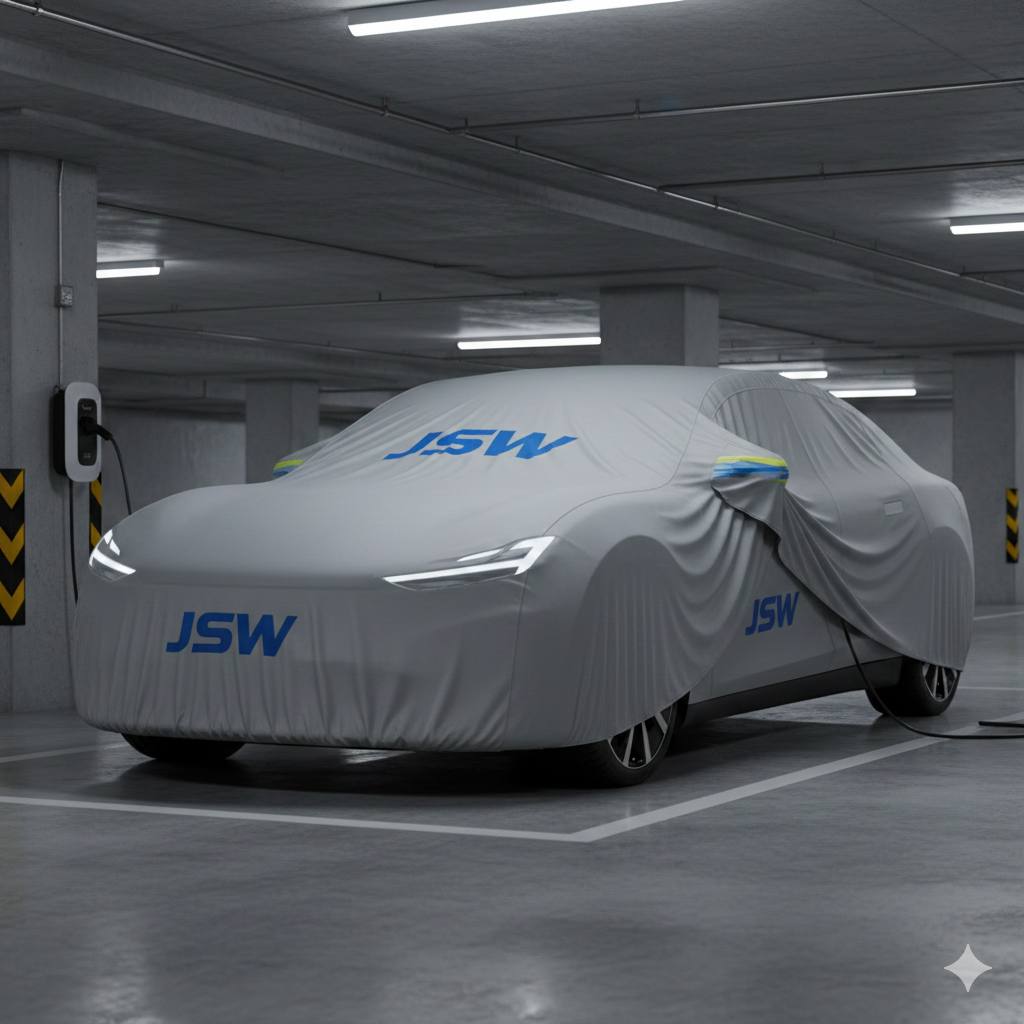
While the MG JV provides near-term sales momentum, JSW is preparing its own fully owned EV brand, separate from MG. Reports indicate the group’s first independently badged electric passenger vehicle is slated for launch in 2027, potentially drawing technology and components from partnerships, including licensing deals with global players like China’s Chery Automobile.
Manufacturing for this new brand is being set up in Maharashtra (Chhatrapati Sambhajinagar), with commercial EVs (trucks and buses) possibly arriving earlier in 2026. JSW aims for high localization (targeting 85% by mid-2026) and affordable pricing, with hints of sub-Rs 10-12 lakh models to compete in mass segments.
This independent venture allows JSW to build a distinct identity, potentially disrupting the market with “designed for India” EVs emphasizing sustainability, performance, and value.
JSW’s multi-pronged strategy—long-term integrated manufacturing in Odisha, immediate sales through the MG JV, and a future proprietary brand—positions the conglomerate as a serious contender in India’s EV race. By controlling upstream supplies and partnering selectively for technology, JSW seeks to reduce import dependence, create jobs, and accelerate EV adoption.
As of late 2025, the Odisha project remains committed despite earlier speculation of shifts, while the MG JV continues aggressive expansion. With India’s EV market poised for explosive growth, JSW’s investments could catalyze a more localized, competitive ecosystem, benefiting consumers with advanced yet accessible green mobility options.