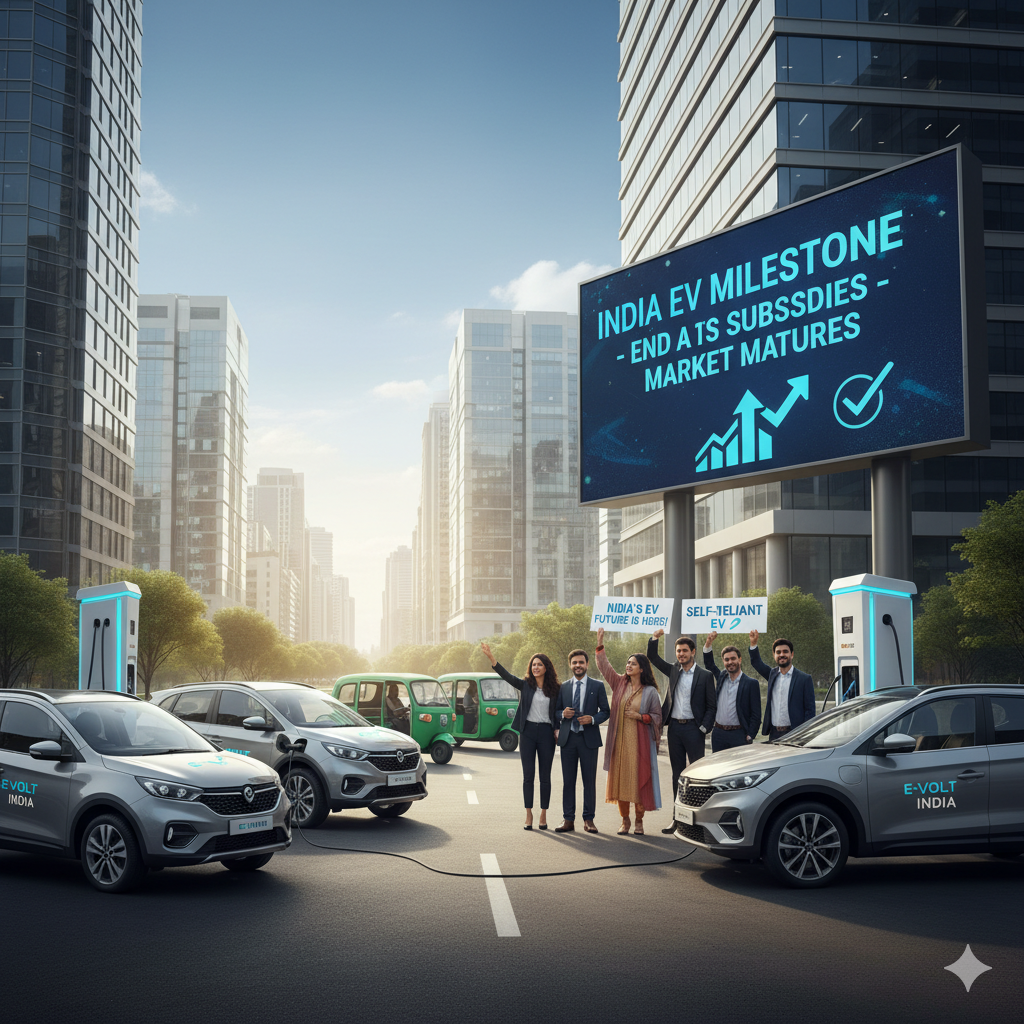
In a pivotal moment for India’s burgeoning electric vehicle (EV) industry, the government is poised to wind down its extensive subsidy programs, a move that underscores the sector’s growing self-sufficiency and readiness to compete on the global stage. This shift marks the culmination of years of targeted interventions that have transformed EVs from a niche experiment into a viable alternative to traditional fossil fuel-dependent transport. Hanif Qureshi, Additional Secretary at the Ministry of Heavy Industries and Public Enterprises (HI&PE), delivered this candid assessment during a keynote address at the recent Automotive Component Manufacturers Association (ACMA) conference in New Delhi. “The time has come to move away from incentives,” Qureshi declared, emphasizing that the EV ecosystem has achieved sufficient maturity to thrive without the crutch of fiscal support. His remarks, met with a mix of applause and thoughtful nods from industry leaders, signal a strategic pivot from hand-holding to fostering long-term competitiveness.
A Decade of Transformation Through Policy Support
The journey to this inflection point has been fueled by a series of ambitious government initiatives designed to accelerate the adoption of clean mobility. Launched in 2015, the Faster Adoption and Manufacturing of Electric Vehicles (FAME) scheme—followed by its enhanced Phase II in 2019—provided demand-side incentives, including subsidies for buyers of electric two-wheelers, three-wheelers, and buses. These were complemented by the Pradhan Mantri E-Drive (PM E-DRIVE) scheme, which expanded support to charging infrastructure and public transport electrification.
On the supply side, the Production-Linked Incentive (PLI) scheme has been instrumental in attracting investments from global giants like Tata Motors, Ola Electric, and international players such as Hyundai and MG Motor. These programs have not only lowered upfront costs for consumers but also spurred domestic production, reducing reliance on imports and curbing carbon emissions in one of the world’s most polluted urban landscapes.
The results are tangible. According to data from the Federation of Automobile Dealers Associations (FADA), EV penetration in the overall vehicle market reached an impressive 7.8% in Fiscal Year 2025 (FY25, ending March 2025)—a sharp rise from under 1% just five years prior. Two-wheelers, which dominate India’s roads, accounted for the lion’s share of this growth, with over 1.5 million units sold in the year. This surge has been particularly pronounced in metro cities like Delhi and Bengaluru, where state-level incentives and improving charging networks have tipped the scales in favor of EVs.
Qureshi highlighted these metrics during his speech, noting that “the foundations have been laid” for a sustainable transition from internal combustion engines to battery-powered alternatives. Yet, he cautioned that complacency is not an option. As subsidies taper off—potentially by the end of the current fiscal year—the onus will fall on manufacturers to innovate on cost, range, and performance to sustain momentum.
Eyes on the Supply Chain: Building Resilience from the Ground Up
With subsidies on the wane, the ministry’s new north star is the creation of a resilient domestic manufacturing base, particularly for high-tech components that form the backbone of EV technology. At the forefront of this agenda are permanent magnets—rare-earth elements essential for electric motors and batteries—which India currently imports almost entirely from China.
Qureshi revealed that the HI&PE is in active consultations with industry stakeholders, including battery makers and component suppliers, to map out strategies for localization. “We’re focusing on supply chain resilience to mitigate geopolitical risks and ensure affordable access to critical materials,” he said. This includes exploring joint ventures with international firms specializing in magnet production and investing in R&D for alternative materials that reduce dependency on scarce resources.
The emphasis on self-reliance aligns with India’s broader “Atmanirbhar Bharat” (Self-Reliant India) vision. Recent announcements, such as the allocation of ₹18,100 crore under the PLI scheme for advanced chemistry cells, underscore this commitment. Industry experts view these efforts as timely, warning that vulnerabilities in the global supply chain—exacerbated by trade tensions and raw material shortages—could otherwise derail EV growth.
Challenges Ahead and the Road to Global Leadership
While the subsidy phase-out is a vote of confidence in the sector, it is not without risks. Critics, including some smaller EV startups, argue that abrupt cuts could stifle innovation among cash-strapped players still scaling up. Rising input costs and infrastructure gaps—India’s public charging network lags behind targets, with only about 12,000 stations operational as of October 2025—remain hurdles
.Nevertheless, optimism prevails. Qureshi’s vision positions India not just as an EV adopter but as a manufacturing powerhouse, potentially exporting vehicles and components to Southeast Asia and Africa. With projections from NITI Aayog estimating EVs could capture 30% of the market by 2030, the government’s recalibration could propel the country toward its net-zero ambitions.As the ACMA conference wrapped up, one thing was clear: India’s EV revolution is entering adulthood. Subsidies may be fading, but the drive for cleaner, smarter mobility is just accelerating. For automakers, policymakers, and consumers alike, the message is unequivocal—it’s time to shift gears and steer toward sustainability on merit alone.