India’s electric vehicle (EV) landscape is charging ahead with unprecedented momentum, as green cars now account for nearly 5% of total passenger vehicle (PV) sales—almost double the 2.6% share recorded at the end of FY25. This surge underscores a maturing market, fueled by falling battery costs, expanding charging infrastructure, and aggressive launches from both domestic giants and luxury marques. In a stark illustration of this acceleration, the first half of FY26 (April-September 2025) witnessed 91,726 EV units sold, representing a whopping 108% year-on-year (YoY) increase from 44,172 units in the same period last year. Remarkably, this half-year tally already covers about 86% of the entire FY25 EV sales volume of approximately 1.07 lakh units.
The Federation of Automobile Dealers Associations (FADA) attributes this explosive growth to standout performances from key players including Tata Motors, Mahindra & Mahindra, JSW MG Motor, and BMW. As consumer preferences shift toward sustainable mobility amid rising fuel prices and environmental awareness, EVs are no longer niche—they’re becoming mainstream. This momentum was particularly evident during the recent festive season, where demand spiked across segments, from affordable urban commuters to high-end luxury sedans.
Tata Motors, India’s EV sales leader, exemplified this festive fervor. Shailesh Chandra, MD & CEO of Tata Motors Passenger Vehicles, highlighted the brand’s robust trajectory: “Our EV portfolio continued its upward trajectory with over 10,000 units retailed in the 30-day window from Navratri to Diwali. This is up 37%. In fact, the second quarter of this fiscal has seen our EVs grow by 59% YoY on a total volume of 25,000 units. The share of EVs at the end of Q2 stands at 17% of overall sales.” Models like the Nexon EV and Punch EV have been instrumental, benefiting from localized production and competitive pricing that has broadened appeal beyond metro cities.
Not to be outdone, JSW MG Motor has emerged as a formidable contender in the affordable EV space. Its Windsor EV SUV, launched just a year ago, has scaled to over 50,000 units sold—an impressive feat in a market still grappling with range anxiety and infrastructure gaps. Anurag Mehrotra, MD of JSW MG Motor, emphasized the brand’s EV dominance: “The share of EVs to the company’s sales is 80% as it witnesses strong traction across segments. EVs are expected to cross 7% industry market share by this year-end. Together, EVs and hybrids are likely to hit 30% share in a decade.” This projection aligns with broader industry forecasts, signaling a hybrid-EV synergy that could reshape India’s automotive ecosystem over the next ten years.
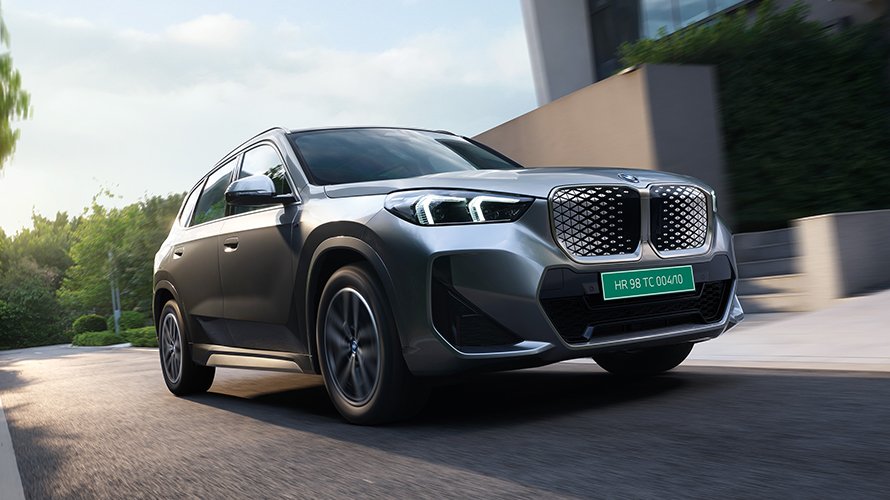
In the luxury arena, where sustainability meets sophistication, adoption rates are even more electrifying. BMW India reported delivering 2,509 electric BMWs and MINIs from January to September 2025—a staggering 246% YoY growth. Hardeep S. Brar, President & CEO of BMW India, noted: “BMW iX1 long wheelbase is the highest-selling electric car, followed by the flagship i7. The share of EVs in total sales further increased to 21%… By 2030, this is further expected to increase to 30%.” The iX1’s locally assembled long-wheelbase variant has resonated with Indian buyers seeking premium features like advanced driver assistance and spacious interiors tailored for family use.
Mercedes-Benz India is equally bullish, with EVs forming a cornerstone of its decarbonization strategy. Santosh Iyer, MD & CEO, shared: “Our top-end battery electrics drive our strategy with the locally-produced EQS SUV recording its highest sales ever, accelerating our EV penetration to 8% of total volumes. The company has seen a 10% growth in EV sales in the second quarter of this fiscal.” The EQS SUV’s success highlights how luxury brands are leveraging India-specific adaptations, such as enhanced ground clearance for pothole-ridden roads, to boost uptake.
Mahindra & Mahindra rounds out the top performers, with its XUV400 EV contributing to the overall tally through targeted marketing in Tier-2 and Tier-3 cities. While exact half-year figures for M&M weren’t detailed, the company’s focus on rugged, value-driven electrics has helped democratize EV ownership.
Looking ahead, the horizon is brighter than ever. With Maruti Suzuki and Hyundai gearing up for locally manufactured EVs starting next year, analysts anticipate exponential growth in market penetration. Subsidies under the Electric Mobility Promotion Scheme 2024, coupled with investments in public charging networks exceeding 10,000 stations nationwide, are set to further erode barriers. As Brar and Mehrotra’s visions converge—30% combined EV-hybrid share by 2035 and luxury EVs at 30% by 2030—India is poised not just to electrify its roads, but to lead the global charge in affordable, sustainable two- and four-wheelers.This isn’t merely a sales story; it’s a testament to India’s pivot toward a greener future, where innovation meets aspiration on every highway and bylane.