India’s electric vehicle (EV) market is firing on all cylinders, with passenger vehicle sales exploding in the first half of fiscal year 2026 (FY26, April to September 2025). In a remarkable display of consumer appetite for green mobility, 91,726 electric passenger vehicles (E-PVs) were sold during this period—nearly matching the entire FY25 total of around 1.07 lakh units. This surge represents a staggering 108% year-on-year (YoY) growth from the 44,172 units sold in the same half of FY25, catapulting EVs’ share in the overall passenger vehicle market to nearly 5%—more than double the 2.6% recorded at the end of FY25.Fueled by falling battery prices, expanding charging infrastructure, government incentives, and a wave of compelling models, this momentum signals a tipping point for India’s auto industry. As urban consumers prioritize sustainability and cost savings, premium and mass-market brands alike are reaping the rewards. With festive sales adding extra spark—especially during Navratri to Diwali—EVs are no longer niche; they’re becoming mainstream. Let’s zoom in on the standout performers: BMW, Mercedes-Benz, and Tata Motors, whose electric lineups are driving this electrifying growth.
BMW India: EVs Claim 21% Share, iX1 Leads the Pack
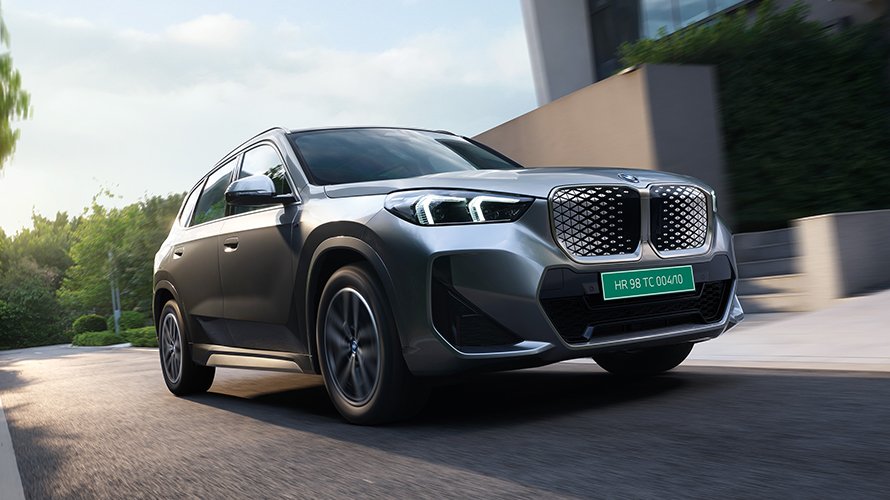
Luxury marque BMW is witnessing its electric portfolio transform from a curiosity to a volume powerhouse. Between January and September 2025, BMW Group India delivered 2,509 electric BMWs and MINIs, marking a phenomenal 246% YoY surge. This robust performance has elevated EVs to 21% of the company’s total sales, with the long-wheelbase iX1 emerging as the undisputed bestseller—its blend of premium features, locally assembled appeal, and competitive pricing resonating strongly with buyers.
Hardeep Singh Brar, President & CEO of BMW India, highlighted the trajectory: “We recorded the highest EV sales between Jan to Sept 2025.” Looking ahead, the brand is bullish, targeting over 30% EV contribution by the end of the decade through an expanded lineup, including upcoming models like the i5 sedan and Neue Klasse EVs. This isn’t just growth; it’s a strategic pivot that’s bolstering BMW’s premium positioning in a market hungry for high-end electrics.
Mercedes-Benz India: Record Quarter for EVs, EQS SUV Shines
Not to be outdone, Mercedes-Benz India notched its strongest-ever quarter for electric sales in Q2 FY26 (July-September 2025), with a 10% YoY increase propelling EVs to nearly 8% of its overall portfolio. Leading the charge was the locally produced EQS SUV, which clocked its highest-ever monthly figures, underscoring the model’s success in blending opulent luxury with zero-emission prowess.
Santosh Iyer, MD & CEO of Mercedes-Benz India, emphasized the strategic importance: “EVs are a key element in the company’s decarbonisation roadmap. Our top-end battery electrics drive our strategy.” This performance aligns with Mercedes’ broader Q2 success, where total sales hit a record 5,119 units, driven by strong SUV demand and the long-wheelbase E-Class. As India’s luxury EV segment grows—up 66% YoY in the first five months of 2025—Mercedes is well-positioned to capture affluent buyers seeking sophisticated, tech-laden electrics.
Tata Motors: 59% Q2 Surge, Festive Fireworks with 25,000 Units
In the mass-premium segment, homegrown giant Tata Motors continues to dominate, reporting a 59% YoY jump in EV sales during Q2 FY26, with approximately 25,000 units retailed. EVs now comprise 17% of its passenger vehicle sales, a testament to the enduring popularity of models like the Nexon.ev, Punch.ev, and Tigor.ev. September alone saw a record 9,191 EV units dispatched—a 96% YoY leap—capping off a quarter where the Punch-Nexon duo fueled overall PV volumes.The festive season amplified this momentum, with over 10,000 EVs sold in the 30-day Navratri-to-Diwali window, up 37% YoY. Shailesh Chandra, MD & CEO of Tata Motors Passenger Vehicles, noted: “EVs have also played a strong part in the company’s healthy performance during the just-ended festive season. Our EV portfolio continued its upward trajectory.” Tata’s edge lies in its affordable, feature-rich offerings and nationwide charging network via Tata Power, making EVs accessible to middle-class families and fleet operators alike.
A Greener Horizon: What’s Next for India’s EV Market?
This H1 FY26 boom—covering 86% of FY25’s full-year EV PV sales in just six months—portends even bigger numbers ahead. Industry watchers like Anurag Mehrotra, MD of JSW MG Motor, predict EVs will surpass 7% market share by FY26-end, with hybrids joining to hit 30% in the next decade. Incoming launches from Maruti Suzuki and Hyundai, coupled with policy pushes like FAME-III incentives, could accelerate this further.
Yet challenges remain: supply chain hiccups, range anxiety in tier-2/3 cities, and GST tweaks on batteries. Still, with exports also surging—India shipped a record 31.4 lakh vehicles in H1 FY26, up 24% YoY—the ecosystem is maturing rapidly. For buyers, it’s a golden window: lower running costs (under Rs 1 per km), instant torque, and eco-credentials make EVs irresistible. As India aims for 30% EV penetration by 2030, these figures aren’t just stats—they’re the spark of a sustainable mobility revolution. Buckle up; the road ahead is electric.