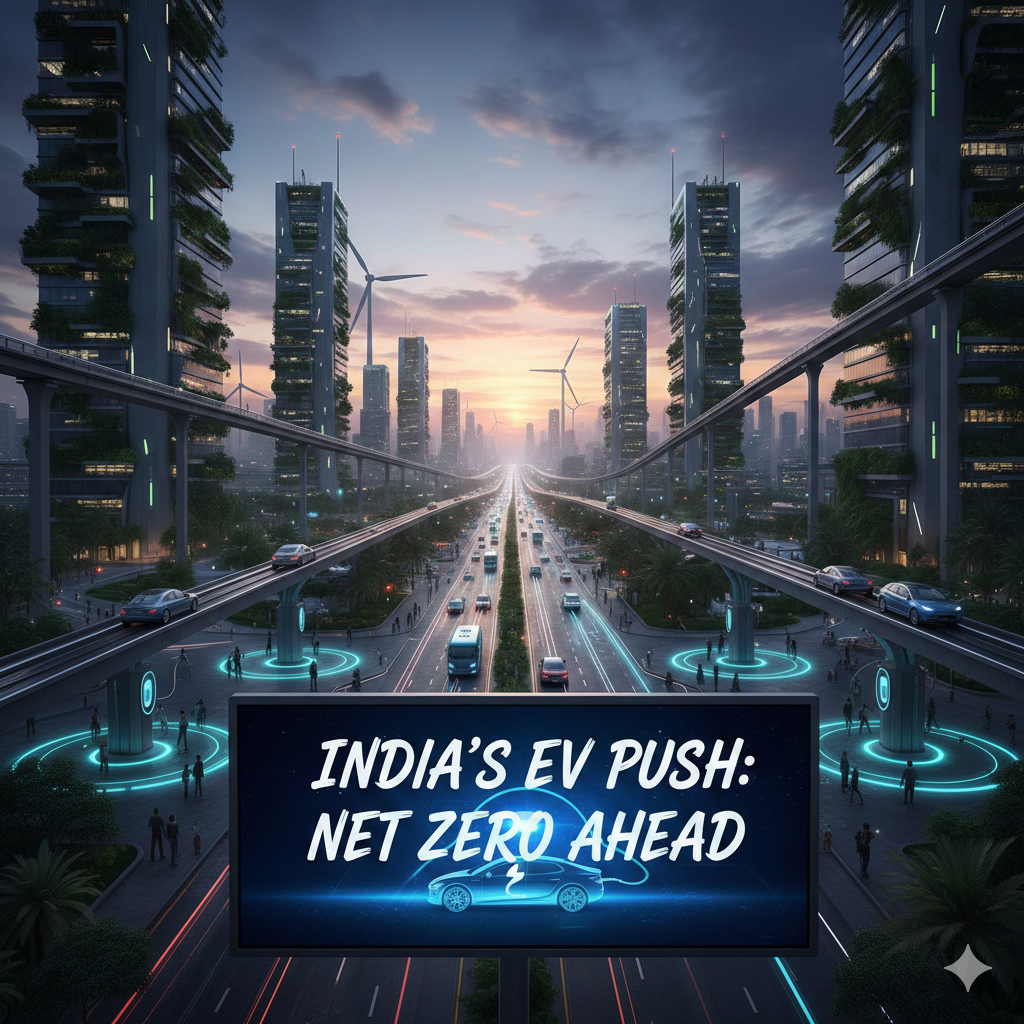
India’s ambitious push toward electric mobility is gaining significant momentum, with the country targeting 30% electric vehicle (EV) market share by 2030 as part of its broader climate commitments. This includes achieving Net Zero emissions by 2070 and reducing carbon emissions by one billion tonnes by 2030. The transition to EVs represents a critical technological leap to meet global climate goals, lower oil dependence, improve urban air quality, and foster domestic manufacturing.
In 2025, EV penetration reached approximately 8% of total automobile sales, a notable increase driven by strong growth in key segments. Electric two-wheelers (e-2Ws) dominated, accounting for about 56% of total EV registrations, thanks to their affordability, favorable economics, and widespread use in urban and semi-urban areas. Electric three-wheelers (e-3Ws), electric buses (e-buses), and electric four-wheelers (e-4Ws) have also seen substantial traction. This progress has been fueled by supportive government policies like the PM E-DRIVE scheme (launched in 2024 with a ₹10,900 crore outlay), state-level incentives, rapid expansion of fast-charging networks, and declining battery costs.
However, scaling EV adoption—particularly in heavy-duty segments such as trucks, buses, and commercial vehicles—faces significant infrastructure hurdles. Heavy-duty vehicles demand high-power, reliable charging solutions to minimize downtime, support long-haul operations, and handle large battery capacities. Government researchers, including those from institutions like NITI Aayog, the International Council on Clean Transportation (ICCT) in collaboration with Indian bodies, and reports aligned with Ministry of Heavy Industries guidelines, have outlined multiple charging approaches to address these challenges. While exact lists of “seven methods” may vary across studies, comprehensive analyses highlight a mix of established and emerging technologies tailored for heavy-duty EVs.
Key charging methods for heavy-duty vehicles in India include:
- Depot-based overnight/slow charging — Primary for fleet vehicles like buses and trucks returning to depots daily. Uses lower-power AC or DC chargers (typically 50-150 kW) during off-peak hours to leverage cheaper electricity and reduce grid strain.
- High-power DC fast charging at highways — Essential for long-haul trucks. Features megawatt-class chargers (250-500 kW or higher, using CCS2 standards) placed every 100-150 km along freight corridors, enabling quick top-ups (30-60 minutes) to maintain operational efficiency.
- Opportunity/mid-route charging — Short-duration high-power charging during loading/unloading or breaks at logistics hubs, ports, or warehouses, often 150-350 kW to extend range without full stops.
- Pantograph or overhead charging — Dynamic or static overhead systems (similar to trolleybuses) for e-buses on fixed routes, allowing charging while stationary at stops or depots, reducing onboard battery size and costs.
- Battery swapping — Quick modular battery exchanges at dedicated stations, ideal for high-utilization fleets like e-trucks and buses. Supported under technology-neutral incentives in schemes like PM E-DRIVE, minimizing downtime to minutes.
- Wireless/inductive charging — Emerging pad-based systems for static charging at depots or dynamic charging on roads (under pilot/research). Offers convenience without plugs, though still nascent in India.
- Smart/managed charging with V2G integration — Optimized charging schedules using software to shift loads to off-peak/renewable surplus periods, potentially including vehicle-to-grid (V2G) for grid support. Reduces peak demand and costs, as explored in ICCT and IEA studies for Indian highways.
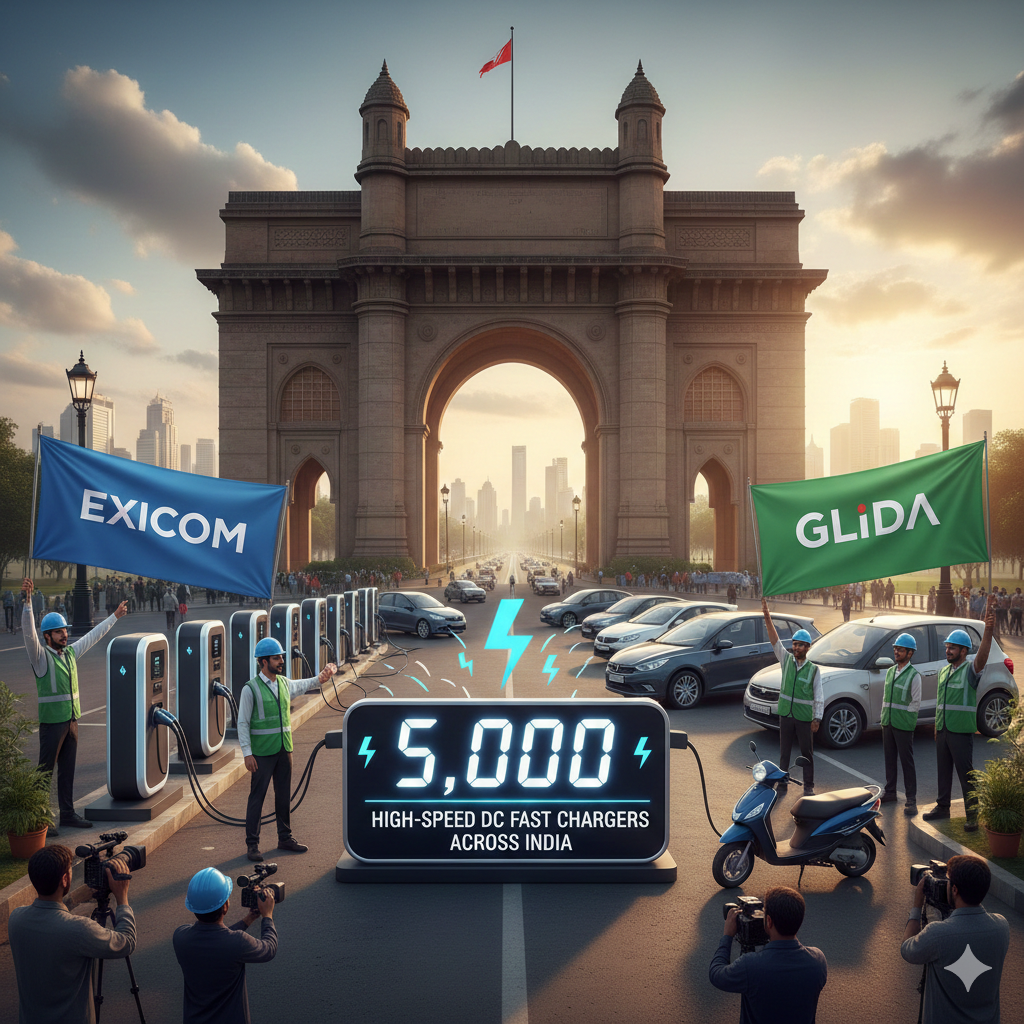
These methods address diverse needs: depot charging suits predictable routes, while highway fast charging tackles range anxiety for freight. Reports emphasize a combination—depot for daily ops, high-power for highways, and swapping for ultra-high utilization—to achieve scale.Supporting this, the government has allocated ₹2,000 crore under PM E-DRIVE for public charging infrastructure, targeting dense urban coverage, highway intervals, and fast chargers (up to 500 kW CCS-II) for heavy-duty vehicles. Guidelines mandate fast chargers every 100 km on highways, upstream infrastructure subsidies, and integration into a national unified hub. Private players like Tata Power and oil marketing companies are deploying thousands of stations.
Despite progress—with public chargers exceeding 25,000-30,000 by late 2025—challenges remain: grid capacity upgrades, uneven rural/highway coverage, high upfront costs for megawatt chargers, and the need for 9 GW+ capacity for e-trucks alone by 2030 (per ICCT estimates). Policies promote renewables integration, smart charging, and interoperability to overcome these.
India’s EV journey is accelerating, but heavy-duty electrification will determine long-term success. By prioritizing practical, multi-method charging infrastructure, the country can drive sustainable mobility, cut emissions, and position itself as a global EV leader.