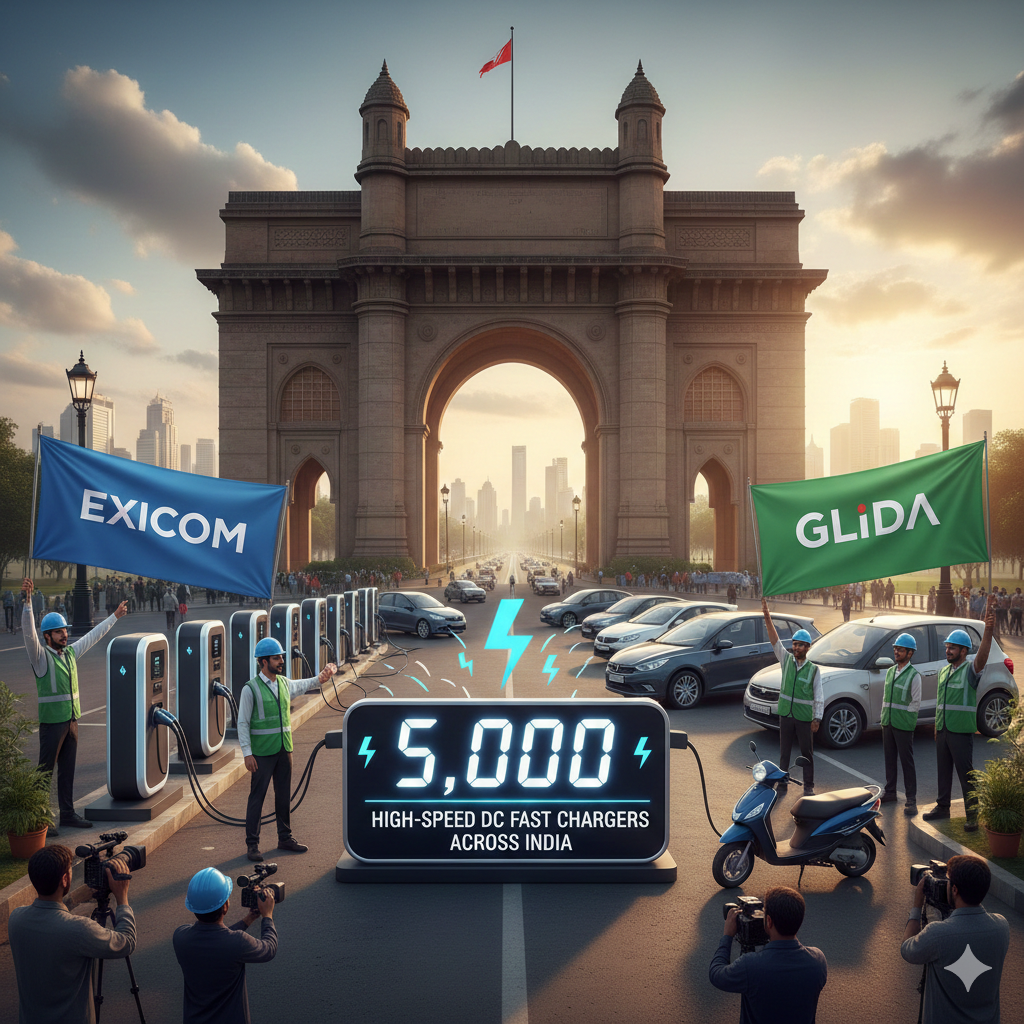

India’s electric vehicle charging infrastructure has crossed a significant milestone, with a total of 67,657 EV chargers installed across states and union territories as of August 7, 2026. This figure includes 1,139 battery-swapping station chargers, according to data released by the Ministry of Heavy Industries. The expansion marks steady progress in building the supporting ecosystem needed to sustain the country’s growing EV fleet.
Alongside the infrastructure growth, the Ministry also shared updates on demand-side schemes. Under the FAME India Phase-II programme, 16.72 lakh electric vehicles—including two-wheelers, three-wheelers and four-wheelers—were sold as of June 30, 2026. An additional 5,299 electric buses have been deployed under the same scheme as of July 31, 2026. Earlier, FAME-I had supported 2.80 lakh EVs.
The government has complemented these efforts with other policy measures. The Goods and Services Tax on electric vehicles and their chargers or charging stations has been reduced to 5 per cent. The Ministry of Road Transport and Highways has also introduced green licence plates for battery-operated vehicles and exempted them from permit requirements, further lowering the barriers to ownership and operation.
Broader support continues through newer initiatives. The PM E-DRIVE scheme has already facilitated the sale of 26.59 lakh electric vehicles, while the Production Linked Incentive scheme for the automobile and auto-component sector has contributed to around 21.30 lakh EV-related sales as of March 31, 2026. Together, these programmes have helped raise overall EV penetration in India from negligible levels a decade ago to more than 8 per cent in recent financial years.
The growing charger network, combined with sustained demand incentives and tax benefits, is expected to reduce range anxiety and encourage wider adoption of electric mobility across both urban and inter-city routes. As more public and private players invest in charging stations and battery-swapping facilities, the foundation for India’s long-term transition to cleaner transport continues to strengthen.