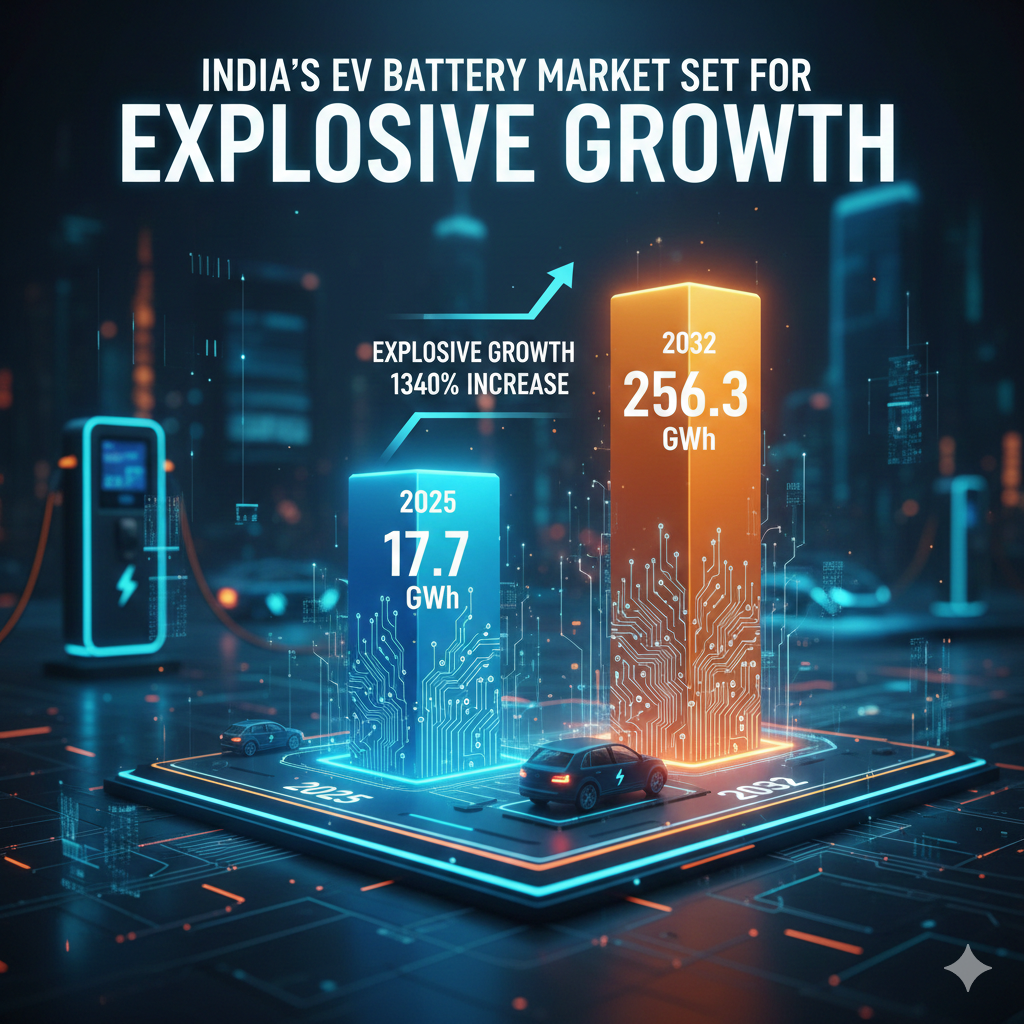
India is on the brink of a transformative era in electric mobility, with the electric vehicle (EV) battery market poised for remarkable expansion. According to the 2025 EV Battery Technology Review Report released by Customized Energy Solutions (CES), battery demand is projected to surge from 17.7 GWh in 2025 to an astonishing 256.3 GWh by 2032—representing a staggering 14-fold increase.
This growth trajectory is fueled by a confluence of factors: escalating fuel prices, a wave of new EV model launches, burgeoning consumer demand, and strong governmental policy support for electrification.
The report forecasts a compound annual growth rate (CAGR) of 35% over the next seven years, signaling a profound transformation in India’s automotive industry. As global electric mobility accelerates, innovations in battery chemistry and manufacturing are playing a pivotal role in making EVs more viable and attractive.
Vinayak Walimbe, Managing Director of CES, emphasized the revolutionary impact of these advancements:
Revolution in Battery Chemistry Driving ProgressAt the heart of this boom lies rapid evolution in battery technologies, including:
- Lithium-ion batteries
- Lithium Iron Phosphate (LFP) batteries
- Nickel Cobalt Manganese (NCM) technologies
These advancements are enhancing safety, energy density, and cost competitiveness—critical factors for widespread EV adoption.
Notably, LFP Gen 4 cells have now surpassed an energy density of 300 Wh/kg, paving the way for extended driving ranges and potentially reduced vehicle prices.
Emerging technologies such as sodium-ion and solid-state batteries are also entering the market, offering tailored solutions for India’s diverse vehicle segments—from two- and three-wheelers (which dominate the EV market) to premium passenger cars and commercial fleets.
While the outlook is optimistic, the report acknowledges hurdles such as high capital requirements, limited domestic mineral resources, and reliance on imported technology. Indian manufacturers are responding aggressively with capacity expansions and diversification into multiple chemistries.
As CES notes, the coming years will be crucial in building a sustainable transport ecosystem. With continued policy backing and technological breakthroughs, India’s EV battery sector is not just growing—it’s redefining the future of mobility.