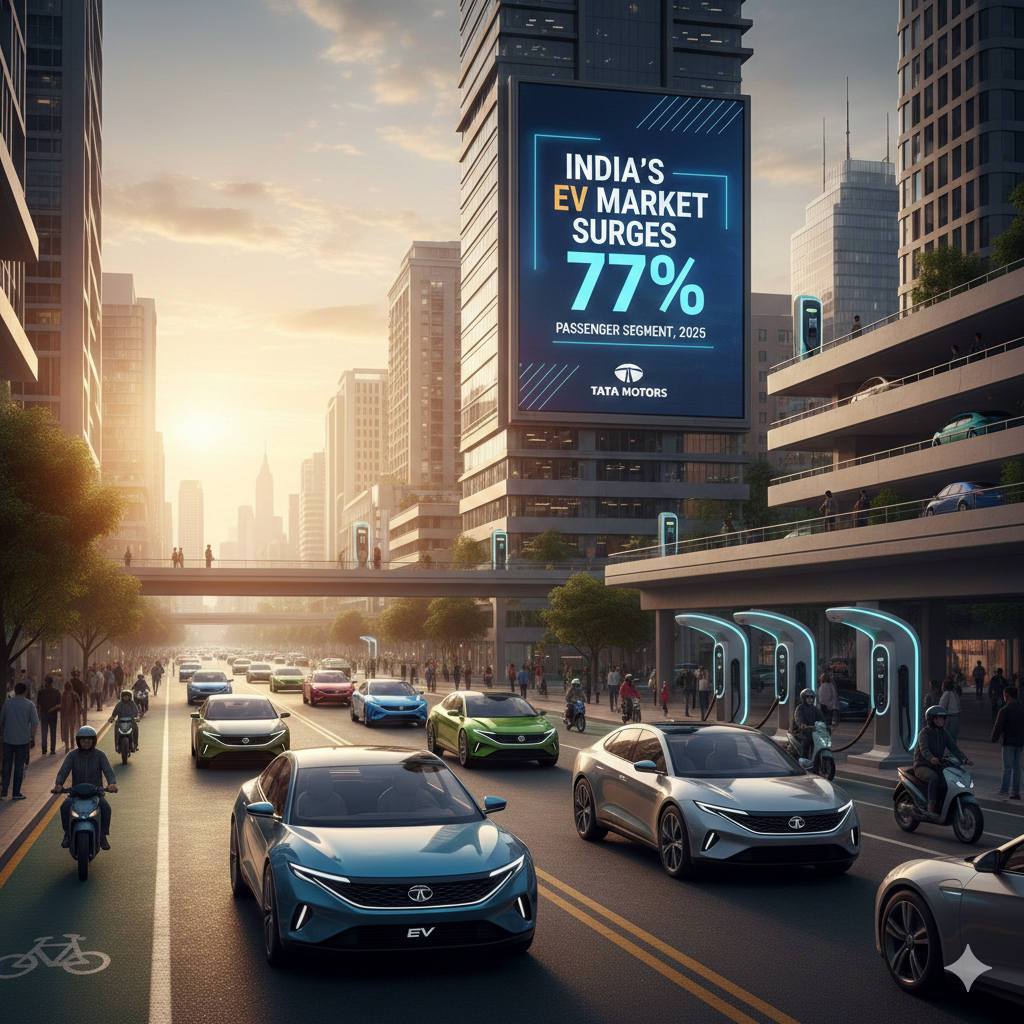
India’s electric vehicle (EV) market witnessed an unprecedented surge in 2025, particularly in the passenger vehicle segment, marking a 77% year-on-year growth compared to 2024. According to retail sales data from the Federation of Automobile Dealers Associations (FADA), electric passenger vehicle sales jumped from 99,875 units in 2024 to 176,817 units in 2025. This sharp rise signals a strong shift toward sustainable mobility in India’s passenger car market, where EVs now account for around 4% penetration, up from 2.4% the previous year.
The overall EV market, including two-wheelers, three-wheelers, and commercial vehicles, reached a record 2.27 million units in 2025, reflecting a 16.37% increase from 1.95 million units in 2024. Electric two-wheelers dominated with 1.28 million units (56-57% of total EV sales), while three-wheelers contributed significantly at around 0.8 million units. However, the passenger four-wheeler segment’s explosive growth highlights accelerating adoption in the personal mobility space, driven by new model launches, improved infrastructure, and favorable economics.
Tata Motors continued its dominance in the EV space, selling 70,004 units in 2025. The brand’s popular models like the Nexon EV and Tiago EV have been instrumental in achieving this feat, thanks to competitive pricing, proven reliability, and an expanding charging infrastructure. The Nexon EV, in particular, has been a bestseller, benefiting from features such as extended range options, lifetime battery warranty on select variants, and strong urban appeal. Tata’s portfolio, including the Punch EV, Tigor EV, and newer additions like the Curvv EV, has helped maintain its leadership despite rising competition.
The passenger EV growth was fueled by several factors:
- Aggressive launches from multiple players, including mass-market SUVs and MPVs with attractive ranges and features.
- Policy incentives, festive demand surges, and total cost of ownership advantages over ICE vehicles.
- Expanding public and home charging networks, making EVs more practical for daily use.
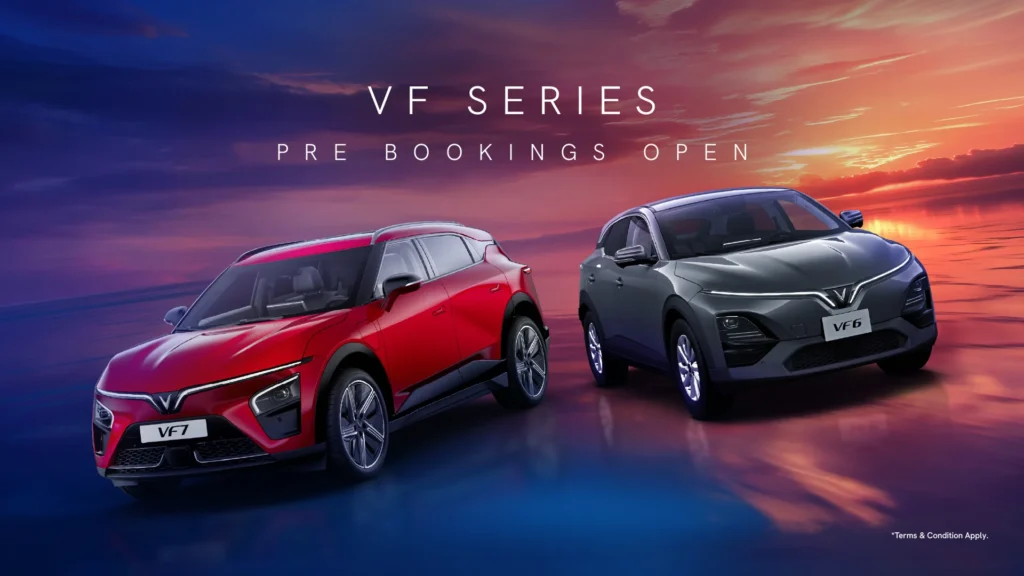
While Tata Motors retained the top spot with roughly 40% market share (down from higher levels in prior years due to intensified competition), other manufacturers contributed to the momentum. Mahindra posted sharp gains with models like the BE 6 and XEV 9e, while JSW MG Motor, Hyundai (with the Creta EV), and emerging entrants like Tesla and VinFast added diversity and pressure on pricing.
This performance aligns with India’s broader push toward electrification amid urbanization, environmental goals, and energy security. The passenger segment’s 77% jump underscores growing consumer confidence in EVs for everyday commuting, supported by falling battery costs and government initiatives.
As India targets higher EV penetration by 2030, 2025’s results—especially in passenger vehicles—mark a pivotal year. Continued focus on affordable models, faster charging infrastructure, and incentives will be key to sustaining this trajectory and positioning EVs as a mainstream choice for Indian buyers.