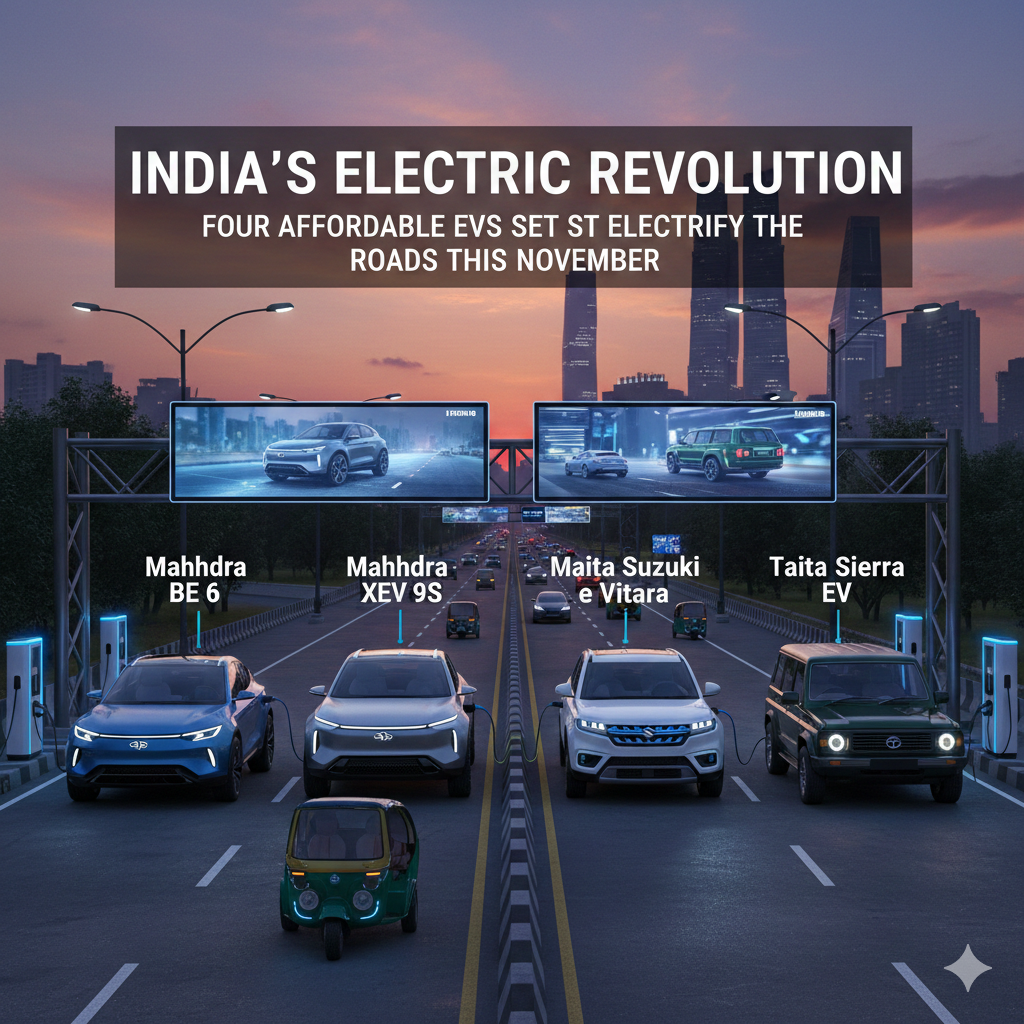
The electric vehicle (EV) market in India is experiencing unprecedented growth, with sales surging over 25% year-on-year and projections estimating that EVs could account for 30% of private cars by 2030. Government incentives, expanding charging infrastructure, and a shift toward sustainable mobility are fueling this boom. As consumers seek eco-friendly alternatives to traditional petrol and diesel vehicles, major automakers are responding with a wave of launches. This November alone, four new affordable electric SUVs from leading brands—Mahindra, Maruti Suzuki, and Tata—are poised to enter the fray, offering compelling options under ₹30 lakh. These models promise a blend of performance, range, and features tailored for Indian families and urban drivers. If you’re eyeing an EV upgrade, here’s everything you need to know about these upcoming stars.
1. Mahindra BE 6 Formula Edition/Rall-E – Launching November 26, 2025
Mahindra is kicking off the month’s EV excitement with a high-octane special edition of its popular BE 6 electric SUV. Dubbed the Formula Edition (or potentially Rall-E, though not officially confirmed), this limited-run variant draws inspiration from Mahindra’s Formula E racing heritage. Set to debut at the brand’s “Scream Electric” event in Bengaluru, it celebrates the first anniversary of Mahindra’s INGLO platform-based eSUVs, which have already sold over 30,000 units in seven months.
The BE 6 Formula Edition builds on the standard BE 6’s sporty foundation, which starts at ₹18.90 lakh (ex-showroom). Expect Formula E-themed styling cues like a striking Firestorm Orange paint scheme, exclusive racing badges, and aerodynamic tweaks reminiscent of Mahindra Racing’s Gen 3.5 livery unveiled in October. Under the hood, it retains the BE 6’s dual-motor setup delivering up to 282 bhp, with a 0-100 km/h sprint in under 7 seconds. Battery options include a 59 kWh pack (claimed range: 450 km) and a larger 79 kWh unit (607 km ARAI-certified), both using efficient LFP chemistry for quick charging—0-80% in about 30 minutes on DC fast chargers.
Inside, the cabin echoes the “Scream Electric” vibe with ambient lighting, a Harman Kardon audio system, and advanced tech like a head-up display and remote parking. Priced likely between ₹25-28 lakh, this edition targets enthusiasts who want performance without compromise. It rivals the Tata Curvv.ev and MG ZS EV, positioning Mahindra as a leader in fun-to-drive affordable EVs.
2. Mahindra XEV 9S – Launching November 27, 2025
Hot on the heels of the BE 6 Formula Edition, Mahindra will unveil the XEV 9S at the same Bengaluru event—the brand’s third INGLO-based EV and its first seven-seater electric SUV. Expected to start at ₹21 lakh (ex-showroom), the XEV 9S serves as the electrified counterpart to the XUV700, blending spaciousness with cutting-edge EV tech for family buyers.
Measuring around 4.8 meters long, the XEV 9S offers a boxy, premium design with C-shaped LED DRLs, a massive panoramic sunroof, and 19-inch alloys. It shares powertrains with the XEV 9e sibling: a single-motor RWD setup (up to 286 bhp) or optional dual-motor AWD, paired with 59 kWh or 79 kWh batteries. Anticipated ranges exceed 500 km, with fast-charging support for hassle-free highway runs.
The interior is a tech haven, featuring ventilated front seats, a 25.65 cm touchscreen with wireless Android Auto/Apple CarPlay, Level 2 ADAS (including adaptive cruise control), and a 360-degree camera. Multi-zone climate control, Dolby Atmos sound, and “Groove Me” customizable drive modes add luxury. At under ₹30 lakh for top trims, the XEV 9S undercuts rivals like the BYD eMax 7 while offering superior space—ideal for India’s growing nuclear families. With Mahindra’s robust service network, this could redefine affordable three-row EVs.
3. Maruti Suzuki e Vitara – Launching December 2, 2025
Maruti Suzuki, India’s volume king, is finally entering the EV arena with the e Vitara, its first pure-electric offering. Slated for a December 2 launch, this mid-size SUV starts at an estimated ₹20 lakh (ex-showroom), making it one of the most accessible premium EVs from a mass-market brand. Built at Maruti’s Gujarat plant (inaugurated by PM Modi in August), the e Vitara is “Made in India for the world,” with exports already underway to over 100 countries.The e Vitara sports a bold, futuristic look with polyhedral body panels, matrix LED lights, and a two-tone roof in colors like Opulent Red with Bluish Black. At ~4.3 meters, it’s compact yet commanding, riding on Suzuki’s new eVG platform with a 173 bhp single-motor FWD setup (AWD AllGrip-e variant possible later). A 60 kWh battery promises over 500 km of range, with 10-80% charging in 30 minutes—perfect for city commutes and weekend getaways.
Packed with segment-first features, it includes a 25.65 cm infotainment screen, seven airbags, ventilated seats, sliding rear bench, and Next Gen Suzuki Connect for remote monitoring. Level 2 ADAS with lane-keep assist and a 360-degree camera enhance safety. Priced competitively against the Hyundai Creta Electric and Tata Curvv.ev, the e Vitara leverages Maruti’s vast dealer network (over 4,000 touchpoints) for unmatched aftersales support. This launch could accelerate EV adoption among budget-conscious buyers, potentially capturing 20% market share in its debut year.
4. Tata Sierra EV – Launching Late 2025/Early 2026
Rounding out the quartet is Tata Motors’ nostalgic revival: the Sierra EV. While the ICE Sierra debuts on November 25, the electric version follows closely in December 2025 or January 2026, starting at ~₹20 lakh (ex-showroom). Born from the iconic 1991 Sierra, this modern EV reimagines the classic three-box silhouette on Tata’s Gen 2 Acti.ev platform, blending retro charm with futuristic prowess.
The Sierra EV’s design turns heads with a fixed panoramic rear glass, slim LED bars, and a lounge-like cabin accessible via sliding doors. Positioned above the Nexon.ev, it measures ~4.3 meters and offers a 65 kWh or 75 kWh battery for 400-450 km range, powered by dual motors (up to 200 bhp) for agile handling. Fast charging (0-80% in 25 minutes) and V2L (vehicle-to-load) capability add versatility.The interior boasts a triple-screen setup (driver display, infotainment, and passenger screen), wireless charging, and Tata’s JLR-inspired four-spoke wheel. ADAS suite, panoramic sunroof, and premium materials elevate it to premium-SUV status. Targeting the Mahindra BE 6 and Hyundai Creta Electric, the Sierra EV’s emotional pull—evoking ’90s nostalgia—could make it a bestseller. Tata’s EV leadership (over 70% market share) ensures reliable ecosystem support.
Why These Launches Matter for India’s EV Future
These four EVs—spanning sporty coupes to family haulers—cater to diverse needs while keeping prices accessible (all under ₹30 lakh). With ranges over 450 km, advanced safety, and quick charging, they address key barriers like range anxiety. As infrastructure grows (target: 1 lakh public chargers by 2025), these models will drive mass adoption, reducing emissions and fuel dependence.If you’re in the market, book test drives soon—these could sell out fast. India’s EV boom is here; the question is, which one will charge up your driveway?