
Hyundai Motor India is pivoting its strategy in the Indian market toward strong hybrid powertrains, particularly in the popular SUV segment. While the company has made significant investments in electric vehicles, including the recently launched Creta Electric, the growing demand for fuel-efficient hybrids—driven by high fuel prices, upcoming stricter CAFE (Corporate Average Fuel Efficiency) norms, and proven success of rivals like Toyota and Maruti Suzuki—has prompted a balanced approach. Instead of relying solely on EVs, Hyundai is developing hybrid technology to offer better fuel economy, strong performance, and compliance with evolving regulations.
Recent reports indicate that Hyundai plans to introduce as many as three new hybrid SUVs over the next 2-3 years, starting from late 2026 or 2027 onward. This aligns with the company’s ambitious roadmap to launch 26 new models by FY2030, including eight hybrids across various segments.
1. New Mid-Size Three-Row Hybrid SUV (Codenamed Ni1i)
Hyundai’s first strong hybrid offering in India is expected to be an all-new three-row SUV positioned between the Alcazar and the discontinued Tucson. Internally codenamed Ni1i, this model will likely be based on the long-wheelbase Tucson sold in China, offering improved third-row space to better compete with rivals like the Mahindra XUV700 and Tata Safari.
- Expected Launch: 2026-2027 (potentially Hyundai’s debut hybrid in India)
- Powertrain: A 1.5-litre naturally aspirated petrol engine paired with hybrid tech for enhanced efficiency
- Production: At the Talegaon plant, with an annual target of around 50,000 units
- Positioning: Premium family-oriented SUV with spacious interiors and strong hybrid benefits
This model will mark Hyundai’s entry into the strong hybrid space, focusing on practicality and fuel savings without compromising on power.
2. Next-Generation Hyundai Creta Hybrid
The bestselling Creta is set for a full generational upgrade, codenamed SX3, which will introduce hybrid technology alongside traditional petrol and diesel options.
- Expected Launch: 2027
- Powertrain: Hybridised 1.5-litre naturally aspirated petrol engine, promising mileage exceeding 25 kmpl in some estimates
- Key Changes: Completely new platform, redesigned exterior and interior inspired by larger Hyundai SUVs like the Palisade, advanced features, and multi-powertrain support (including a facelifted Creta Electric)
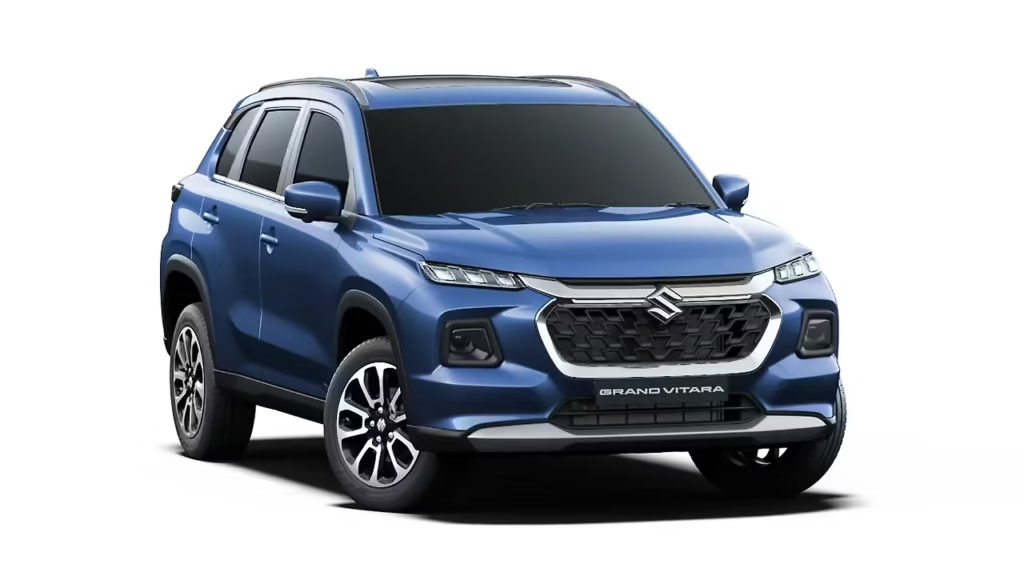
- Rivals: Kia Seltos hybrid, Maruti Grand Vitara, Toyota Hyryder, and upcoming Renault Duster hybrid
The third-generation Creta will continue to dominate the compact-mid SUV segment while addressing fuel efficiency demands.
3. Flagship Palisade Hybrid (Potential Third Model)
At the premium end, Hyundai is evaluating the global Palisade full-size SUV for India, which could arrive as a hybrid flagship.
- Expected Launch: Around 2028
- Powertrain: Advanced 2.5-litre turbo-petrol hybrid with over 330 hp combined output
- Positioning: Above Rs 30 lakh segment, rivaling luxury three-row SUVs
While timelines for the Palisade extend slightly beyond the 2-3 year window, it fits into Hyundai’s broader hybrid expansion plans.
Why the Hybrid Focus Now?
Hyundai’s strategy reflects market realities: Hybrids currently offer a practical bridge between ICE vehicles and full EVs, especially in India where charging infrastructure is still developing. With CAFE 3 norms kicking in from 2027 and potential incentives for hybrids, these models will help Hyundai offset emissions while maintaining competitive pricing through local production of key components like batteries and motors.This hybrid push complements Hyundai’s EV plans, ensuring a diversified portfolio that balances performance, economy, and regulatory needs in India’s rapidly evolving automotive landscape. As details emerge closer to launches, these SUVs are poised to strengthen Hyundai’s dominance in the SUV-heavy Indian market. Stay tuned for official confirmations from the company.