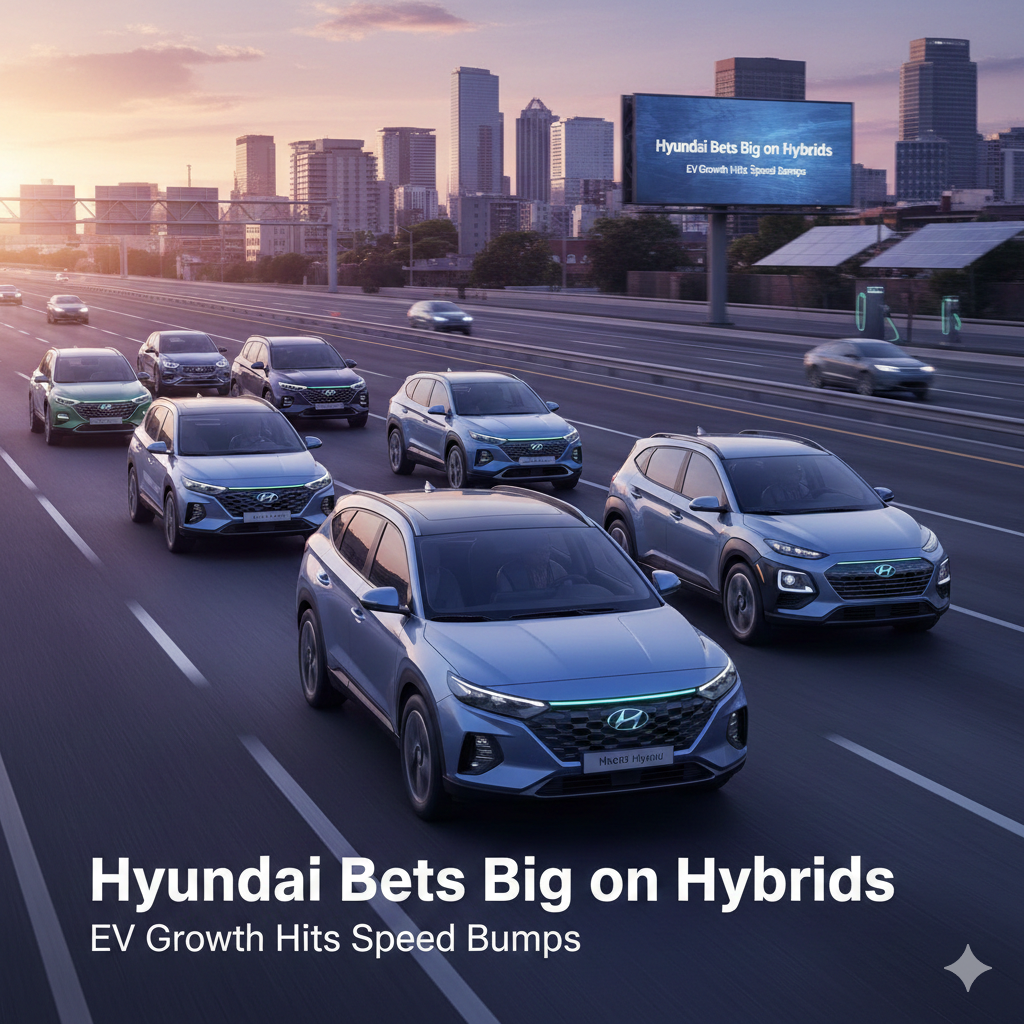
In a bold move to redefine its presence in one of the world’s fastest-growing automotive markets, Hyundai Motor India Limited (HMIL) has unveiled a comprehensive strategy that positions hybrids and electric vehicles (EVs) at the heart of its future growth. As outlined during the company’s inaugural Investor Day in October 2025, these electrified powertrains are projected to account for over 50% of Hyundai’s portfolio in India by FY2030—potentially translating to nearly half of its total sales volume in the region. This shift underscores Hyundai’s commitment to sustainable mobility amid India’s evolving regulatory landscape, including stricter CAFE 3 emission norms, while capitalizing on the burgeoning demand for eco-friendly vehicles.
The roadmap, spanning through FY2030, marks Hyundai’s most transformative product overhaul yet for India. Backed by a staggering investment of Rs 45,000 crore, the plan aims to elevate India to Hyundai’s second-largest global market, with utility vehicles (UVs) driving over 80% of sales and rural penetration reaching 30% of the total volume. By blending refreshed internal combustion engine (ICE) models with an aggressive electrification agenda, Hyundai is not just adapting to market trends but actively shaping them.
A Product Portfolio Revolution: 26 Launches on the Horizon
At the core of Hyundai’s vision is an expansive launch cadence: 26 new models by FY2030, encompassing seven entirely new nameplates, full model refreshes, facelifts, and segment expansions. This diverse lineup will span ICE, compressed natural gas (CNG), hybrid, and EV options, ensuring Hyundai becomes one of the few mass-market original equipment manufacturers (OEMs) offering a “complete range of powertrains” tailored to Indian consumers. Among the highlights:
- SUV Dominance: With UVs poised to overshadow sedans, expect mainstream favorites like the Venue and Creta to receive strong hybrid upgrades. These models will integrate Hyundai’s advanced TMED-II hybrid technology, promising superior fuel efficiency and performance without compromising affordability.
- New Segments: Hyundai is venturing into uncharted territory with a dedicated multi-purpose vehicle (MPV) and rugged off-road SUVs, targeting family buyers and adventure enthusiasts alike. These additions will broaden the brand’s appeal beyond urban confines.
- Luxury Ambitions: By 2027, Hyundai’s premium Genesis brand will make its Indian debut, introducing hybrid variants starting in 2026. This move signals the company’s intent to capture a slice of the burgeoning luxury market, where electrified options are increasingly favored.
The hybrid offensive is particularly noteworthy, with eight dedicated models slated for introduction by FY2030—representing 16% of the total lineup. Early adopters could see strong hybrids in compact offerings like the next-gen i20 and Bayon, alongside larger flagships such as the Palisade. Globally, Hyundai plans to expand its hybrid portfolio to over 18 models by 2030, but India’s rollout will prioritize localization to keep costs competitive.
Electrifying India: EVs Designed for Local Roads
Complementing the hybrid surge, EVs will form a critical pillar of Hyundai’s strategy. The company has confirmed six dedicated EV launches by 2030, including India’s first locally designed and manufactured electric SUV in 2027—likely based on the compact Inster platform.
This sub-compact EV, available in standard and long-range battery configurations, will feature over-the-air (OTA) updates, Level 2 Advanced Driver Assistance Systems (ADAS), and a high-strength body for enhanced safety. Priced competitively, it aims to rival models like the Tata Punch EV while leveraging a robust local supply chain to minimize import duties. Hyundai’s broader EV ambitions include the Creta EV and other segment-spanning variants, ensuring electrified options across compact, mid-size, and premium tiers. With production ramping up at the Pune multi-model export hub—adding 250,000 units of capacity by 2030—India will not only serve domestic demand but also emerge as a key export base for Hyundai’s global electrified lineup. This aligns with the “Make in India” ethos, positioning the country as a strategic pillar in Hyundai’s worldwide goal of 5.55 million annual vehicle sales by 2030, with 3.3 million units electrified.
Investments and Infrastructure: Building for the FutureFueling this transformation is Hyundai’s Rs 45,000 crore commitment through FY2030, directed toward advanced manufacturing, software-defined factories, and deeper localization—targeting over 90% domestic content in key models. The expansion will extend Hyundai’s sales and service network to 85% of Indian districts, emphasizing rural outreach to democratize access to green mobility.
Financially, HMIL projects robust growth, with a 15%+ domestic market share and dividend payouts of 20-40%. Total shareholder returns are expected to exceed 35% from 2025-2027, underpinned by cost efficiencies and a premium product mix.
A Balanced Path to Sustainability
Hyundai’s 2030 blueprint reflects a pragmatic approach to India’s unique mobility challenges: rising fuel costs, urban congestion, and environmental imperatives. By leveraging hybrids as a bridge technology—offering EV-like efficiency with ICE familiarity—the brand addresses range anxiety and charging infrastructure gaps that currently hinder full EV adoption. Tarun Garg, Whole-time Director and COO of HMIL, emphasized this holistic strategy: “Our 2030 roadmap will help us deepen our presence in high-growth SUV segments… and reinforce Hyundai’s legacy of innovation and trust.”
As Hyundai accelerates toward this electrified future, it not only eyes volume leadership but also sustainability leadership. With hybrids and EVs set to dominate nearly half the sales pie by 2030, the Korean giant is poised to steer India’s automotive evolution—one green mile at a time. For enthusiasts and investors alike, the road ahead promises excitement, efficiency, and a cleaner drive.