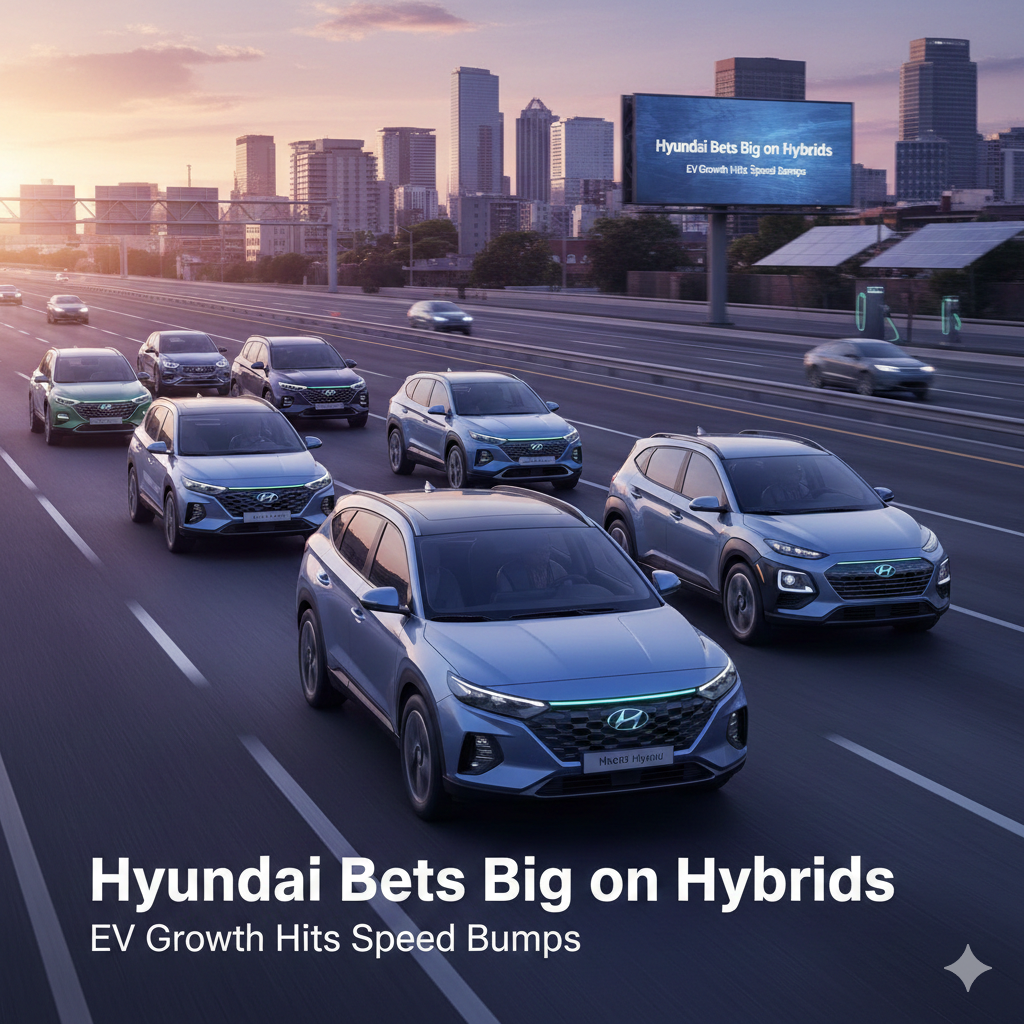
Hyundai Motor Company expects hybrid vehicles to continue outselling battery-electric models (BEVs) for the next several years, even as it pushes forward with one of the industry’s most ambitious electrification strategies. Speaking recently, Global CEO José Muñoz made it clear that customer behavior—not a retreat from EVs—is driving the Korean automaker’s current sales mix.“Hybrids are seeing incredibly strong demand right now,” Muñoz said. “In some months we’re recording 60% growth, in others 80%. The limiting factor is supply, not demand.
”The numbers tell the story. In the third quarter of 2025, Hyundai delivered 158,629 hybrid vehicles worldwide—nearly double the 87,737 pure battery-electric vehicles it sold in the same period. That ratio has held steady or widened in recent months, a pattern also visible at Toyota, Honda, and Ford.
Why Hybrids Are Winning the MomentOutside of China and a handful of European countries with dense fast-charging networks and generous subsidies, many car buyers remain hesitant about jumping straight to a full EV. The familiar pain points haven’t gone away:
- Range anxiety on longer trips
- Sparse or unreliable public fast-charging infrastructure
- Higher upfront purchase prices (even after incentives in some markets)
- Uncertainty around battery replacement costs and resale values
- Shifting policy support and subsidy programs
Hybrids sidestep almost all of these concerns. Drivers enjoy 30–50% better fuel economy than equivalent gasoline models, lower tailpipe emissions, and—crucially—no need to plug in or restructure their daily routine. You fill up at any gas station in three minutes and keep driving.For families, fleet operators, and rural buyers, that combination currently feels like the sweet spot between traditional internal-combustion vehicles and a still-maturing EV ecosystem.
Still Full Speed Ahead on Electrification
Importantly, Hyundai is not backing away from its EV commitments. The company continues to roll out dedicated electric platforms (E-GMP and the upcoming I-GMP), new battery chemistries, and an expanded IONIQ lineup. It has reaffirmed targets of 2 million annual EV sales by 2030 and carbon neutrality by 2045.Muñoz frames hybrids as a bridge rather than a detour: “We need both technologies right now. Hybrids are bringing customers into electrified powertrains today, and many of them will move to full BEVs when the infrastructure and pricing equation improves further.”Industry analysts largely agree. While global EV adoption continues to grow (especially in China, which already accounts for more than half of worldwide BEV sales), the rest of the world is proving slower and patchier than many forecast two or three years ago. Plug-in hybrids and conventional hybrids are filling the gap—and in many markets, growing faster than pure EVs.
The Bottom LineFor the foreseeable future, Hyundai believes the smartest way to cut emissions and satisfy customers is a dual-track approach: keep ramping up hybrid production as fast as factories allow, while continuing to invest billions in the battery-electric future.
In the words of CEO Muñoz, “We are not choosing between hybrids and EVs. We are giving customers both—today and tomorrow.”