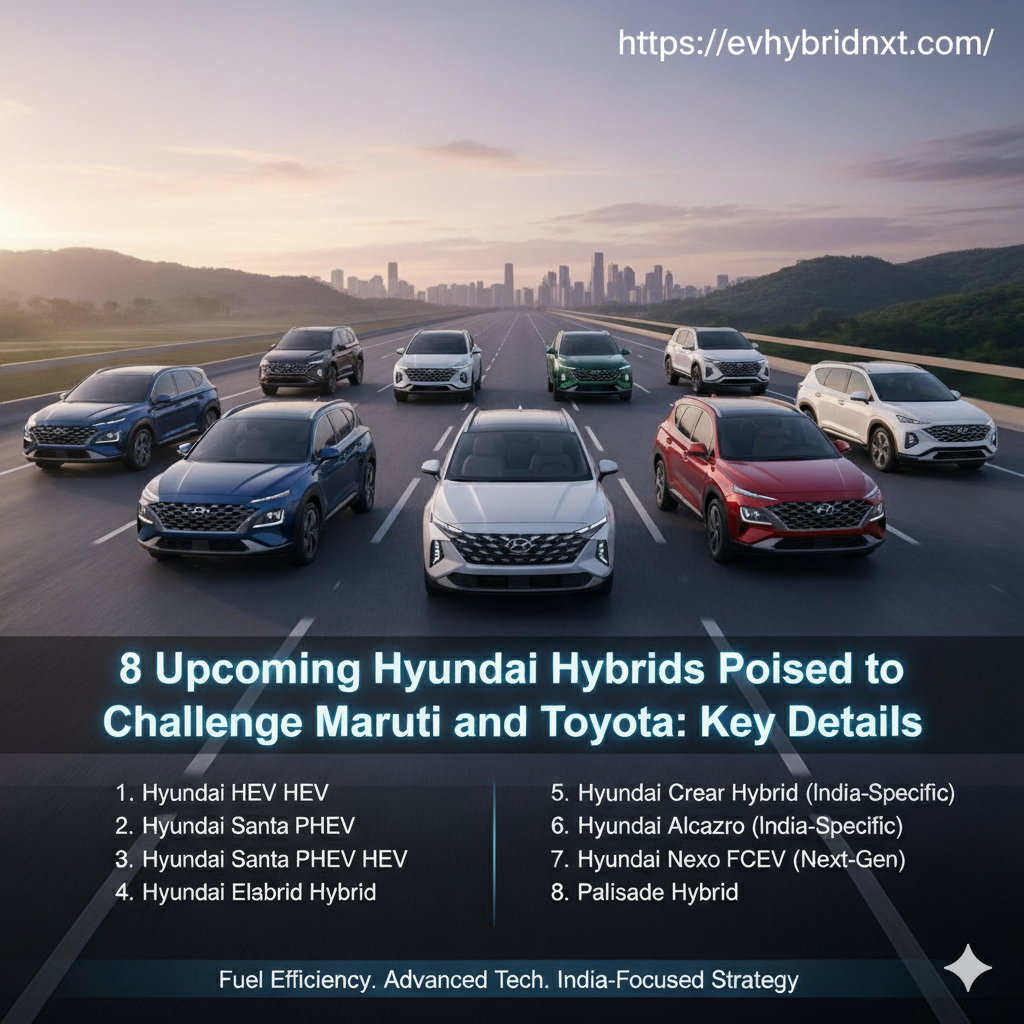
In a strategic pivot that’s reshaping the Indian automotive landscape, Hyundai Motor Company has unveiled plans to roll out eight hybrid models by the end of the decade. The announcement, made by Jose Munoz, President and CEO of Hyundai Motor Company, underscores the automaker’s adaptive response to the global slowdown in electric vehicle (EV) adoption. “This move is a direct response to slower-than-expected global EV demand,” Munoz stated, highlighting Hyundai’s commitment to diversifying its powertrain offerings without abandoning its electrification goals.
The decision marks a significant evolution in Hyundai’s approach, building on a strategy shift initiated nearly two years ago. Back then, the company began emphasizing hybrid technologies as a bridge between traditional internal combustion engines and full EVs. This recalibration signals a pragmatic acknowledgment of market realities—rising fuel costs, infrastructure challenges, and consumer preferences for versatile, efficient vehicles—while keeping sustainability at the forefront.
For Indian buyers, the news couldn’t come at a better time. Munoz emphasized that localizing hybrid production will enable faster delivery timelines, reducing wait periods that have plagued EV launches in the past. “The decision will benefit buyers here as Hyundai can deliver the hybrids faster in the country,” he added, pointing to the potential for quicker market penetration in a highly competitive segment.
A Balanced Portfolio for a Greener Future
By the turn of the decade, these eight hybrid models are projected to account for 16% of Hyundai’s overall lineup in India. This expansion aligns with the manufacturer’s ambitious sustainability targets: by fiscal year 2030, Hyundai aims to derive 52% of its fuel offerings from compressed natural gas (CNG), hybrid, and electric vehicles. The hybrids will cater to a broad spectrum, spanning mass-market staples and premium offerings. Expect updates to familiar nameplates like the Venue and i20, alongside fresh launches designed to capture diverse buyer segments—from urban commuters seeking compact efficiency to families eyeing spacious crossovers.
At the heart of this hybrid offensive is innovation in powertrain technology, tailored for India’s unique demands. Leading the charge will be the Bayon, a compact crossover internally codenamed BC4i, set for a mid-2026 debut. This model will introduce Hyundai’s all-new 1.2-litre turbocharged petrol engine, meticulously engineered for strong hybrid compatibility. The four-cylinder unit promises a sweet spot in performance and economy, bridging the gap between the existing 1.0-litre and 1.5-litre turbo-petrol options. More compact than its larger sibling, it prioritizes high fuel efficiency without compromising on drivability, making it ideal for stop-go city traffic and highway hauls alike.
Powering Ahead with Local Roots
The 1.2-litre engine isn’t just a technical marvel—it’s poised to become the cornerstone of Hyundai’s hybrid ecosystem in India. Future iterations of popular models like the Venue and i20 are slated to adopt this powertrain, seamlessly integrating into the hybrid portfolio. By manufacturing the engine locally, Hyundai stands to slash costs significantly, passing on savings to consumers in a price-sensitive market. “This means lower costs and better value,” Munoz noted, as the company vows to maintain aggressive pricing to fend off rivals like Maruti Suzuki and Tata Motors.
This local production push also bolsters Hyundai’s supply chain resilience, minimizing import dependencies and aligning with India’s “Make in India” initiative. As the Bayon hits showrooms in 2026, it will serve as a litmus test for Hyundai’s hybrid ambitions, potentially setting the stage for a cascade of electrified variants across its range.
In an era where automakers are navigating volatile consumer trends and regulatory pressures, Hyundai’s hybrid bet reflects a calculated blend of foresight and flexibility. With EVs still maturing in infrastructure and affordability, hybrids offer a compelling interim solution—delivering eco-friendly credentials with the familiarity of petrol power. As Munoz put it, this isn’t a retreat from electrification but a smarter path forward. For Indian drivers, it promises a lineup that’s not just greener, but more accessible than ever. Watch this space: the hybrid revolution is revving up.