In an era where electric vehicles (EVs) are often praised for their seamless, silent propulsion, Honda is flipping the script. At the recently held Honda Automotive Technology Workshop in Tokyo, the Japanese automaker unveiled tantalizing technical details about its next-generation hybrid and EV platforms. The big reveal? Even as the world shifts into overdrive on electrification, Honda is laser-focused on preserving the visceral thrill of driving – think rev-matching gear shifts and the satisfying growl of an engine, all simulated in a zero-emission package.
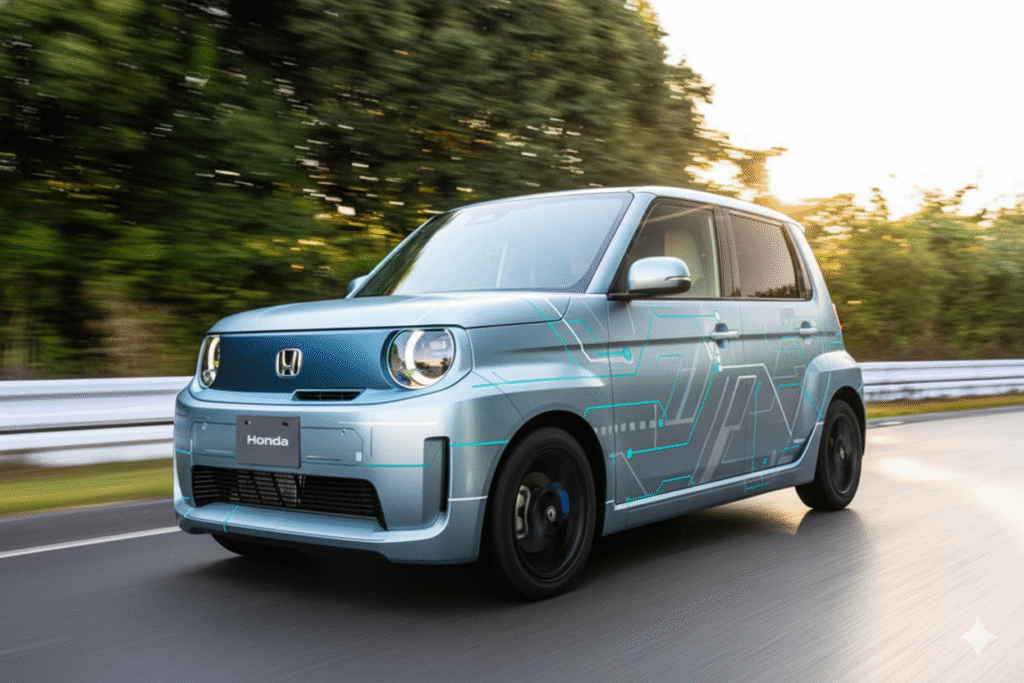
Leading the charge is the production version of the Super-ONE prototype, which made its global debut at the Japan Mobility Show 2025. This pint-sized A-segment EV isn’t just another commuter box; it’s Honda’s bold statement that fun-to-drive dynamics don’t have to die with the internal combustion engine (ICE). Slated for a Japan launch in 2026, with global markets to follow, the Super-ONE promises to inject personality into the EV segment through clever tech tricks and a chassis engineered for agility.
Simulated Thrills: A 7-Speed Gearbox in an EV?
Forget the one-pedal driving monotony that’s become EV gospel. Honda’s engineers are channeling the spirit of classic hot hatches with a simulated 7-speed gearbox for the production Super-ONE. Drawing inspiration from the world’s love affair with manual transmissions and paddle shifters, this system will mimic the precise “click” of gear changes, complete with rev-matching for smoother downshifts. It’s not just theater – Honda says these virtual shifts will enhance driver engagement, making every twist of the road feel more connected and responsive.
But Honda isn’t stopping at gears. The Super-ONE will also pipe in synthetic engine sounds through the cabin speakers, evolving in pitch and volume based on acceleration. Picture this: flooring the pedal and hearing a refined, futuristic rendition of a high-revving four-cylinder, tailored to your driving style. And for those moments when you need to unleash the beast? A dedicated “Boost” mode will simulate the classic “kickdown” effect from automatic ICE cars – that instantaneous surge of power as the transmission hunts for the lowest gear. It’s a nod to enthusiasts who miss the drama of traditional powertrains, proving that EVs can deliver emotional highs without the emissions.
These features aren’t gimmicks; they’re rooted in Honda’s philosophy of the “joy of driving,” a mantra that’s defined the brand since the Civic Type R era. As EVs proliferate, Honda’s approach could set a new standard, appealing to drivers who crave more than just efficiency stats.
The Platform: Lightweight, Low, and Locked-In for Corners
Underpinning this playful powertrain is a next-gen EV platform that’s all about shedding pounds and hugging the ground. At its core is a razor-thin battery pack, paired with other heavy components like the electric motor and inverter, mounted low and dead-center in the chassis. This strategic placement optimizes the center of gravity, giving the Super-ONE a planted, eager stance that rivals sports cars twice its size.
Honda didn’t reinvent the wheel here – or rather, the platform. The team drew heavily from the weight-reduction wizardry of the N Series architecture (think the efficient, nimble underpinnings of models like the Honda Fit). Add in a widened track for improved stability, and you’ve got a recipe for confident cornering. Honda boldly claims the Super-ONE prototype boasts “one of the lightest bodies in the A-segment,” tipping the scales lower than many comparably sized ICE vehicles. That means sharper turn-in, less body roll, and a playful chassis that encourages you to push limits on winding backroads – all while sipping electrons instead of gasoline.
In numbers? While full specs are still under wraps, early prototypes suggest a curb weight under 2,000 pounds, paired with a floor-mounted battery that keeps the hip point low for better visibility and ergonomics. It’s a holistic design that prioritizes dynamics over brute range, signaling Honda’s bet that buyers want engaging drives, not just megapixel infotainment screens.
Why It Matters: EVs with Soul in a Battery-Powered World
Honda’s Super-ONE arrives at a pivotal moment. With global EV adoption accelerating – pun intended – amid tightening emissions regs and subsidy scrambles, the market is flooded with efficient but often soulless appliances. Brands like Porsche and Hyundai have dabbled in synthetic sounds (Taycan’s optional Burmester audio wizardry, anyone?), but Honda’s full-throated commitment to simulated mechanics feels refreshingly authentic.This isn’t just about nostalgia; it’s forward-thinking. By blending EV practicality with ICE-like feedback, Honda could broaden the appeal of electrification, drawing in skeptics who balk at the “silent spaceship” vibe. And with production ramping up for 2026, the Super-ONE positions Honda as a disruptor in the urban EV space, potentially challenging the likes of the Mini Cooper SE or Fiat 500e on pure driving grins per mile.
As the dust settles from the Japan Mobility Show, one thing’s clear: Honda’s next-gen EVs aren’t here to replace the joy of driving – they’re here to redefine it. Buckle up; 2026 can’t come soon enough.