More than a year after entering India’s electric two-wheeler market, Honda Motorcycle & Scooter India (HMSI) is struggling to gain momentum. Despite being the first among Japanese two-wheeler manufacturers to launch electric scooters in the country, Honda’s EV journey has so far delivered modest results.
Official industry data suggests that slow retail demand has led to rising inventory levels, forcing the company to scale back production over the past several months.
According to figures compiled from the Society of Indian Automobile Manufacturers (SIAM), HMSI’s electric scooter volumes remain limited compared to domestic rivals.
Key Numbers (February 2025 – January 2026)
- Total production: 11,168 units
- Dealer dispatches (wholesales): 5,445 units
- Customer deliveries (retail): 3,723 units
- Exports: 2 units (February 2025)
These numbers indicate that less than half of the scooters produced were sold to customers, leaving a significant portion parked in dealer and company inventory.
Activa e and QC1: Slow Market Acceptance
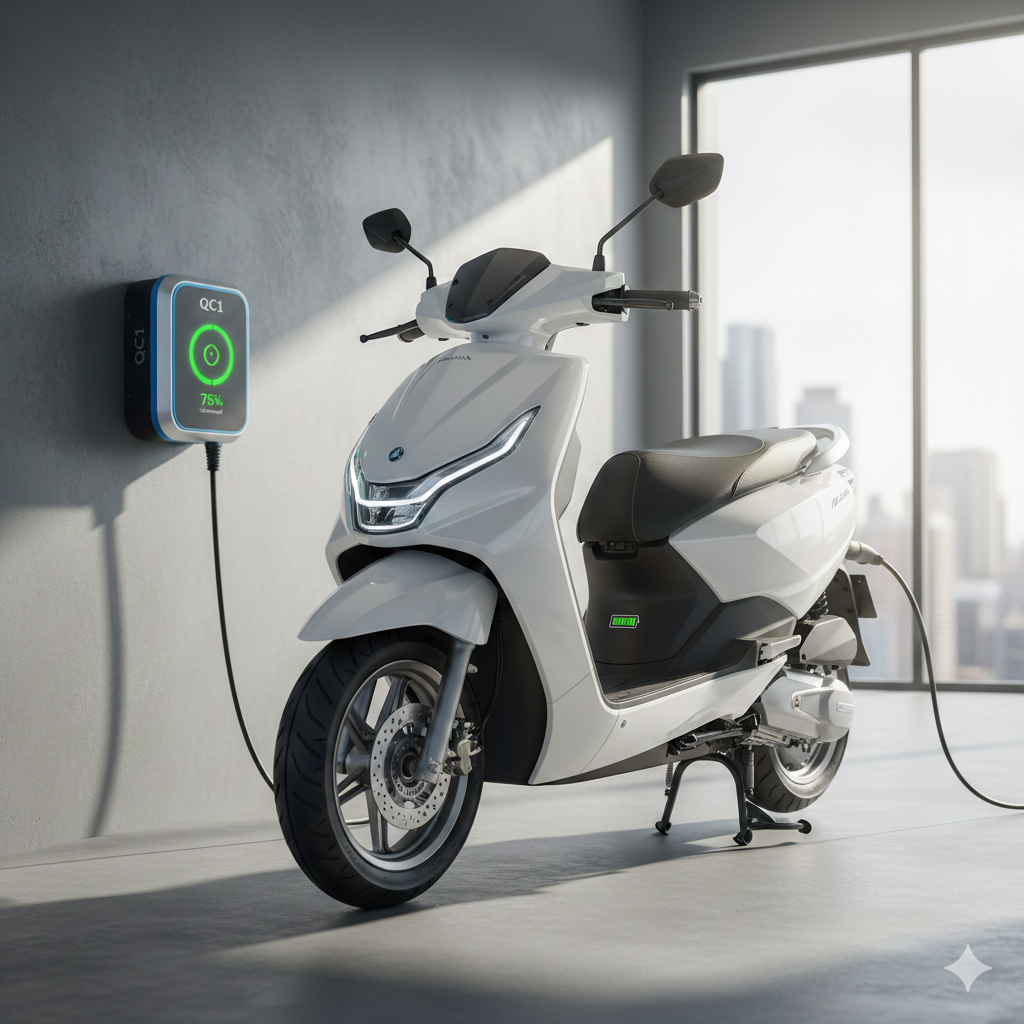
Honda’s EV portfolio currently consists of two models — the Honda Activa e and the Honda QC1. Both were expected to leverage Honda’s strong brand reputation and Activa’s legacy in the petrol segment.
However, real-world demand has fallen short of expectations.
Challenges Faced by Honda’s EVs
- Limited range compared to rivals
- Conservative feature set
- Relatively high pricing
- Slower expansion of charging ecosystem
- Intense competition from Indian brands
Production Halt Reflects Inventory Pressure
One of the clearest indicators of weak demand is the fact that HMSI has reportedly not produced either the Activa e or QC1 in the past six months.
This pause in manufacturing suggests that:
- Existing stock remains unsold
- Dealer inventory levels are high
- Fresh production is unnecessary in the short term
Such a situation is unusual for a brand of Honda’s scale and underlines the difficulties it has faced in adapting to India’s rapidly evolving EV market.
Inventory Build-Up Raises Concerns
With 11,168 units produced but only 3,723 sold to customers, thousands of electric scooters remain in the system. By the end of January 2026, HMSI was sitting on a sizeable unsold inventory.
This has several implications:
- Increased carrying costs for dealers
- Pressure on margins and discounts
- Risk of older stock becoming less attractive
- Slower confidence among retail partners
If not addressed quickly, this could impact Honda’s long-term EV strategy in India.
Why Honda Is Lagging Behind
While Honda dominates the petrol scooter market, the EV segment has different success factors. Domestic manufacturers have moved faster in adapting to local needs.
Key Reasons Behind Slow Progress
- Late entry compared to Indian competitors
- Cautious product strategy
- Limited model variety
- Slower software and connectivity development
- Less aggressive pricing
What Lies Ahead for Honda?
Despite a slow start, Honda still has strong fundamentals — brand trust, financial strength, and a massive dealer network. Industry observers believe the company may regroup with:
- Updated electric platforms
- New battery technologies
- More affordable models
- Improved connected features
A refreshed product strategy could help Honda regain relevance in the EV space over the next few years.
Honda’s first year in India’s electric two-wheeler market has been underwhelming. With just 3,723 retail sales against over 11,000 units produced, rising inventory has forced the company to slow down manufacturing.
The experience highlights how even established global players cannot rely on brand power alone in the EV era. As competition intensifies, Honda will need sharper pricing, stronger products, and faster innovation to catch up with India’s rapidly evolving electric mobility landscape.