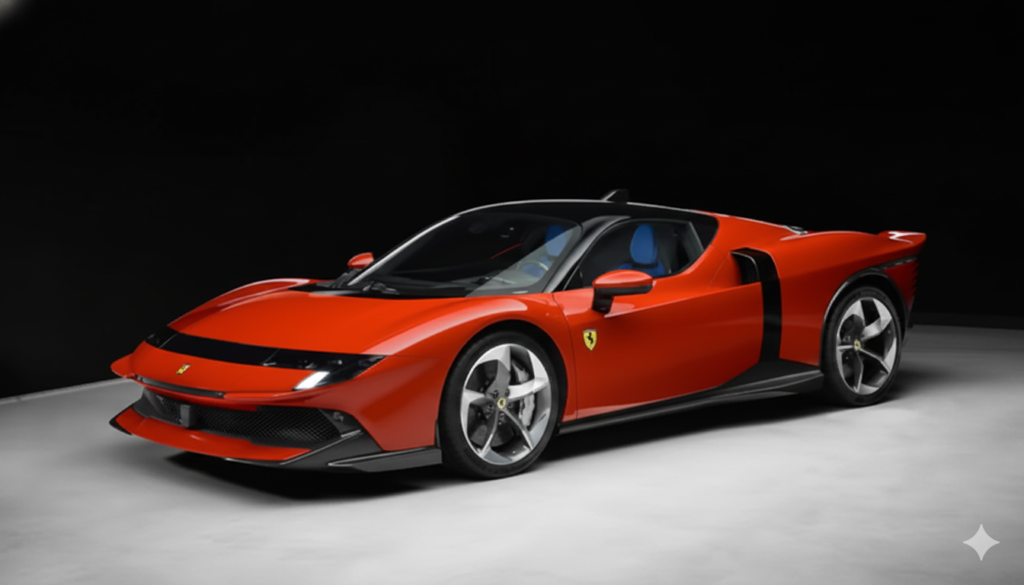
Ferrari’s first electric vehicle, the Luce, is shaping up to be one of the most anticipated launches in automotive history. As the Maranello-based brand transitions into the EV era, it remains committed to preserving the core emotional thrills that define a true Ferrari—exceptional acceleration, visceral driving pleasure, and even an engineered auditory experience—despite the absence of a traditional combustion engine.
High-end sports cars are legendary not just for their performance stats, but for the intricate stories behind their development. Engineers obsess over every detail, from chassis tuning to aerodynamics, to deliver that signature “Ferrari feeling.” The latest chapter in this saga stands out for its extraordinary collaboration: Ferrari enlisted the expertise of NASA (National Aeronautics and Space Administration) to fine-tune one of the trickiest aspects of its groundbreaking electric supercar.
Electric vehicles are renowned for their instantaneous torque delivery, which provides blistering straight-line acceleration far beyond what most internal combustion engines can achieve. While thrilling, this linear, unrelenting surge can sometimes feel overwhelming—described by Ferrari CEO Benedetto Vigna as potentially “disturbing our brain” due to its intensity and lack of progression.
In a recent interview, Vigna explained that Ferrari’s development team sought to calibrate the longitudinal acceleration in the Luce to maximize exhilaration without crossing into discomfort. To achieve this, they turned to NASA’s specialists, who have decades of research into human physiology under extreme acceleration (from fighter jets to space launches). NASA helped identify the precise thresholds where acceleration shifts from exhilarating to disorienting or unpleasant.
This collaboration ensured the Luce’s power delivery—expected to exceed 1,000 horsepower from a four-motor setup—remains addictive and driver-focused, rather than overwhelming. The goal? To preserve Ferrari’s hallmark driving emotions, including sound (via an advanced synthetic audio system that amplifies rather than mimics ICE notes), feedback, and sheer performance joy.
The Luce isn’t positioned as a track-only machine but as a road-going Ferrari that redefines electrification as “a means, not an end.” Named “Luce” (Italian for “light”), the moniker symbolizes illumination, inspiration, and a bright future—far beyond mere battery power.Key development highlights include:
- A revolutionary interior co-designed with LoveFrom (Jony Ive and Marc Newson’s firm), featuring glassy, aluminum-infused elements, intuitive physical controls, and a driver-centric interface that prioritizes tactility over touch-heavy screens.
- Advanced battery tech capable of absorbing massive charging rates while maintaining consistent performance lap after lap.
- A chassis incorporating high recycled aluminum content for sustainability without compromise.
- Emphasis on the “five key drivers” of Ferrari thrills: acceleration, sound, handling, braking, and emotional connection.
Ferrari has stressed that the Luce will deliver authentic Prancing Horse DNA—proving that going electric doesn’t mean sacrificing soul. With a debut slated for later in 2026 (following tech reveals and teasers), the project has involved years of secretive refinement, including this unique NASA partnership.
In an industry where EVs often prioritize raw speed over nuance, Ferrari’s approach—seeking cosmic-level expertise to perfect human-centric dynamics—highlights why the brand commands such reverence. The Luce isn’t just Ferrari’s first EV; it’s a bold statement that true driving pleasure transcends powertrains. Stay tuned as more details emerge from Maranello’s most ambitious chapter yet.