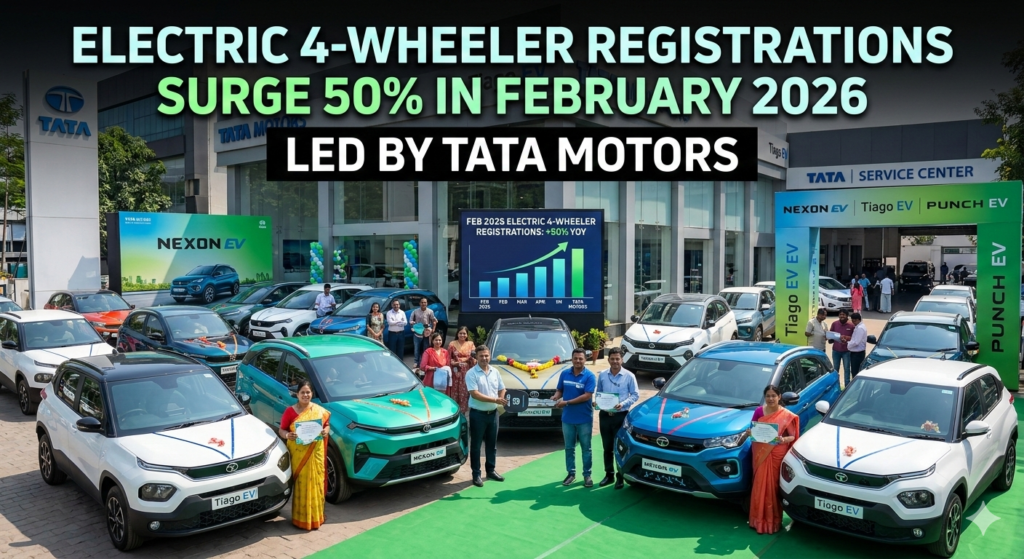
Electric four-wheeler (e4W) registrations in India witnessed a strong surge in February 2026, rising by nearly 50 per cent year-on-year, reflecting growing consumer interest in electric mobility. The latest data highlights that the growth was largely driven by market leader Tata Motors, which continued to strengthen its dominance in the segment.
Tata Motors Maintains Leadership
Tata Motors remained at the forefront of the electric passenger vehicle market in February, registering over 5,200 units. This translated into a market share of around 40 per cent, underlining the company’s strong foothold in the EV space. Popular models such as the Nexon EV, Punch EV and Tiago EV continue to attract buyers with their competitive pricing, improved range and expanding charging ecosystem.
The company’s consistent product upgrades and wide dealership network have helped it retain customer trust, especially in the mass-market segment.
JSW MG and Mahindra Follow Closely
Second place was claimed by JSW MG Motor India, which recorded steady growth during the month. The brand’s portfolio, led by models such as the Windsor EV and Comet EV, has found favour among urban buyers seeking compact and tech-focused electric cars.
Meanwhile, Mahindra Electric Automobile posted one of the strongest gains, registering over 2,700 units. The growing popularity of electric SUVs like the XUV400 and the BE series has helped Mahindra rapidly close the gap with established players.
New and Global Brands Gain Ground
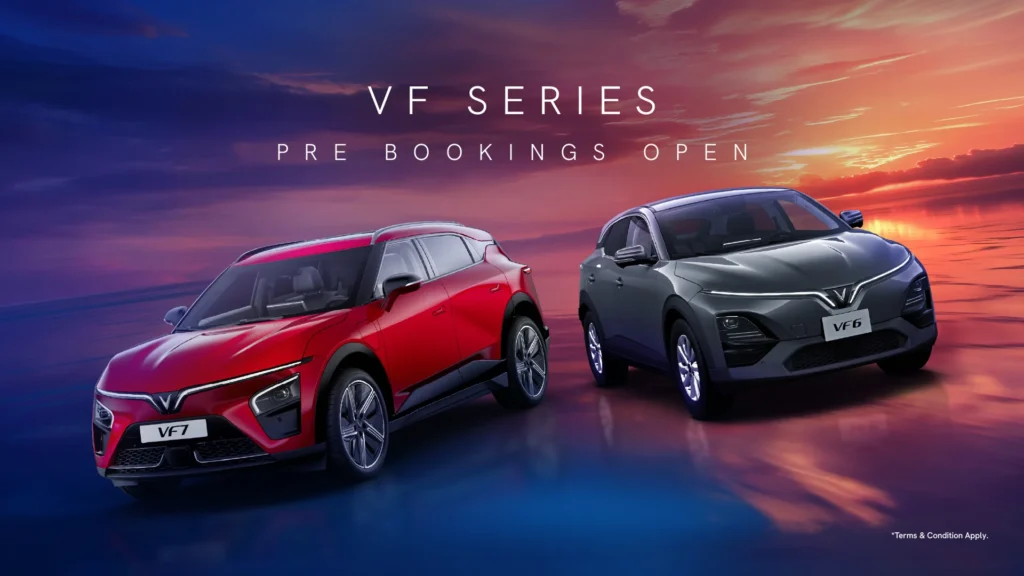
International and emerging brands also showed encouraging momentum. VinFast Auto recorded registrations for its VF6 and VF7 models, marking its gradual entry into the Indian EV market. Similarly, Hyundai Motor India maintained a modest presence with its electric offerings.
At the same time, Maruti Suzuki continued to expand its EV footprint following the launch of its first electric model, indicating increasing participation from traditional automakers.
Strong Market Traction Despite Challenges
Industry experts believe the 50 per cent growth reflects improving consumer confidence in electric vehicles, supported by:
- Expanding charging infrastructure
- Better driving range and battery technology
- Growing government incentives and state-level support
- Increasing model choices across price segments
However, the sector still operates on a relatively low base compared to conventional vehicles. High upfront costs and limited affordability in entry-level segments remain key challenges.
SUV Segment Drives Growth
Most of the recent expansion has been led by electric SUVs and crossovers, which continue to dominate buyer preference. Mid-premium and compact SUV models account for a significant share of new registrations, while hatchbacks and sedans remain limited in number.
This skewed distribution suggests that mass adoption will depend on the introduction of more affordable EVs in the ₹8–12 lakh range.
Outlook: More Room for Expansion
With registrations rising sharply and more launches planned in 2026 and beyond, India’s electric four-wheeler market is poised for sustained growth. Manufacturers are focusing on localised production, battery cost reduction, and improved after-sales support to strengthen their presence.
While Tata Motors currently leads the race, increasing competition from domestic and global players is expected to intensify, benefiting consumers through better products and pricing.
As infrastructure improves and affordability increases, electric cars are likely to play a much bigger role in India’s automotive landscape in the coming years.