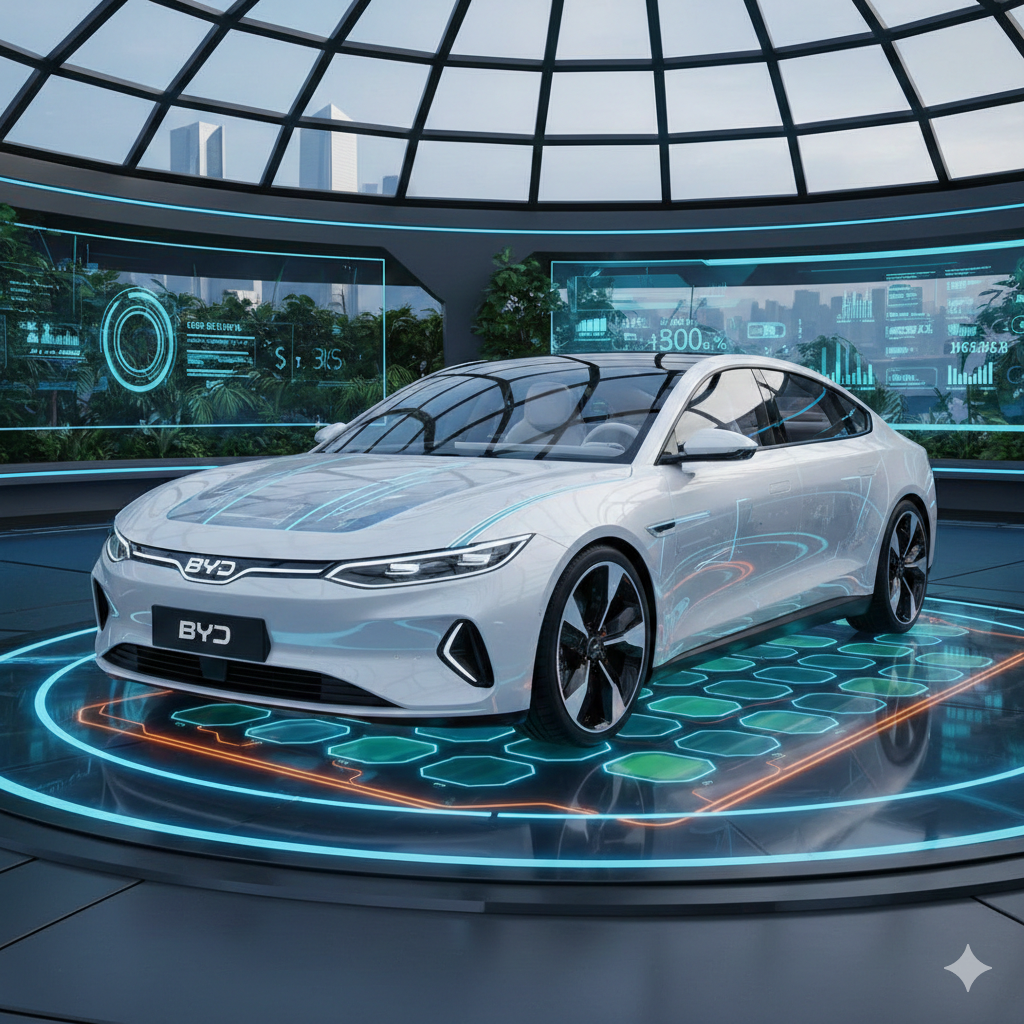
The world of electric vehicles (EVs) is on the verge of another major shake-up, thanks to BYD, the world’s largest EV maker and the second-largest EV battery producer. In a recent investor update (around early February 2026), BYD confirmed significant breakthroughs in two groundbreaking battery technologies: sulfide-based solid-state batteries and third-generation sodium-ion batteries. These advancements could redefine safety, longevity, cost, and performance in the EV industry.These announcements have generated massive excitement because they address key pain points of current lithium-ion batteries—like fire risks, limited lifespan, high costs, and raw material dependency—while pushing toward a more sustainable and accessible future.
Solid-state batteries replace the liquid electrolyte in traditional lithium-ion batteries with a solid one, making them inherently safer and more efficient. BYD is focusing on sulfide-based solid electrolytes, which are considered top-tier due to their exceptionally high ionic conductivity (often called “superconductors” in the battery world). This allows ions to move faster, enabling superior performance.Key advantages over conventional lithium-ion batteries:
- Near-zero fire risk — No flammable liquid electrolyte means thermal runaway (fires) is almost eliminated.
- Higher energy density — Potentially 350–500 Wh/kg (or more in future iterations), compared to ~250–300 Wh/kg in today’s best lithium-ion packs. This could double real-world range: a current 350 km EV might easily hit 600–700 km (or even 1,000+ km in optimized designs) with the same battery size.
- Ultra-fast charging — Support for 500 kW to 1 MW rates, meaning minutes instead of hours for significant charges.
- Improved cycle life and stability — Recent progress includes better lifespan and fast-charging capabilities.
Challenges remain: Solid-state batteries are expensive to produce today due to manufacturing complexity and scaling issues. BYD claims costs could eventually match or approach current lithium-ion levels with massive production scale.Timeline: BYD has made major progress in sulfide solid-state tech, with breakthroughs in cycle life and fast charging. Small-batch/limited production is expected to start in 2027, initially for higher-end or demonstration vehicles. Pilot testing in vehicles could begin around then, with full mass-market rollout likely after 2030.
Sodium-ion batteries use sodium (abundant and cheap) instead of scarce lithium, making them a game-changer for cost and sustainability.BYD’s first-generation sodium-ion tech launched in 2021, and they’re now at the third-generation platform. In lab tests, these have achieved up to 10,000 charge cycles—a massive leap.Comparisons to lithium-ion (e.g., LFP Blade batteries):
- Much lower cost — Sodium is everywhere (extractable from seawater or salt via simple processes like high-temperature melting, electrolysis, and purification). Production costs could be 30–40% lower than lithium-ion, with no reliance on rare/expensive lithium mining.
- Extreme durability — 10,000 cycles means 20–25+ years of life even with daily charging (far beyond typical vehicle lifespan). Most lithium-ion batteries top out at 2,000–3,000 cycles.
- Better cold-weather performance — Works well from -20°C to -40°C, where lithium-ion struggles.
- Safer and more stable — Solves issues like sodium precipitation and high-temperature degradation in earlier generations.
Downsides: Energy density is lower (~170 Wh/kg vs. 250+ for lithium-ion), so they’re better suited for shorter-range city cars, fleets, or budget models rather than ultra-long-range premium EVs.Timeline: Third-gen tech is mature in labs, but mass production timing depends on market demand and customer plans. No firm date yet, but given competitors like CATL deploying sodium-ion vehicles in 2026, BYD is likely to move quickly—possibly announcements or models by late 2026 or soon after.Overall Impact on the EV WorldBYD’s multi-technology strategy (continuing Blade LFP as the safe core, while advancing solid-state and sodium-ion) positions it ahead of rivals. They’re not betting on one winner—they’re developing all three in parallel.
- Solid-state batteries will transform the premium/luxury segment (think Mercedes, BMW equivalents). Expect 1,000+ km ranges, near-instant charging, and zero range anxiety, starting in high-end models around 2027–2030.
- Sodium-ion batteries will revolutionize affordable, high-usage segments like city cars, taxis, ride-hailing fleets, and commercial vehicles. Super-long life eliminates battery replacement worries, lower costs make EVs cheaper upfront, and abundance reduces supply chain risks.
Together, these could accelerate global EV adoption by making them safer, longer-lasting, cheaper to own, and less dependent on volatile lithium supplies.In markets like India, where cost and durability matter hugely (with startups and Reliance also exploring sodium-ion), these technologies could turbocharge EV growth—potentially slashing ownership costs and enabling faster fleet electrification.What do you think—could solid-state and sodium-ion batteries make EVs truly mainstream in India within the next 5–10 years? Share your views!