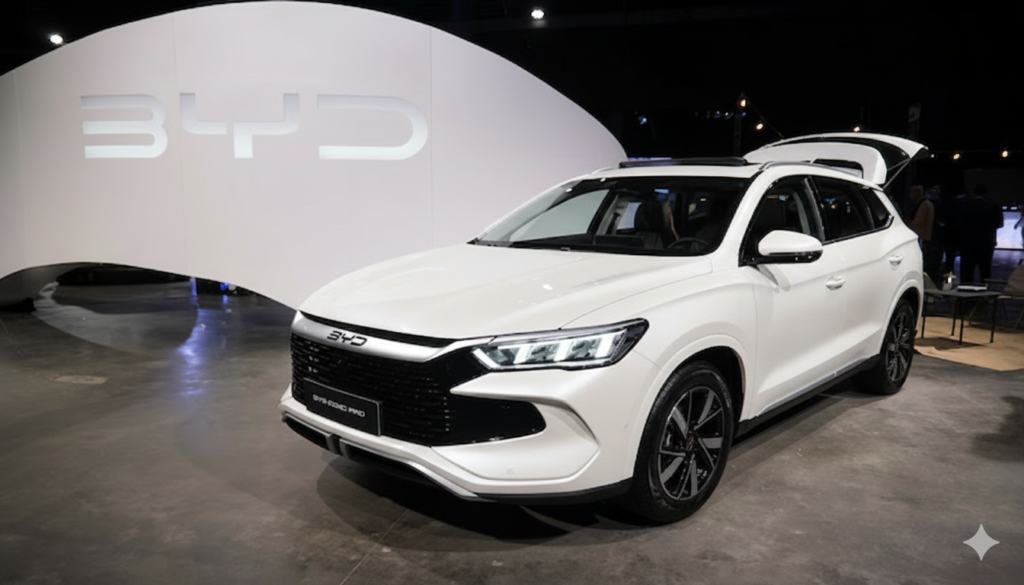
In a pivotal moment for the electric vehicle (EV) industry, China’s BYD Co. has officially surpassed Tesla Inc. to become the world’s largest seller of battery-electric vehicles (BEVs) in 2025. This marks the first time Tesla has lost its crown as the top pure-EV maker on an annual basis, highlighting intensifying global competition, policy changes, and shifting market dynamics.
BYD announced that it delivered 2.26 million battery-electric vehicles in 2025, reflecting a robust 28% year-over-year increase. In contrast, Tesla reported 1.636 million vehicle deliveries for the full year — a decline of approximately 8.6–9% from 1.79 million in 2024. This represents Tesla’s second consecutive annual drop in deliveries, underscoring challenges in its core automotive business.
Tesla’s Tough Year: Q4 and Full-Year Figures
Tesla’s fourth-quarter deliveries came in at 418,227 vehicles, down 16% from 495,570 in Q4 2024. The drop fell short of most analyst expectations (which ranged from around 422,000–440,000) and was heavily influenced by the expiration of the $7,500 federal EV tax credit in the U.S. at the end of September 2025. This policy change triggered a rush of purchases in Q3 — boosting deliveries to a record high — but created a sharp pullback afterward.
Key factors contributing to Tesla’s decline include:
- Heightened competition from lower-priced rivals, particularly in Europe and China.
- An aging product lineup, with the Model 3 and Model Y (accounting for ~97% of deliveries) receiving only minor updates.
- Consumer backlash tied to CEO Elon Musk’s political involvement early in 2025, which reportedly alienated some buyers in key markets.
Despite these headwinds, Tesla’s energy storage business showed strength, deploying a record 46.7 GWh for the year.
BYD’s Strong Momentum
BYD’s performance stands in stark contrast. While its overall “new energy vehicle” sales (including plug-in hybrids) reached around 4.6 million units — up ~7–8% from 2024 — its pure BEV segment grew much faster at 28%. This growth was fueled by:
- A diverse lineup spanning affordable city cars to premium models.
- Surging exports, with over 1 million vehicles sold internationally (up significantly year-over-year).
- Rapid expansion in markets like Europe, Latin America, and Southeast Asia, despite trade barriers.
BYD’s ability to maintain momentum amid a fiercely competitive domestic Chinese market — where it faces rivals like Geely and Xiaomi — demonstrates the effectiveness of its vertical integration (from batteries to vehicles) and aggressive pricing.
Investor Reactions and the Bigger Picture
Markets appeared relatively unfazed by Tesla’s sales drop. The company’s stock ended 2025 up around 11–19% (depending on the source), as investors focused on Musk’s vision for the future: autonomous robotaxis, Full Self-Driving (FSD) advancements, and humanoid robots (Optimus). These high-margin AI-driven initiatives are seen as the next growth driver, overshadowing near-term automotive challenges.
BYD’s rise, meanwhile, symbolizes the broader shift toward Chinese dominance in the EV supply chain and manufacturing scale. While Tesla maintains a profitability edge in recent quarters and strong brand loyalty in premium segments, BYD’s volume leadership — achieved without direct U.S. sales due to tariffs — underscores how policy, pricing, and product variety are reshaping the global landscape.