As the demand for electric vehicles (EVs) continues to surge globally and in India, a wave of innovative startups is entering the market with creative solutions to address key challenges like charging infrastructure, high costs, and downtime for commercial use. One of the latest developments comes from Blinq Mobility, a Gurugram-based EV startup founded in 2024 by a team of IIT Delhi alumni and experienced engineers, including Nikesh Bisht (CEO, former CTO of Vecmocon Technologies) and Ankit Kumar (with prior experience at Tesla).
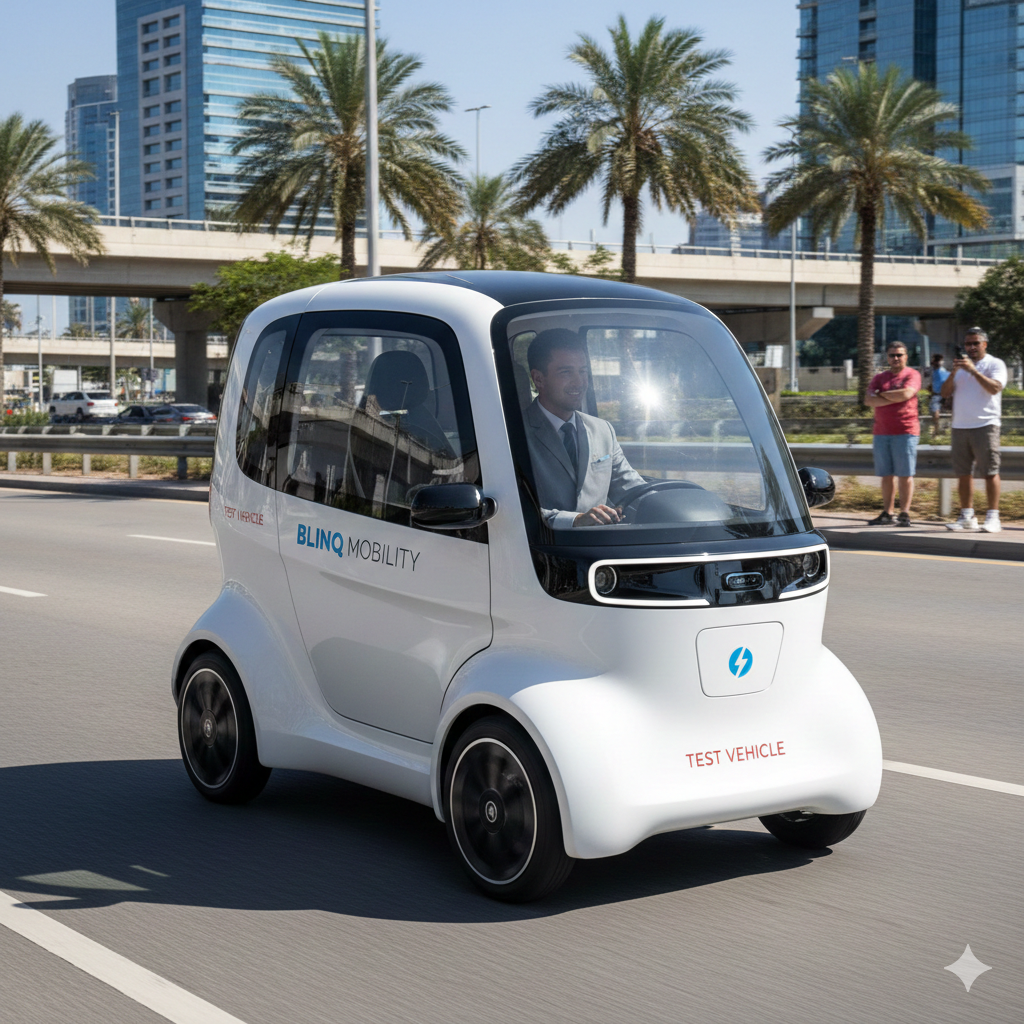
Blinq Mobility has recently commenced real-world testing of its first working prototype on public roads. The vehicle, known as the Blinq Pod, is a compact micro electric car (classified as an L7 quadricycle) purpose-built for urban ride-hailing, shared mobility, and high-utilization fleet operations.
A video circulating online shows the Blinq Pod being driven on roads, marking a significant milestone for the young company. This prototype testing follows successful validation of the vehicle’s design and its innovative battery-swapping system in controlled environments. The tests aim to demonstrate real-world performance, reliability, and integration potential ahead of pilot deployments.
Key Features of the Blinq Pod
The Blinq Pod stands out with its focus on practicality for India’s congested cities:
- Quick battery swapping — Batteries can be exchanged in under 5 minutes, eliminating long charging waits and enabling near-continuous operation for drivers.
- Modular design — Built on a scalable “skateboard” platform using lightweight composites, it supports adaptations for microcars, vans, or other forms while prioritizing affordability, safety, and comfort.
- Targeted for urban use — With features like a claimed range of around 250 km per swap, it’s optimized for city commuting where high speeds and heavy payloads aren’t needed.
- Competitive economics — The company aims to deliver a “4-wheeler experience at a 3-wheeler price,” positioning the Pod’s ownership and operating costs to rival those of traditional three-wheeled autorickshaws, making it attractive for ride-hailing operators and individual buyers in the commercial segment.
This pricing approach addresses a major barrier in EV adoption: upfront costs and total cost of ownership. By treating batteries as a separate asset (via battery-as-a-service models) and reducing downtime, Blinq seeks to make EVs more viable than internal combustion engine (ICE) vehicles for daily high-mileage use.
Recent Milestones and Funding
In December 2025, Blinq Mobility raised ₹4.3 crore in a pre-seed funding round led by 8i Ventures, with participation from IIMA Ventures, AIC Banasthali Vidyapith, and angel investors. The funds are supporting product development, prototyping, battery-swapping infrastructure, vehicle certification, homologation, and initial pilot fleets in controlled settings like campuses before broader rollouts with ride-hailing partners.
The startup has also been recognized in programs like IIT Startup India Cohort 12 and has participated in global showcases, highlighting India’s growing EV ecosystem.
Broader Context in India’s EV LandscapeIndia’s push for electric mobility is accelerating, driven by government incentives, rising fuel costs, and urban pollution concerns. Startups like Blinq are focusing on niche solutions—such as battery swapping for fleets—rather than competing directly with mainstream passenger EVs. This approach could help overcome range anxiety and infrastructure gaps, especially in ride-hailing, where vehicles often run 16–20 hours daily.
As Blinq Mobility progresses from prototype testing to pilots and eventual commercialization, the Blinq Pod could play a role in making clean, efficient urban transport more accessible. With a video of the Pod in action now shared online, excitement is building around this homegrown innovation that promises to blend affordability, sustainability, and convenience for India’s bustling cities. Keep an eye on Blinq Mobility—their journey from IIT labs to public roads is just getting started.